GUIDE · RANDOM MAPS
Fortified Clearing
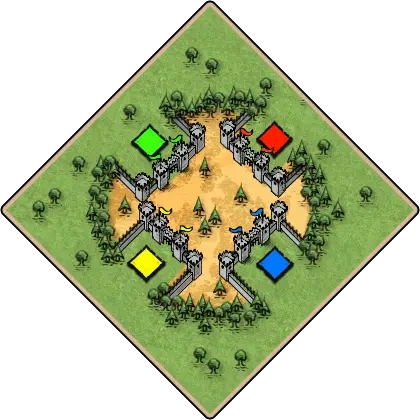
A protected clearing offers a secure start, while routes through the surrounding woodland lead toward contested ground.
Overview
A protected clearing offers a secure start, while routes through the surrounding woodland lead toward contested ground.
Map type and generation
Fortified Clearing is listed as Land, with the features Forests & woodlines, Fortifications & walls. Its recorded map scope is Standard. These labels describe the kind of terrain and match setup to expect; they do not guarantee that every generated map places resources in the same location.
Planning a match
Scout the space between the starting bases, locate exposed food and wood, and identify a safe route for early pressure before investing in distant expansion. Identify the few usable entrances and secure them deliberately. Walls and narrow routes can buy time for an economy, but they also make the contested opening or cut-through especially important. Compare your opening plan with the actual spawn and scout report before choosing a build order.
How to use this reference
A protected clearing offers a secure start, while routes through the surrounding woodland lead toward contested ground. Restricted approaches make scouting the usable gaps important; secure those routes before committing to a large expansion or slow siege push. Pool scope: Standard.
- Focus
- Map layout · Land · Standard · Walled land · forest clearing
- Signature / category
- Map overview
- Release / context
- Map pool
- Region
- Random maps
- Classification
- Maps
- Map features
- Forests & woodlines · Fortifications & walls