Fishing Boat
Fishing Boat is Asians, Europeans, Federal Americans, Native Americans economic unit in Age of Empires III, available from the Exploration Age; obtained through European Dock. Its listed ability is Gathers from fishes and whales; Transports land units.
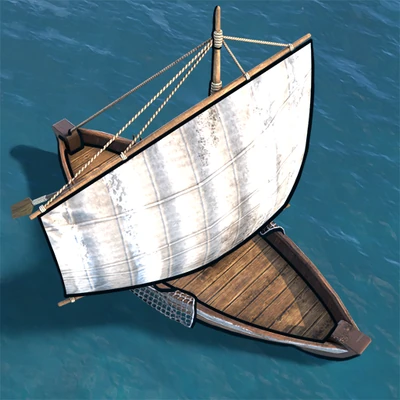
Recorded values
- Cost
- 70 Wood
- Available
- Exploration Age · European Dock
- Training
- 25 sec · 1 population · 7 XP per train
- Durability & mobility
- 200 hit points · 50% ranged resistance · 4.0 speed · 18 line of sight
- Ranged attack
- 8 damage · 20 range · 2.0 attack interval · bonuses: 0.5x vs. Villager
- Siege attack
- 15 damage · 20 range · 2.0 attack interval
- Ability
- Gathers from fishes and whales; Transports land units
Role, availability & values
Production is available through European Dock. It has 200 hit points and 50% ranged resistance. It moves at 4.0 speed and uses 1 population. Training costs 70 Wood; it takes 25 seconds to train. Attack profile: Ranged attack deals 8 damage. Siege attack deals 15 damage. Ranged attack bonuses: 0.5× against Villager. Special ability or role: Gathers from fishes and whales; Transports land units.
Matchup & timing
Use this transport for a planned crossing or landing rather than sending it alone into contested water. Its listed speed is 4.0, so load the army before the route becomes unsafe and allow time for the return trip. Unload where the force has room to form up, keep an escort near the ship, and protect the shore while the last units disembark.
Water economy and transport
The Fishing Boat is an Exploration Age economic unit built at a Dock for 70 Wood, with a 25-second build time, one population, 200 hit points, 50% ranged resistance, speed 4 and line of sight 18. It gathers from Fish and Whales, and it can transport land units across water. Its ranged attack is only eight damage at range 20, and the 15-damage siege attack is not a reason to treat it as a warship. The main value is sustained water income and the ability to move a small force between shorelines. Build boats when fish or whale resources are available and the water can be protected; on a map with little safe water, Wood may be better spent on land infrastructure. Use transport to cross a channel or reach an island, but scout the landing site first and avoid unloading troops beneath a defended Dock. A 50% ranged resistance does not prevent enemy warships from destroying an unsupported boat. Keep Fishing Boats near friendly naval cover and retreat them when the opponent contests the water.
Protecting the water investment
Water economy often compounds over time, so the timing of the first Fishing Boat matters. Construct a Dock in a location with access to useful Fish or Whales, then add boats as the economy and naval safety allow. Gatherers can be targeted by enemy ships, so patrol the water and keep a route to safer ground. If the enemy gains control, stop adding boats and redirect resources toward naval defense or land expansion rather than feeding units into a losing area. A Fishing Boat can carry land units, which gives it utility beyond gathering: use the transport to move a raiding party or reinforce a coastline, and return the vessel after unloading when practical. Population is also a cost; one population per boat competes with the army cap, so a large fishing fleet should be supported by a plan for land production. The stat card’s low attack values are secondary. The boat survives through positioning and fleet support, not through dueling a combat ship.
Water control before fleet expansion
A Fishing Boat is useful only while the water remains accessible. Scout for enemy Docks, warships and shore defenses before committing Wood to a fleet, and position the first Dock where boats can reach several resource nodes. Use the boat’s transport action for islands or a protected crossing, but plan to unload land units in a safe formation and return the boat to friendly water. Its 200 hit points and 50% ranged resistance help against incidental fire but are not a substitute for combat ships. When the enemy contests the sea, protect the gatherers with naval units or stop expansion until control improves. The one-population cost also competes with land units, so compare the expected Food income with the ground force you delay. On a water-heavy map, several protected boats can sustain the economy; on a land map with one exposed fish patch, a large fleet may never recover its initial Wood cost.
Balance boats against land units
The boat’s one population and 70 Wood cost are modest individually but add up across a fleet. Estimate how long the water resource will remain safe, then build only enough boats to gather efficiently. Keep transport use separate from gathering when a landing is imminent, and protect the dock and fleet with naval units before expanding into contested waters.
Use transports without abandoning income
A boat carrying land units cannot gather safely at the same time. Shift a few boats to transport duty when the map requires a landing, and leave the rest in protected fishing areas. This preserves some water income while the army crosses and avoids exposing the entire fleet to one landing operation.
Safe gathering distance
Spread boats across nearby resource nodes when the water is safe, but keep them close enough for naval cover. A single enemy ship can otherwise isolate one boat at a time and remove the fleet before reinforcements arrive.
Water economy and transport utility
Fishing Boats gather from Fish and Whales and can transport land units, giving a small naval investment both economic and tactical uses. They are available at the European Dock from the Exploration Age for 70 Wood, take 25 seconds to train and use one population. At 200 hit points and four speed, they are more vulnerable and slower than warships, so use them in waters the fleet can protect. Transporting troops can create a landing route, but loading workers or army units also takes the boat away from gathering. Decide which role is most valuable before committing the vessel.
Gathering, defense and safe crossings
The Fishing Boat’s 8-damage ranged attack and 15-damage siege attack reach 20 range, but its attack against Villagers is reduced and it should not be treated as a combat ship. Use the sight range to inspect nearby water and keep the boat near friendly naval support if the opponent can raid. Fishing can provide renewable resources where fish stocks and game rules permit, while Whales are another listed source. For a landing, choose a safe shore and unload beyond the immediate enemy firing line. Protect the boat during the crossing: losing it may cost both the investment and the units it carries.