Age of Empires III
Age of Empires III is the 2005 real-time strategy game built around European colonies in the early modern era. Its core match combines resource gathering, Home City shipments, exploration, age advancement and military control.
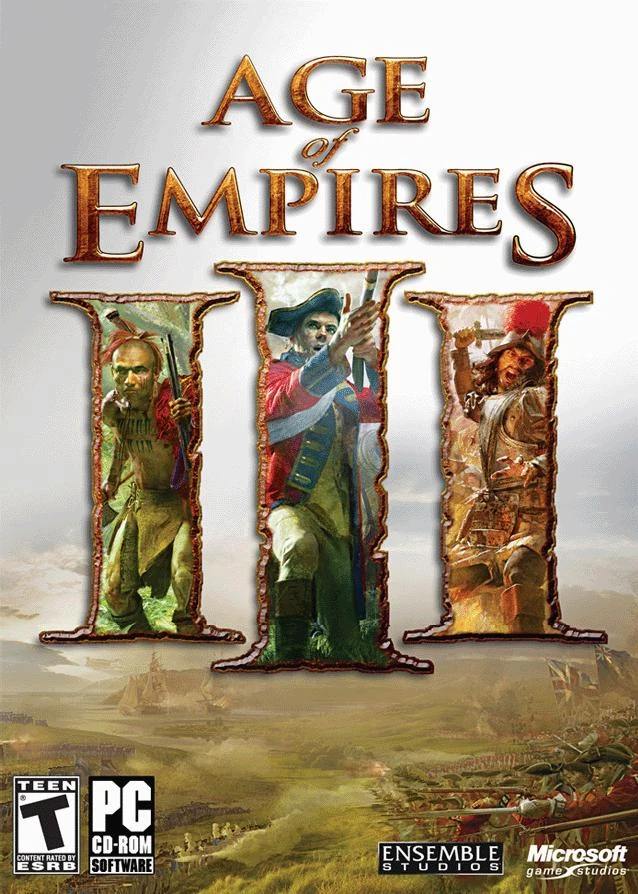
Included content
The original base game launched with eight European civilizations: British, Dutch, French, Germans, Ottomans, Portuguese, Russians and Spanish. Players gather Food, Wood and Coin, earn experience for Home City shipments, and advance through five Ages. The original release also includes the three-act Blood, Ice and Steel campaign.
Version boundary
When using a guide, distinguish the 2005 base-game roster and rules from The WarChiefs, The Asian Dynasties and Definitive Edition additions. Later versions change names, balance and some campaign content.
Release and expansion sequence
Age of Empires III is a real-time strategy game released for Windows in 2005. Its two original expansions arrived in sequence: The WarChiefs in 2006 and The Asian Dynasties in 2007. The expansions added civilizations, campaign chapters, units, maps and mechanics while keeping the game centered on colonial-era conflicts and the New World. Definitive Edition launched in 2020 as a remastered release that includes the earlier expansions and adds further civilizations and content. Later expansions for Definitive Edition continue to add playable groups, maps, campaigns and features. Check the version entry for each named release because an item added in one expansion may not appear in the original game.
Core real-time strategy loop
A standard match begins with a Town Center, a scouting hero and a small group of workers, though scenario settings can change the start. Players explore a partly hidden map, gather Food, Wood and Coin, train units, build structures and research upgrades. Actions such as construction, training and combat generate experience. When the shipment threshold is reached, the player chooses a Home City card to send to the colony. The economy and army develop together: resources pay for workers and units, scouting reveals opportunities, and shipments add timed support. Victory usually comes from defeating the opponent’s colony or reaching the selected mode’s objective.
Ages, advancement and civilization systems
The main technological phases are the Exploration Age, Commerce Age, Fortress Age, Industrial Age and Imperial Age. Advancing opens units, buildings and research, and many civilizations select a Politician or another civilization-specific reward that delivers resources or troops. Asian civilizations advance through Wonders, Native American civilizations use Tribal Councils, Africans select Alliances, the United States uses Federal States, and other later civilizations have their own systems. Age-up choice affects both timing and available cards, so check the civilization page rather than applying one reward structure everywhere.
Gunpowder, artillery and unit classes
The game features prominent gunpowder warfare alongside archers, cavalry, hand infantry, ships and artillery. Units have class tags that determine bonus damage and resistance, so a unit’s name alone does not tell the full matchup. Heavy infantry can screen ranged units, cavalry can reach vulnerable artillery, and specialist counters can punish a specific class. Siege weapons attack buildings and may also damage units, while naval maps add transport, fishing and ship combat. Read the unit statistics and class tags before deciding that a force is a counter; the same unit can be strong against one class and weak against another.
Campaigns and historical battles
The base game includes a story campaign following the Black family across several generations, while The WarChiefs and The Asian Dynasties add their own campaign arcs and playable civilizations. Historical Battles provide standalone scenarios with named factions and objectives. Campaign units, starting resources and win conditions can differ from standard multiplayer, so use the mission briefing and scenario entries when describing a scripted encounter. A unit shown in a campaign may not be trainable in the ordinary civilization technology tree.
Definitive Edition and version checking
Definitive Edition remasters the original game and expansions and introduces additional civilizations, maps, campaigns, artwork and quality-of-life changes. Balance updates can alter unit statistics, card effects, civilization bonuses and available content. A strategy written for an earlier release may therefore use a different cost, name or timing than the current build. This encyclopedia labels each entry with its applicable version and links to the specific unit, technology or civilization page. Use those individual entries for exact statistics and update-specific rules instead of treating every release as one fixed dataset.
Using the encyclopedia by topic
Start with a civilization page to understand its economy and roster, then follow links to the units, buildings and technologies that support the plan. Campaign entries explain the story and mission goals, while map pages describe terrain and route priorities. System pages cover shared mechanics such as experience, Home City shipments, Trade Routes and minor civilization alliances. Version pages identify when an expansion or Definitive Edition feature was introduced. This structure helps separate a general rule from a civilization-specific exception.
Expansion content changes the roster
The WarChiefs adds three Native American civilizations and their Tribal Council advancement system, as well as a campaign continuation and additional units. The Asian Dynasties adds Chinese, Indians and Japanese, with Wonders, Consulates, export and other civilization-specific mechanics, alongside new campaigns and maps. Definitive Edition combines those earlier expansions and introduces later civilizations and content through additional expansions. A building, unit or system can therefore be absent from the 2005 base game while still belonging to the Age of Empires III family. Each entry identifies its release scope.
Campaign, skirmish and multiplayer contexts
The game includes campaign missions with scripted factions, resources and objectives, as well as skirmish and multiplayer matches built around standard civilization economies. A campaign may grant a special unit or begin with a fixed army that is not available in ordinary play. Multiplayer maps add Trade Routes, minor civilization settlements, water routes and other terrain features that change the value of a civilization’s tools. Keep mode-specific rules separate when reading unit access or victory conditions.
Use the selected edition as the reference
Definitive Edition includes visual and interface updates, campaign revisions, new content and ongoing balance changes. The original game and its expansions retain distinct card sets and unit availability. A strategy from one version may use an older statistic or a name that changed later. The encyclopedia marks the version and links to the detailed entries so players can check the current cost, training time, ability and prerequisite for the edition they are using.
Read civilization pages with their mechanics
A civilization page describes its economy, unique roster and Age advancement system. Use it as the starting point, then follow the unit and technology links for exact data. Shared rules such as experience and Home City shipments have exceptions, so check whether a rule belongs to Europeans, a specific expansion civilization or one release only.
Separate shared rules from exceptions
Experience, Age advancement and unit classes form shared systems, while each civilization changes some card and production rules. Follow the linked entries when a mechanic uses a distinct African, Asian, Native American or later Definitive Edition implementation.
Follow a topic through related entries
Use the version labels on each unit and technology page when comparing a release or balance update. The linked entries explain the exact requirements.
Choose the matching release
Confirm the selected expansion before applying an entry to a build order.
Use campaign notes separately
Scenario armies and objectives can differ from standard multiplayer access.
Check the campaign or match mode
Use the rules for the selected mode.
Ages, shipments and economic rhythm
A standard match progresses through the Exploration, Commerce, Fortress and Industrial Ages, with the Imperial Age as the final upgrade tier. Each age opens stronger units, buildings, technologies and Home City Cards, but exact options depend on civilization and mode. Players gather Food, Wood and Coin, then convert them into Villagers, armies, infrastructure and advancement. Home City experience generates shipments that may deliver resources, units, buildings or technologies. A shipment creates a timing opportunity: reinforce an attack, stabilize a threatened economy or unlock an improvement. Spending every shipment as soon as it arrives is not always optimal; holding one can align support with an age-up or decisive unit batch.
Civilization identity and map objectives
Civilizations share the broad economic framework but differ in worker production, age advancement, resource gathering and army composition. Some rely on a conventional Town Center and Villager queue; others use unique workers, allied structures, livestock, shipments or special age-up systems. Hunts, mines, forests, Trade Routes, Native settlements and water access can change which opening is practical. Scout both the opponent and map before committing to a build order. A civilization’s campaign appearance does not guarantee its skirmish roster is identical; use the playable civilization entry and correct expansion or Definitive Edition profile when comparing units and technologies.
Campaign, scenarios and multiplayer rules
Age of Empires III includes a story campaign, historical battles, skirmish and multiplayer, alongside a Scenario Editor. Campaign missions can use scripted objectives, allied factions and special units that are not standard skirmish rules. Skirmish and multiplayer emphasize repeatable timings, scouting and counter-unit choices, while scenario settings can alter victory conditions and available content. A campaign character should not be treated as a civilization bonus, and a scenario-only unit should not be presented as standard production. When comparing a mechanic, identify its mode and version, then follow the linked entry for the exact unit, building or objective.