The WarChiefs
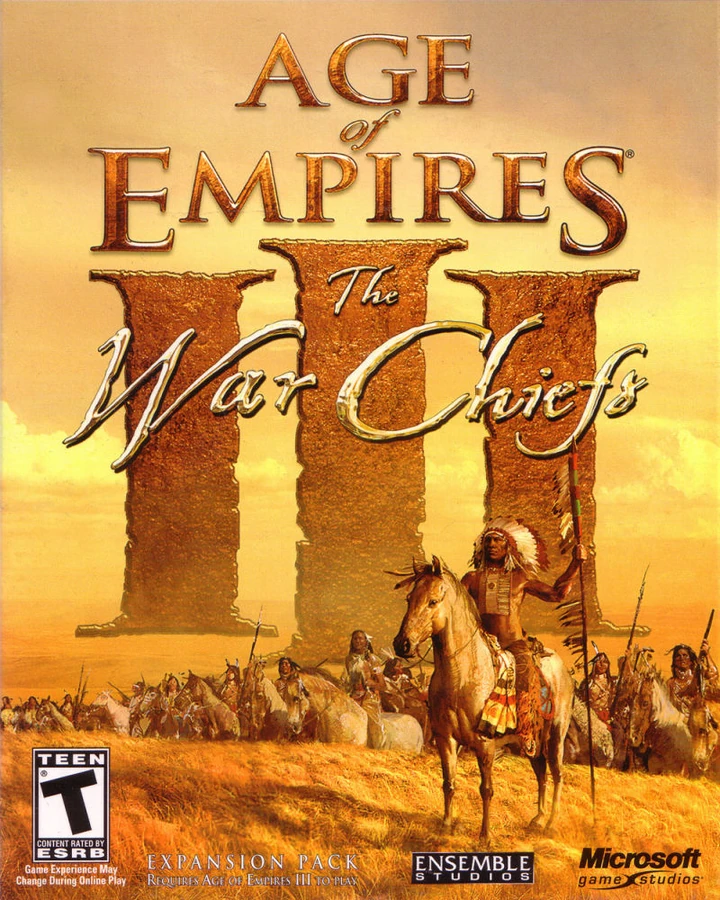
The WarChiefs is the first Age of Empires III expansion. It adds the Aztecs, Haudenosaunee and Lakota, the two-act Fire and Shadow campaign, and Native civilization systems and maps.
Included content
The expansion’s civilizations use War Chiefs, the Community Plaza and Tribal Council age-up choices, with unique buildings and rosters. The original release called the Haudenosaunee the Iroquois and the Lakota the Sioux; Definitive Edition uses the current names and revises some campaign details.
Version boundary
Read older guides with the original names in mind and check whether they refer to an expansion feature or current Definitive Edition balance. Campaign-only Black family factions should not be treated as selectable skirmish civilizations.
Expansion identity and civilizations
The WarChiefs is the first official expansion for the original Age of Empires III, released in 2006 and later included in Gold Edition and Complete Collection. It adds three playable civilizations: the Aztecs, Iroquois (now called Haudenosaunee in later Definitive Edition content) and Sioux (later called Lakota). Each has its own architecture, economy, military roster and Home City options. The expansion also adds minor Native civilizations, maps, units, cards and a new campaign. The Definitive Edition includes revised names, graphics, balance and content, so an original-era guide may use labels or values that no longer match the current interface. The WarChiefs is an Age of Empires III expansion and its features should not be confused with similarly named content in other games.
War Chiefs and Native civilization play
The expansion gives its Native civilizations a War Chief in place of the European Explorer. The War Chief supports nearby troops through civilization-dependent effects and can convert eligible Treasure Guardians rather than relying only on the Explorer’s guardian-killing ability. These strengths make the hero useful in early exploration and in army formations. The War Chief can also use a community gathering site known as the Fire Pit in original-era content, where villagers perform dances that provide military, economic or healing effects. The exact dances and interface change in later releases, but the strategic choice remains: villagers assigned to a dance stop gathering resources, so the player trades short-term economy for an army or support bonus. Native play therefore asks players to balance map exploration, Fire Pit use and ordinary resource production.
Native Embassies, minor tribes and maps
European civilizations gain access to the Native Embassy, which lets them recruit units from allied minor civilizations without relying only on Trading Posts. The expansion also adds the Saloon for hiring mercenaries and new human Treasure Guardians. Minor tribes include replacements for earlier map tribes and new settlements such as the Cheyenne, Huron, Zapotec, Klamath, Apache, Navajo and Mapuche, with availability dependent on map and edition. New maps include Northwest Territory, California, Painted Desert, Araucania variants, Orinoco and Andes. Their resources, settlement placement and route layout create different scouting priorities. A Native Embassy can provide a composition not normally available to a European civilization, but its value depends on the map’s allied tribe and the cost of keeping its units supplied.
Revolution and Trade Monopoly
The expansion introduces the Revolution as an alternative to advancing to the Imperial Age for eligible European civilizations. A revolution converts Settlers into Revolutionary units and stops ordinary Settler production, trading long-term economic growth for an immediate military surge and a selected revolutionary leader’s bonus. It is a high-commitment timing choice: if the first offensive fails, the opponent’s continuing economy can outlast the revolutionary army. The Trade Monopoly victory condition creates another way to end a match. In the original rules, a player or team in the Industrial or Imperial Age that controls more than half of the Trading Posts can pay resources to start a countdown. The opposing side can interrupt the attempt by reducing the controller below the required share; the initiating team cannot expand its Trading Post count during the timer. Confirm the exact rules for the installed edition and mode before planning around either feature.
Campaign acts and chronology
The campaign has 15 scenarios across two acts and returns to the Black family in a more historical setting. Act I: Fire follows Nathaniel Black, John Black’s son and Amelia’s father, as he commits much of the family fortune to the American Revolution; the Battle of Bunker Hill is one of its major episodes. This story sits between the second and third acts of the original campaign. Act II: Shadow follows Chayton Black, Amelia’s son, and opens during Red Cloud’s War after the original campaign’s third act. The campaign combines real events with fictional family characters and the game’s continuing narrative. Missions use scripted units and objectives, so their resource access and reinforcements do not necessarily represent ordinary civilization balance.
Stealth and unit visibility
Stealth becomes a tactical option for selected units in the expansion. Native units and certain specialists can hide from ordinary enemy sight when conditions allow, and European players can access Spy units through Home City cards. Stealth is not the same as permanent invisibility: nearby enemy units or defensive structures can reveal hidden units, and some scenarios or versions change the rules. Use it to scout, set an ambush or approach a vulnerable target, but keep an escape route and avoid exposing the unit near an Outpost or Town Center. Because a hidden scout provides information only while it survives, do not trade it needlessly for a low-value attack.
Multiplayer and edition notes
The expansion also changed Home City and multiplayer progression in its original release, carrying over cities while adding WarChiefs statistics and new cards. Modern Definitive Edition multiplayer uses a different service and a substantially updated ruleset; those historical account details are not current setup instructions. When comparing strategies, specify whether they refer to the original expansion or Definitive Edition. Native civilization names, Fire Pit behavior, available minor tribes, card effects and victory-condition details can vary by release and balance update. Learn the expansion through one Native civilization and one European build using the new Embassy or Revolution, then adapt after scouting. The new systems add choices, but success still depends on protecting gatherers, producing counters and using map control effectively.
Using the new systems together
The WarChiefs features reward planning around the map. A War Chief explores and supports a mobile force; a Native Embassy opens access to allied units; the Saloon adds mercenary options; and the Fire Pit trades worker time for a selected civilization bonus. These tools compete for resources and attention. On a map with a valuable minor settlement, claim the Trading Post or use an Embassy when it produces a meaningful counter. If the army needs immediate support, a Fire Pit dance may be more useful than sending every Villager to gather. European players considering a Revolution should first identify a target and protect the route there, while Native players can use the War Chief to scout for treasures and guardians. None of these buildings or heroes removes the need for ordinary production and economic safety.
Choosing when to revolt
A Revolution is most appropriate when a player has a clear military objective and can exploit the temporary increase in fighting power. Check the opponent’s defenses, map distance and available siege before committing. The conversion of Settlers means the economy loses its normal ability to create replacements, so avoid revolting while behind in army or with no reachable target. Pick the revolutionary leader whose bonus fits the expected attack and use the first wave to damage production, control a Trading Post route or force the opponent to spend resources on defense. If the attack stalls, preserve enough units to guard the remaining economy. The Trade Monopoly can instead reward map control and a network of Trading Posts, but it exposes the victory attempt to counterattacks during the countdown. Both are strategic commitments that should follow scouting, not substitute for it.
Civilizations, campaign and Native systems
The WarChiefs is the first expansion for Age of Empires III. It adds the Aztecs, Haudenosaunee and Lakota, along with the Fire and Shadow campaign and new maps and Native civilization mechanics. The expansion’s civilizations use War Chiefs, Community Plaza ceremonies and Tribal Council age-up choices, with their own buildings and military rosters. These are not simply cosmetic alternatives to European systems: the available workers, age-up rewards and resource access affect how an army is built. Campaign factions and mission-only units can also differ from the civilizations available in skirmish.
Original release names and Definitive Edition changes
The original expansion used the names Iroquois and Sioux; Definitive Edition uses Haudenosaunee and Lakota. Definitive Edition also revises some campaign details and changes parts of the Native economy, so a strategy written for the original release may describe different buildings or gathering rules. The Fire Pit in older versions corresponds to the Community Plaza in DE, and direct Coin gathering rules differ for the Haudenosaunee. When reading older guides, identify the expansion and patch before applying a build order. Black family campaign factions are story participants, not additional selectable civilizations in standard skirmish.