Explorer
The Explorer is the European starting Hero and primary early scout. It reveals the map, defeats Treasure guardians and can establish Trading Posts and Town Centers when the match provides those options.
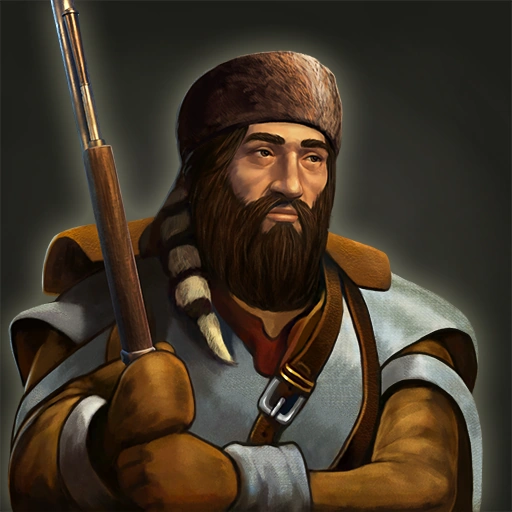
Recorded values
- Durability & mobility
- 400 hit points · 10% ranged resistance · 4.5 speed · 18 line of sight
- Ranged attack
- 12 base damage · range 16 · attack interval 3.0 · bonus damage: 3.0x vs. Treasure guardian; 0.25x vs. Villager
- Siege attack
- 15 base damage · range 6 · attack interval 3.0
- Hand attack
- 6 base damage · attack interval 1.5 · bonus damage: Same as ranged attack
- Sharpshooter attack
- 750 base damage · range 16 · attack interval 3.0
- Crack shot attack
- 475 base damage · range 16 · attack interval 3.0 · bonus damage: 0.01x vs. MercType2 · requires Industrial Age
- Heavy hand attack
- 30 base damage · attack interval 2.0 · bonus damage: 20.0x vs. Treasure guardian · requires Duelist card
- Swashbuckler attack
- 100 base damage · attack interval 2.0 · area of effect 3 · bonus damage: 0.25x vs. Villager; 0.25x vs. MercType2 · requires Captain card
- Ability
- Claims treasures; Builds Town Centers and Trading Posts; Has some civilization differences; Auto scout
Role & counters
Explorers claim eligible Treasures after defeating their guardians and reveal resources, routes and enemy access. They can be incapacitated and recovered, so their value includes continued scouting and construction, not only combat. Other civilizations may use a War Chief, Monk or different Hero with similar but not identical functions.
When to field it
Scout nearby Hunts, Treasures and Trading Post sites before an opponent reaches them. Avoid fighting a dangerous guardian alone, and preserve the Explorer for later construction and map information. Keep an eye on its health and use recovery rules rather than losing the Hero to a small early skirmish.
Scouting, treasure recovery and revival
The Explorer is an early information unit as well as a campaign-style hero used in standard European matches. Its 18 line of sight helps reveal nearby hunts, routes, Treasure guardians and contested Trading Post sites before the opponent can claim them. The Explorer’s attacks are most valuable while defeating a Treasure guardian or helping a small escort; the unit is inefficient at raiding Settlers and should not be sent alone into a defended base. Some civilizations begin with a modified Explorer or a related hero, so the European stat line does not describe every civilization’s War Chief, Monk or other hero. If the Explorer reaches zero hit points, it collapses rather than following the ordinary death rule. Recovery depends on the mode: a player may pay a ransom to the opponent credited with the defeat, or revive the Explorer by bringing it near a friendly unit or building once it has recovered enough health. Keep the hero within reach of support so a collapse does not strand it behind enemy lines. Treasure collection often requires the Explorer to defeat guardians and then claim the reward; send enough escort to handle dangerous guardians without losing the early advantage to a preventable knockdown.
Construction and long-term value
In eligible matches the Explorer can build a Town Center and Trading Posts, making survival important after the opening scout. A second Town Center can help rebuild after a base is destroyed, but it requires the resources and safe location to construct; it is not an automatic replacement. The hero builds some structures faster than ordinary Settlers, which can make a newly secured site valuable, but construction removes the Explorer from scouting and combat until it finishes. Early on, check the minimap for Treasure and Trading Post routes, then return toward the settlement as opponents approach. As the game advances, shipments and civilization bonuses can improve the hero’s hit points, attacks, speed or special actions. Those upgrades accumulate only when the relevant civilization, card or scenario supplies them. The Explorer therefore has several competing tasks: map vision, Treasure recovery, building, and limited combat. Prioritize according to the match state. If the enemy is contesting the route, keep the hero near the army; if the map is safe, use its vision to identify the next site and establish it before the opponent. The auto-scout function can reveal unexplored ground, but should not be left unattended near a dangerous guardian or enemy army.
Shared profile and field role
The Explorer is the scouting hero used by many European civilizations, with a shared profile of 400 hit points, 10% ranged resistance, speed 4.5 and line of sight 18. Its ranged attack deals 12 damage at range 16 and has a three-second interval; the attack deals triple damage to Treasure Guardians but only one quarter damage to Villagers. That makes the Explorer an excellent treasure fighter and scout, but a poor early raider against a settlement. The unit’s siege attack is 15 damage at range 6, and its hand attack is modest. Exact hero abilities and starting values vary by civilization, so the shared profile is a baseline rather than a rule for every named leader. Use the Explorer to reveal terrain, fight guardians with nearby support and place the first map-control structures.
Treasures and safe exploration
Treasure collection is one of the Explorer’s main early jobs. The hero’s guardian multiplier lets it remove Treasure Guardians more efficiently than an ordinary unit, while accompanying troops can help with tougher sites. Treasures may grant resources, experience or a temporary and permanent profile improvement, depending on the treasure. Some effects stack with technologies or other treasures, so a small early reward can continue to matter later. Scout the route before challenging a guarded treasure, keep the Explorer’s health high enough to retreat and avoid leaving it isolated near the opponent. The Explorer also has automatic scouting behavior in supported modes, but direct orders are more useful when a particular Trading Post route, resource location or enemy approach needs attention.
Trading Posts and Town Centers
The Explorer can build Town Centers and Trading Posts, giving it an economic role beyond combat. It constructs Trading Posts faster than ordinary Settlers, which helps secure a Trade Route or Native settlement early. A Trading Post can contribute experience, map access or a Native alliance, depending on its site and the map. The Explorer can also rebuild a Town Center if the original colony is destroyed, provided the player can pay for construction and train workers; this makes the hero a recovery tool rather than a guaranteed second economy. Use it to claim a strategically valuable site while other units cover the builders. Construction exposes the Explorer and takes it away from scouting, so avoid starting a forward Town Center without an escort or a clear retreat path.
Collapse, rescue and ransom
Unlike an ordinary unit, the Explorer collapses when its hit points reach zero. While down, it can be brought back by a friendly unit or building after it has regenerated to at least 100 hit points, or the player can pay a ransom of 100 Coin at a Town Center. A ransom sends the hero to the Town Center with full health. The enemy that caused the collapse can also ransom the Explorer, so the downed hero creates a decision for both players. Move nearby friendly units to rescue it when safe, and keep it away from opposing buildings that could complete an enemy ransom. The ability to return makes the Explorer resilient over a long match, but it does not justify giving the opponent repeated opportunities to capture or ransom it.
Special attacks and ability timing
Sharpshooter Attack deals 750 ranged damage to a Treasure Guardian and has a 60-second cooldown, making it a strong answer to a dangerous guardian rather than a general combat shot. Eye of the Assassin becomes available in the Industrial Age and deals 475 ranged damage to an enemy infantry or cavalry unit, with a 90-second cooldown and a special reduction against MercType2 targets. These abilities can remove a key unit or clear a valuable treasure, but the cooldown means the target should be chosen deliberately. Civilization-specific heroes may have additional abilities or different names. Portuguese Explorers use Spyglass to reveal a distant area, with the reveal radius affected by the Navigator card; other civilizations can grant distinct improvements through their own Home City cards. Check the civilization-specific Explorer entry before assuming that an ability is universal.
Home City cards and civilization differences
European civilizations have Home City support for the Explorer, commonly improving the hero and providing an Explorer’s Dog. The Spanish already have War Dogs, so their card improves those instead of adding the same companion. The Portuguese Spyglass, the Ottoman Explorer’s bonus hit points and the Russian Explorer’s extra siege damage are examples of civilization-specific changes. Maltese use the Grand Master rather than the shared Explorer, while other civilizations can field a distinct hero such as the Inca War Chief or Chinese Shaolin Master. These heroes share exploration or construction functions in some ways, but their abilities, combat rules and available buildings differ. Treat the common stat panel as the standard version and use the relevant civilization’s page for its precise hero package.
When to fight and when to withdraw
The Explorer regenerates hit points, with recovery improving as the player advances in Age. That allows the hero to return to scouting after a safe retreat. Early in the match, avoid attacking enemy Villagers because the damage penalty makes the exchange poor; use the Explorer’s range and guardian bonus where they matter. Spies and Ninja are particularly dangerous counters, and the hero can be overwhelmed by ordinary armies without support. Keep the Explorer near units when clearing a treasure or scouting a contested route, and withdraw before its health reaches the collapse threshold. Its value comes from repeated map actions over time—treasures, construction, vision and occasional combat—not from being a substitute for the main army.
Scouting the opposing settlement
The Explorer’s line of sight 18 helps locate enemy production and resource access, but moving too close can expose the hero to a prepared army. Use the wide vision to identify where a Barracks, Stable or Town Center is placed, then withdraw and let the main force respond. The hero’s 25 percent damage against Villagers makes a raid inefficient, and its modest attack does not justify trading away treasure and construction utility. A Trading Post claim can secure a map feature and add future experience, while an enemy-facing construction site can be interrupted if no escort is present. On maps with multiple Trade Routes, the Explorer can move between sites faster than ordinary builders, but check the route for guardians and enemy scouts before committing.
Coordinate rescue and ransom decisions
When an Explorer collapses, nearby support can change the outcome. A friendly unit or building can rescue the hero after it has regenerated to 100 hit points, and a Town Center ransom costs 100 Coin and returns the Explorer at full health. If a safe rescue is possible, protect the area until the threshold is reached; if the position is lost, weigh the ransom cost against the time and resources needed to recover control. Do not send another unit into a losing fight solely to touch the downed hero. The enemy may also ransom a collapsed Explorer, so keep the body away from an opposing Town Center and be ready to contest the rescue route.
Hero abilities are not universal
The Explorer page describes a shared role, but the ability set changes across civilizations. Portuguese Spyglass reveals an area at a distance; Spanish heroes can train War Dogs; Ottoman, Russian and other civilizations have their own profile adjustments. Maltese use a Grand Master, the Inca have a War Chief, and Chinese use a Shaolin Master, each with separate abilities and construction options. Some cards grant an Explorer’s Dog or improve the hero’s combat performance. Before choosing a card or planning a treasure route, check the civilization-specific hero entry. A shared Explorer statistic should never be applied to a distinct hero merely because both can scout or build a Trading Post.
Treasure bonuses and long-term value
An Explorer may gain useful statistics from certain treasures, and those bonuses can stack with technology or other treasure effects. Collect valuable sites early when the guardians can be handled safely, then preserve the hero so the improvements support later exploration and construction.
Keep the hero available
Withdraw early so passive regeneration can restore the Explorer for another scouting trip.
Choose between scouting, combat and construction
The Explorer has several valuable jobs that compete for the same unit’s time. Sending it far ahead reveals routes and Treasure sites, but it can expose the hero to guardians or an enemy scout. Staying with the army improves its contribution to a fight and can help secure a contested Treasure, while returning to a legal site allows it to construct a Trading Post or, where the rules permit, a Town Center. These are different timings: a Trading Post claims a map socket and its associated benefits, whereas a Town Center is a larger economic commitment that needs a safe location and supporting workers. Avoid leaving construction until the hero is already needed elsewhere. If the Explorer is incapacitated, use the applicable recovery rule and protect the area; losing it permanently can remove early vision and delay later map control. Other civilizations’ Monks and Warchiefs share some hero functions but do not necessarily share this exact build access or combat profile.
Hero, scout and builder
The Explorer is a hero unit that scouts the map, fights Treasure Guardians, collects Treasures and builds Trading Posts. Under the relevant rules it can also construct a Town Center, giving the player a recovery option if the original colony is destroyed and enough resources remain. Its hero status and special abilities vary by civilization; some factions use a different leader or worker system instead.
Keep the Explorer useful through the match
Escort the Explorer while claiming Treasures and placing forward buildings, then keep it near the army when its combat or support abilities matter. If it is defeated, use the applicable rescue or ransom system rather than assuming it is permanently lost. The Explorer is not a replacement for Settlers: Town Center construction still needs resources and worker production to support it. Check the civilization profile for exact building, healing and attack abilities.
Industrial Age Crack Shot values by release
The Explorer’s special Crack Shot requires the Industrial Age and has a 90-second cooldown. Its current profile deals 475 damage at range 16 with a three-second interval; before the Definitive Edition the recorded damage was 5,000. The attack also has a 0.01× modifier against MercType2 units, so it should not be described as a universal one-shot against every target in the current profile. Older guides showing 5,000 damage refer to the pre-Definitive Edition ability. The Explorer’s separate Sharpshooter attack against Treasure guardians has its own damage value and cooldown and should not be confused with Crack Shot.