Barracks
The Barracks is the standard infantry production building for many Age of Empires III civilizations. It lets the player train and upgrade infantry, but the available roster depends on civilization, Age, expansion and game mode.
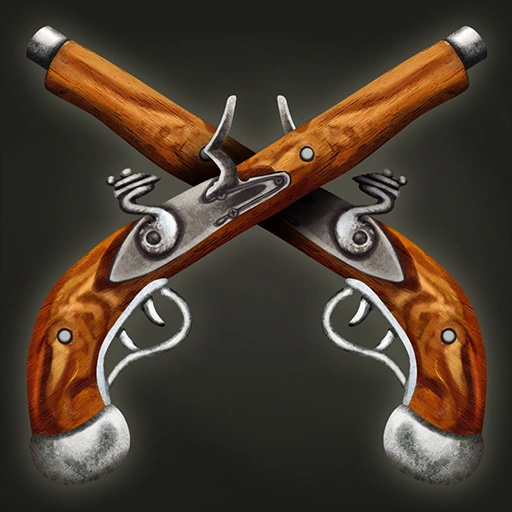
Recorded values
- Cost
- 200 Wood
- Available
- Commerce Age
- Builder
- Settler and its counterparts, Military Wagon, Military Rickshaw, Envoy (with the "Peace of Münster" card), Grenadier (with the "Génie Troops" card), Janissary and, Azap (with the "Derbentler" card), Sepoy and, Mansabdar Sepoy (with the "Battlefield Construction" card)
- Function
- Trains and upgrades infantry units
- Construction
- 30 sec · up to 8 builders
- Structure
- 2,500 hit points · 12 line of sight · 4x4 footprint
Function
A Barracks may train units such as Musketeers, Pikemen, Skirmishers or civilization-specific infantry. Some factions use a different structure or combine production roles; Asian, Native, African and newer rosters should be checked individually. Home City cards and technologies can also change which units or improvements are available.
Placement & timing
Build one when the next army needs infantry for a frontline, anti-cavalry duty or ranged support. Choose production based on what the opponent is actually fielding rather than treating all Barracks units as interchangeable. Add another building only when the economy can sustain the additional queue and the army needs faster reinforcement.
Choosing infantry and production capacity
The Barracks is the standard 200-Wood infantry building in Age of Empires III, normally available from the Commerce Age. A Settler or eligible builder constructs it in 30 seconds; the building has 2,500 hit points, line of sight 12 and a 4-by-4 footprint. Up to eight builders can work on it. Its value comes from the infantry roster, which changes by civilization and Age. Musketeers can provide a durable frontline and anti-cavalry pressure, Pikemen focus on melee targets and siege, and Skirmishers provide ranged damage with a different counter profile. Those examples are not a universal roster: Asian, African and Native civilizations often produce infantry from unique buildings such as a War Academy, War Camp, War Hut or Kallanka. Some factions combine infantry and other roles in one structure, while special cards or units can build a Barracks in unusual ways. Build the structure when scouting shows which infantry will answer the opponent, then use the unit’s page to check the exact multiplier and upgrade. An infantry queue is only useful if the economy can sustain it; adding a second Barracks without enough Food, Wood or Coin may leave both idle. Place the building where reinforcements can join the army safely, but avoid giving the enemy an easy target near the front. Home City cards and Arsenal technologies can improve specific infantry classes. Research should match the actual unit composition rather than being selected just because it is available. In a mixed army, infantry can screen artillery or ranged cavalry, while other units handle targets that the Barracks line cannot reach. The Barracks is a general production category, not a guarantee that every civilization trains the same units there.
How many production buildings to build
A single Barracks may be enough while the economy is small, but a sustained army often needs more than one production queue. Add another only when workers can gather enough resources to keep both active and population capacity can support the output. A forward Barracks shortens reinforcement travel but is easier to raid; a rear building is safer but takes longer to return units to the front. Civilizations with unique production buildings may train infantry from another structure, so consider their whole military network rather than constructing a generic Barracks automatically. Musketeer, Pikeman and Skirmisher lines cover different jobs; use the opponent’s actual units to decide which queue matters. Upgrades are also civilization-specific, and cards can change access or cost. The Barracks does not itself guarantee that an infantry line is cost-effective if its counter is already massed.
Countering specialist units
Infantry trained at a Barracks often provide the army’s stable center, but the player must account for the unit’s counters. Musketeers can hold cavalry away from ranged units, while Pikemen apply melee anti-cavalry and siege pressure; Skirmishers attack from range but can be punished by cavalry. These roles are examples and exact multipliers depend on the named unit. Use production queues to adapt when the opponent changes composition, and do not overproduce a counter after its target disappears. If the civilization uses a War Hut, War Camp, War Academy or another unique structure, consult that building for access rather than assuming a Barracks is available.
Infantry production and civilization equivalents
The Barracks is a military production building for infantry and related units. Its available roster, upgrades and age access depend on the civilization. Several factions use a building that combines Barracks production with defense: Native American civilizations have the War Hut, Russia has the Blockhouse, and Malta has the Hospital. These equivalents add their own functions and should not be treated as ordinary Barracks with a different appearance.
Build for the units scouting reveals
A Barracks is useful only when its unit queue answers the current matchup. Add one before the opponent’s timing reaches the base, then choose infantry that counters the visible army. Wood spent on a second Barracks competes with housing, a Market and other production, so expand when resources can support the queue. Check the civilization’s unit list and building limit before planning a generic Barracks opening.