Grenadier
Grenadier is a gunpowder infantry unit that throws explosive attacks at range. Its attacks can deal area damage to grouped targets and siege damage to buildings, giving it a role between ordinary infantry and dedicated artillery. Grenadiers are generally slower and more expensive than basic infantry, and their access varies among civilizations and releases. They are not durable enough to operate unsupported against cavalry or concentrated ranged fire.
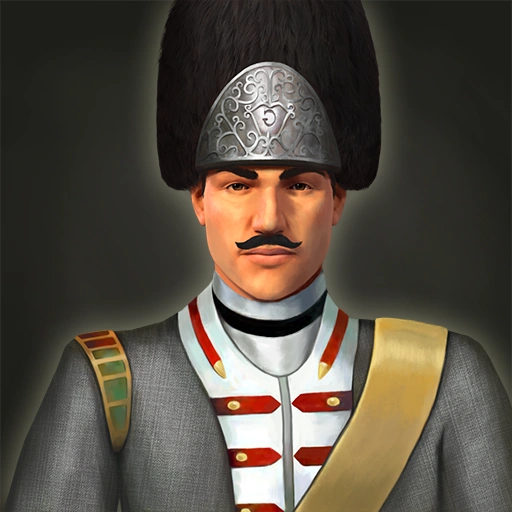
Recorded values
- Available
- Commerce Age · Barracks (requires the "Line Grenadiers" Home City Card) ; Artillery Foundry; Fort; Galleon; Fluyt (Dutch) ; American Citadel
- Training
- 42 sec · 2 population · 18 XP per train
- Durability & mobility
- 200 hit points · 50% ranged resistance · 4.0 speed · 15 line of sight
- Ranged attack
- 16 base damage · range 12 · attack interval 3.0 · area of effect 3 · bonus damage: 0.5x vs. Villager; 0.5x vs. Artillery; 0.4x vs. Cavalry; 0.4x vs. Shock troops
- Siege attack
- 41 base damage · range 12 · attack interval 3.0
- Hand attack
- 24 base damage · attack interval 1.5 · area of effect 1 · bonus damage: 0.25x vs. Cavalry; 0.15x vs. Shock troops
- Mortar attack
- 16 base damage · range 4-14 · attack interval 3.0 · area of effect 3 · bonus damage: Same as ranged attack · requires Grenade Launchers card
- Siege attack (mortar)
- 41 base damage · range 14 · attack interval 3.0 · requires Grenade Launchers card
Role & counters
Use Grenadiers behind a frontline so they can reach structures or clustered enemies without being immediately engaged. Their ranged explosive attack lets them contribute before melee units arrive, while their siege damage can help a push destroy defenses. Keep mobile defenders near them and avoid sending them after targets that can kite or surround them.
When to field it
Choose Grenadiers when the army needs portable building damage or splash pressure and can protect their approach. They are most effective when the opponent’s formation is dense or when a structure must be pressured, but they should not replace all other infantry. Check the civilization’s production access and compare their cost with dedicated siege.
Role and class profile
The Grenadier is a Commerce Age gunpowder infantry unit with Heavy Infantry, Ranged Infantry and Siege Unit roles in its profile. This combination explains why it behaves differently from a Musketeer or a dedicated artillery piece. Its ranged explosive attack can damage a group and pressure buildings, while its higher population use and slower movement make it a larger investment than basic infantry. It can contribute siege damage without requiring a cannon, but its approach and firing range still expose it to mobile counters. The class labels are mechanically important: attacks with bonuses against Heavy Infantry, Cavalry or Shock troops apply according to the target tags and the current attack mode, not merely the target’s visual appearance.
Base statistics and attacks
The current profile lists a cost of 120 Food and 60 Coin, 42 seconds to train, 2 population, 200 hit points, 4.0 movement speed, 15 line of sight and 50% ranged resistance. Its hand attack is 24 damage at a 1.5-second interval, with an area radius of 1 and a 0.25 multiplier against Cavalry plus 0.15 against Shock troops. The ranged attack is 16 damage at range 12, with area radius 3 and a 3-second interval; its listed multipliers include 0.5 against Villagers and Artillery and 0.4 against Cavalry and Shock troops in the current entry. The siege attack is 41 damage at range 12 with a 3-second interval. Use the stat panel for the exact version-specific row and check the relevant multiplier before comparing nominal damage.
Production access and prerequisites
Grenadiers are usually trained at the Artillery Foundry and can also be available from a Fort, Galleon or other civilization-specific production source. The Barracks requires the Line Grenadiers Home City Card before it can produce them. Dutch Fluyts provide an additional naval access route, and the United States Citadel has a listed production role. French access is tied to the Young Guard Church technology. These conditions affect timing: a unit may be present in the roster but remain unavailable until the correct Age, building or card is active. Check the civilization and edition shown in the entry before planning a production sequence.
Grenade Launchers and the Mortar attack
The Grenade Launchers Home City Card is listed for Germans, Portuguese and Spanish. It replaces the ordinary ranged attack with a Mortar attack and enables a different range band, listed from 4 to 14, with area damage. This is an attack-mode change, not simply a free improvement to every Grenadier statistic. The card has its own eligibility and shipment timing, and the Grenadier still needs population space and safe positioning after arrival or production. Compare the card profile with the standard ranged attack before building the army: the replacement can change the unit’s useful distance and role against structures or grouped enemies.
Choosing a target
The Grenadier can punish grouped targets and attack buildings, but it is not equally efficient against every class. Its standard ranged attack has reduced multipliers against several common target groups, including Villagers, Artillery, Cavalry and Shock troops in the current profile. Its siege attack is the more direct building tool, while its hand attack has a separate close-range profile. This means the player should select a target whose class and position let the attack do useful work. Do not treat a Grenadier’s explosive appearance as evidence that it counters all infantry or replaces a Falconet. Check whether the selected attack is Ranged, Siege or the card-enabled Mortar mode.
Counters and protection
Cavalry can reach Grenadiers quickly, while ranged fire can wear down a group that is unable to close. Heavy Infantry and other anti-cavalry screens help protect their approach; mobile units can also intercept a flank. Grenadiers are slower than dedicated cavalry and use two population per unit, so losing them before their attack contributes is costly. Keep them behind a frontline and withdraw if the opponent establishes a counter screen. Their 50% ranged resistance makes ranged damage less effective than it would be against an unresistant target, but it does not make the unit invulnerable or protect it from every attack type. Maintain distance from artillery and avoid giving cavalry a direct path.
Area attacks and formation
Area damage makes spacing and target selection relevant. A dense group can allow a Grenadier attack to affect several units, while a spread formation reduces the number caught by one blast. Conversely, grouping Grenadiers tightly can expose them to enemy area attacks. Keep the unit’s own attack radius and the enemy’s damage type in mind when choosing a formation. Use a screen to hold the enemy in place while Grenadiers attack from behind, and let them focus on a useful target rather than splitting fire across a dispersed army. In a siege push, protect them from units that can close while the Grenadiers remain in firing range.
Training investment and population
Each Grenadier costs 2 population and takes 42 seconds to train in the listed current data. A group therefore occupies meaningful population capacity and takes longer to replace than a small batch of basic infantry. The Food and Coin cost can compete with workers, cavalry and artillery, so decide whether the army needs their area and siege role before placing a large queue. If the composition needs a frontline as well, reserve resources and population for the units that protect the Grenadiers. The available card or building can change the access timing, but it does not remove the resource and population commitment.
Technology and promotion path
Age upgrades can strengthen Grenadiers through the civilization’s ordinary unit-promotion system, and Church or Home City options can change their access or attack. A technology that improves Heavy Infantry or a related class may affect the unit, but confirm its eligibility in the current technology description rather than assuming every infantry upgrade applies. Research before producing a sustained queue when the improvement benefits newly trained units; for a one-time shipment or a brief battle, the research cost may be better spent on another army role. Keep upgrade tier and civilization-specific bonuses attached when comparing two Grenadier groups.
Civilization-specific options
The unit’s access differs by faction. The French can unlock Grenadiers through Young Guard, while Germans, Portuguese and Spanish can receive the Grenade Launchers card that changes the ranged attack. Dutch naval production can train Grenadiers from a Fluyt, and other listed sources include the Fort and the United States Citadel. The Line Grenadiers card is required for Barracks access. These options create different timings and production constraints; they do not mean the unit has identical statistics or a shared deck across all civilizations. Check each civilization’s own unit page and active card list before treating Grenadiers as a standard Barracks choice.
How to use Grenadiers in a push
Bring Grenadiers when the plan benefits from portable siege damage, area pressure or a durable ranged infantry presence. Scout the target first, keep anti-cavalry units close and use the main army to prevent the opponent from closing on them. If a structure is the objective, place them within their siege range and protect their retreat route. If enemy infantry is the target, confirm that its classes do not receive a damaging penalty from the Grenadier’s attack. Rotate damaged units away rather than allowing the entire group to be caught. Avoid spending on a large force when the opponent is fielding dedicated anti-infantry or artillery that can attack them from outside their effective reach.
Patch and edition differences
Grenadier statistics have changed across releases and Definitive Edition updates. The source records older values for hand and siege damage, attack multipliers and ranged resistance. For example, the standard hand attack was listed at 8 before update 13.27885 and later became 24; ranged resistance and siege damage also have earlier values in the version history. An attack multiplier against Villagers or Cavalry has changed more than once. This is why the current stat panel and the active game’s unit card should be used for play, while older screenshots and guides should be treated as historical. Do not combine an old attack value with a current resistance or card effect.
History and related explosive units
The Grenadier belongs to a wider family of explosive or siege infantry, but other units such as the Ottoman equivalent, Aztec Arrow Knight, Chinese Flamethrower, Japanese Shinobi, Inca Huaraca, Mexican Soldado, Maltese Fire Thrower, Chakram Thrower and mercenary Arsonist or Giant Grenadier have their own access and statistics. Their shared thematic role does not make their attack modes interchangeable. Use the Grenadier page for this unit’s Commerce Age cost, attack profile and access, and follow the linked entry for a civilization-specific counterpart before using it in a matchup calculation.
Civilization upgrade paths
Grenadiers do not share a single upgrade ladder across all civilizations. The Danes and Russians can develop them to Royal Guard and Imperial Guard. John Black’s Mercenaries have access only to Guard. In Definitive Edition, French players can train the unit through Young Guard and research its promotions at both the Barracks and Artillery Foundry; Middle Guard unlocks Incendiary Grenades, while Old Guard enables the Mortar attack and adds 2 line of sight. Germans, Portuguese and Spanish use Grenade Launchers to gain access and can research Incendiary Grenades at the Arsenal, with Guard and Imperial upgrades also available through that route. Italians can train Grenadiers by default, but do not receive Incendiary Grenades from the Arsenal unless they send Grenade Launchers. Check these paths before deciding that a card is mandatory or that a technology can be researched.
Huaraca and civilization equivalents
Some civilizations obtain a related unit through a conversion rather than through ordinary Grenadier production. The Inca Tupac Rebellion Home City Card turns Huaracas into Guard Grenadiers. Other explosive or siege infantry entries include the Ottoman equivalent, Aztec Arrow Knight, Chinese Flamethrower, Japanese Shinobi, Inca Huaraca, Mexican Soldado and Maltese Fire Thrower. Revolution and mercenary rosters include Mounted Granadero, Filibuster, Arsonist and Giant Grenadier. These names indicate related design roles, not identical classes, range or damage. Follow the specific unit entry for its cost, attack profile and prerequisites before using it in place of a Grenadier.
What the unit handles well
The source identifies groups of Infantry and Buildings as Grenadier strengths. Its explosive area attack can contribute when infantry bunch together, and its siege damage allows it to pressure a structure without requiring a gun to be the only siege unit in the army. These advantages are positional: a building must be within the attack’s effective range and the Grenadiers must remain protected long enough to fire. A formation that spreads out reduces the area value against units. A wall or fortress can keep them from reaching the structure, and dedicated artillery may outrange them. The unit should therefore be selected for a defined siege or formation-pressure job, not as a generic replacement for all infantry.
Weak matchups and how to protect the group
Light Infantry, Cavalry, Shock troops and Artillery are listed as weaknesses. Light Infantry can attack from range and often has a favorable class relationship; cavalry can close quickly if no screen blocks the route; shock units threaten a slow group at close range; and artillery can attack from beyond the Grenadier’s useful distance. Keep anti-cavalry troops near the flanks, use ranged support against the light-infantry screen and identify enemy artillery before beginning a push. If the opposing army can engage the Grenadiers directly, retreat behind the frontline rather than trading their population cost for a small amount of damage.
Relevant upgrades and exact effects
Several recorded improvements can change the unit. The Spanish Corselet grants Grenadiers +25% hit points; Cree Tanning, Navajo Weaving and Tar Kilns each provide +5% hit points in their respective access paths. Haudenosaunee Lacrosse grants +10% attack, while Armatoloi and Yoga each provide +5%. Clenched Fist increases hand damage by 25%. Incendiary Grenades adds a 15% siege attack multiplier against Buildings and increases the ranged attack’s area of effect by 1 in the current profile. Somali Ajuran Engineers adds a 20% multiplier against Frontier Fortification. These upgrades are civilization- and prerequisite-specific. Verify the target class and attack row affected before including a bonus in a damage estimate.
Home City card choices
Home City Cards support Grenadiers in different ways: some deliver a group, some grant access or change attack mode, and others improve siege or infantry statistics. The British have several Grenadier-related cards; the source lists British Grenadiers, Scots Guards, TEAM Grenadier Guards, Coldstream Guards and a six-Grenadier shipment. Chinese cards include siege hit point, siege attack and siege combat effects among other options. Asian civilizations can receive Grenadiers through an Intervention shipment when French Allies are selected, while TEAM Senegalese Riflemen is available to the French and Hausa. These examples do not mean every card has the same effect or is available to every deck. Read its text, Age and eligibility and distinguish a one-time shipment from a permanent upgrade.
Patch history and balancing
The Grenadier has undergone several substantial balance changes. The original profile had 50% ranged resistance, no melee multipliers and different ranged multipliers, including a 0.5 value against Cavalry and Shock troops; its siege attack was listed at 54 damage. Definitive Edition initially lowered ranged resistance to 40%, set several ranged class multipliers to 0.3 and changed siege rate of fire to 4.0. Update 50830 restored the current listed 50% ranged resistance and 0.5 multipliers against Cavalry, Villagers and Artillery, while the siege profile returned to a 3.0-second interval and 41 damage. Update 13.27885 changed the French access condition, replacing the earlier Grenade Launchers access with Edict of Nantes and Young Guard. Use the active in-game card for current values; these older records explain why archived guides disagree.
Attack animation and historical role
The Grenadier’s name comes from infantry historically associated with throwing grenades, first as a siege role and later as elite infantry. The game uses this theme for its ranged explosive attack and building pressure. Its models distinguish standard, Veteran and Guard or Imperial tiers. Veteran and higher models change the uniform and headgear, but their appearance alone does not establish which attack or upgrade is active. In Definitive Edition, the Grenade Launchers card changes the visual firing behavior to a hand mortar and shortens the attack delay in the described profile. This card effect should be kept separate from the unit’s base attack mode when interpreting screenshots or comparing versions.
Use upgrades in a lasting plan
A Grenadier upgrade is worth the investment when the affected units will remain a meaningful part of the army. Hit point or attack improvements reward continued production and repeated engagements; an area or siege bonus matters when the intended targets appear. If the opponent changes to cavalry or long-range artillery, a new class counter may be a better purchase than another Grenadier technology. Keep the relevant unit count, resource stock, population and production site in view. An upgrade affects a particular line and may require a Church, Arsenal, Barracks, Foundry or Home City card; it does not automatically improve every explosive infantry equivalent in the roster.
Campaign and special-roster cautions
Campaign scenarios and Revolution paths can present Grenadiers with different availability, training rules or bonuses from ordinary skirmish. A scenario may use a fixed unit or scripted force, while a revolutionary faction may replace workers and have a restricted production roster. Do not assume the standard Commerce Age unit can be trained in every campaign mission, nor apply skirmish upgrade costs to a mission object. Check whether the page’s listed release is the original game, The WarChiefs, The Asian Dynasties or Definitive Edition, and use the relevant scenario page for mission-specific conditions.
Revolutionary France and consulate versions
Revolutionary France has a specialized Grenadier profile. Its Grenadiers can gather Coin from mines at 1.0 per second and Wood from trees at 1.5 per second. With the Génie Troops Home City Card, they can construct Barracks, Stables, Artillery Foundries, Outposts, Trading Posts and Field Hospitals. A separate Napoleonic France path and Imperial Old Guard card affect the Guard or Imperial visual and combat profile; the listed hand damage doubles and hand, ranged and siege resistance each rise by 10%. This is a Revolution-specific exception and must not be applied to a standard French Grenadier. Consulate Young Guard is another named profile available through the Consulate for eligible civilizations; use its access and upgrade conditions rather than assuming it is trained from an ordinary Artillery Foundry.
Where to place production
The production route determines whether Grenadiers can reinforce the army in time. An Artillery Foundry is the normal military site; a Barracks requires Line Grenadiers, a Fort requires access to the structure, and naval production depends on the listed ship and civilization. A French Young Guard technology can shift production or upgrade access to the Barracks and Foundry, while a card shipment arrives on Home City timing instead of the ordinary queue. Place forward production only where it can be defended. Because Grenadiers move at 4.0 in the listed profile and take 42 seconds to train, a distant base can leave the unit absent from the fight even when resources are available.
A matchup example
Against a compact infantry formation, Grenadiers can use area damage while a Musketeer or other Heavy Infantry screen prevents Cavalry from reaching them. If the opponent answers with Skirmishers or artillery, add a mobile or ranged counter and retreat the Grenadiers until the screen is addressed. Against a building, switch attention to their siege attack and use the army to stop reinforcements. The approach follows the listed strengths and weaknesses: grouped Infantry and Buildings are suitable targets, while Light Infantry, Cavalry, Shock troops and Artillery threaten the unit. Recheck enemy upgrades before committing the population-heavy force.
Summary
Keep its screen close during the attack.
Select targets by attack mode
The Grenadier carries three distinct jobs in its attack profile. Its ordinary ranged attack deals 16 damage at range 12, affects a radius of three and fires every three seconds; it is reduced against Villagers, Artillery, Cavalry and Shock troops. The 41-damage Siege attack also reaches 12, while the 24-damage hand attack is a last resort and is especially poor against Cavalry and Shock troops. This is why the unit should usually fire from behind a screen rather than chase a target into melee. A dense Infantry group is a better ranged target than a single Villager, and a structure is better handled with its Siege attack than with the ordinary blast. The Grenade Launchers card replaces both its ranged and Siege profiles with Mortar versions that reach from 4 to 14. Keep the card’s change in mind when judging whether the unit can still engage at its usual distance; attack mode, reload and target class all affect its contribution.
Production investment and composition choices
At 120 Food and 60 Coin, two population and 42 seconds per unit, Grenadiers compete directly with the same resources and production time used for other gunpowder Infantry. They are available at the Artillery Foundry and some other civilization-specific buildings; Barracks production requires Line Grenadiers, while French access is connected to Young Guard. Germans, Portuguese and Spanish can use Grenade Launchers to change the firing profile, and several special campaign, naval or Revolution routes have their own conditions. Before adding a batch, decide whether the army needs siege pressure, ranged area damage or both. If the enemy fields Cavalry or fast Shock troops, reserve resources for the units that can protect the Grenadiers. A large Grenadier group without that screen pays both its Coin cost and replacement time when it is caught. Keep the production site behind the line and rally reinforcements to a safe point rather than directly onto the battlefield.
Heavy Infantry that doubles as light siege
Grenadiers are Heavy Infantry whose explosive attacks behave like light siege. They can damage buildings and clustered units, but are not classified as true artillery for all bonus interactions; Culverins and other anti-artillery units do not necessarily receive their usual multiplier against them. This makes Grenadiers useful when an army needs some siege without training a dedicated cannon.
Short range and cavalry vulnerability
Grenadiers must approach targets and can be punished by Cavalry or ranged units before they attack. Keep a screen in front, aim at structures or dense formations and avoid leaving them exposed after a siege volley. They are not a substitute for Mortars against a defended base or for infantry that can hold a front line. Their availability and upgrades vary by civilization, so consult the correct unit profile.