Artillery
Artillery is the long-range, heavy-weapon class used to break infantry formations, buildings, and ships. Pieces are costly, slow, and take more population space than ordinary troops; cavalry, fast ranged cavalry, shock infantry, and Culverins can threaten them. The roster and production building depend on civilization and expansion.
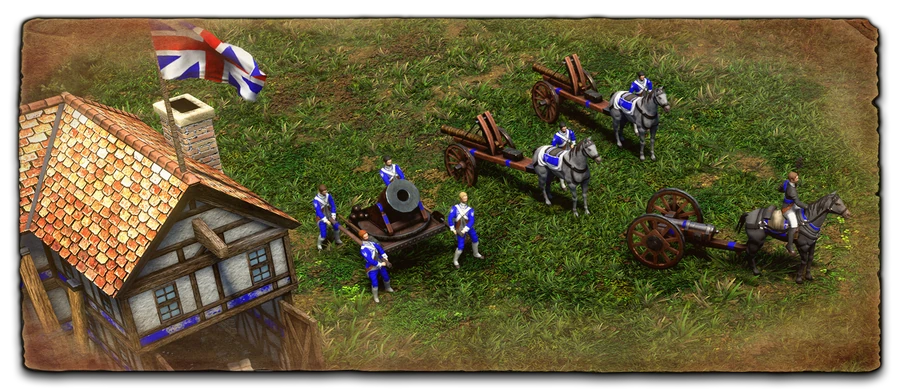
Class role & counters
Many cannon-type units switch between Limber mode for travel and Bombard mode for firing. Bombard mode slows movement, while changing modes takes time, so position the guns before combat and protect them with a frontline. Culverins specialize in countering artillery; Falconets pressure infantry, and Mortars attack buildings from range. Siege troopers such as Grenadiers are classified as infantry rather than Artillery and interact with upgrades and counters accordingly.
Positioning & support
Add artillery when the opponent’s infantry mass, fortifications, or ships are difficult to answer with ordinary troops. Scout for counters, escort the guns, and withdraw or reposition when cavalry can reach them. Verify the unit’s own entry because some artillery pieces use different movement or firing rules.
Roles, counters and movement modes
Age III artillery are long-range, high-damage units that usually consume more population and resources than ordinary troops. They are effective against Infantry, Buildings and Ships, but Heavy Cavalry, Light Ranged Cavalry, Shock Troops and Culverins can counter them. Most cannon units change between Limber mode for movement and Bombard mode for firing; Bombard mode moves at about 40% of base speed, and switching modes takes time. Set the firing position before the enemy engages, keep a screen between the guns and fast attackers, and reposition when a Culverin can return fire. Siege Troops such as Grenadiers are classified as Infantry or Cavalry rather than Artillery, so artillery upgrades and counter multipliers may not apply to them. Each unit has its own attack profile, and exceptions to the general rule are listed on the individual unit pages.
Cannon classes and exception handling
Falconets are commonly used to pressure Infantry formations, Mortars specialize in attacking Buildings and Culverins counter enemy Artillery. These are role descriptions rather than universal damage rules: each cannon has its own range, population cost, firing mode and multipliers. Siege Troops such as Grenadiers use their own Infantry or Cavalry classification and should be evaluated separately from cannon artillery.
Roles, firing modes and counter units
Artillery units provide long-range fire against infantry formations, buildings and ships, but they are costly, slow and use more population than ordinary troops. Many cannon switch between Limber mode for travel and Bombard mode for firing; changing modes takes time, so position the guns before combat and protect them with a frontline. Falconets pressure infantry, Mortars specialize in buildings, and Culverins counter other artillery. Some siege specialists such as Grenadiers are classified as Infantry rather than Artillery, so class labels affect upgrades and counters.
Escort and production planning
Add artillery when fortifications, dense infantry or ships are difficult to answer with ordinary troops. Scout for Cavalry, fast ranged cavalry, shock infantry and Culverins before advancing. Keep an escort near the guns and withdraw or reposition when the enemy can reach them. Production buildings and available artillery vary by civilization and expansion, so check the unit entry and access route before spending resources. Artillery is strongest as part of a combined force: the frontline occupies the opponent while guns fire from a clear position.