Falconet
The Falconet is a Fortress Age field artillery unit available to many civilizations. Its area-damaging cannon attack makes it especially dangerous to grouped infantry and gives an army a strong ranged tool for battlefield control.
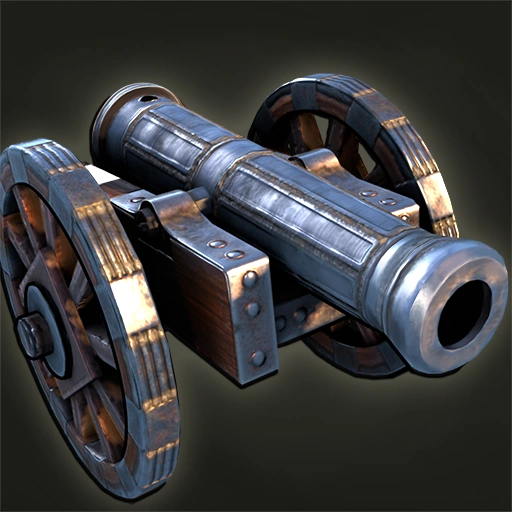
Recorded values
- Available
- Fortress Age · Artillery Foundry; Fort; Palace; American Citadel
- Training
- 45 sec · 5 population · 50 XP per train
- Durability & mobility
- 200 hit points · 75% ranged resistance · 4.0 / 1.6 speed · 30 line of sight
- Bombard attack
- 100 base damage · range 26 · attack interval 4.0 · area of effect 3 · bonus damage: 3.0x vs. Infantry; 3.0x vs. Ship; 2.0x vs. Building; 0.5x vs. Arrow Knight, 16
- Case shot attack
- 10 (7) base damage · range 13 · attack interval 4.0 · area of effect 5 · bonus damage: 3.0x vs. Infantry; 0.5x vs. Cavalry; 0.5x vs. Shock troops; 0.5x vs. Arrow Knight, 16 · requires Case Shot card
Role & counters
A Falconet fires at long range and deals bonus damage to infantry and buildings. Its artillery class is vulnerable to Cavalry and Culverins, while its case-shot option requires the Case Shot card and changes its close-range attack profile.
When to field it
Protect Falconets behind a frontline and focus them on compact infantry formations or a siege objective. Scout for enemy Cavalry and Culverins, then screen or reposition before they can reach the guns.
Bombard and case-shot modes
The Falconet has two battlefield modes, and its value comes from choosing the correct one. In Bombard mode it deals 100 damage at range 26, with a three-point area radius and a four-second firing interval. Its multipliers are 3× against Infantry and Ships, 2× against Buildings and 0.5× against Arrow Knights. This is why a small early group can punish a tightly packed infantry line or apply pressure to a defensive structure. Case shot is a close-range option: it fires a spread at enemies approaching the gun rather than delivering the long-range bombard hit. It is less effective against Cavalry and Shock troops, so it should not be mistaken for a way to defeat the units that counter artillery. The mode switch is a response to distance and target class, not a replacement for a proper screen. In Limber mode the Falconet moves at 4.0 speed; Bombard mode reduces speed to 1.6. Limber to reposition, then deploy where the gun has a clear firing lane and the frontline can prevent a charge. Its 75% ranged resistance helps against ordinary ranged fire, but does not make the piece safe from artillery counters or melee attacks.
Building a protected artillery line
A Falconet costs 100 Wood and 400 Coin, takes 45 seconds to train and occupies five population. The Fortress Age timing makes it a major midgame investment: spending the Coin on guns reduces the resources available for age advancement, upgrades or heavy units, so the artillery should arrive with a plan. Its common production source is the Artillery Foundry, with Forts, Palaces and the American Citadel providing access for eligible civilizations. Civilization access differs: the standard roster covers many European, African and Mexican forces, while Portugal receives Field Guns through its own shipment route. Asian civilizations can obtain the Consulate counterpart through their alliance system. Some revolutions also change which artillery is available. These are roster distinctions, not interchangeable names for an identical delivery. In battle, place the Falconet behind Musketeers or other units that can stop Cavalry, and keep Culverins or enemy artillery in mind when choosing a position. Its 30 line of sight and long bombard range help it engage from behind the army, but vision and firing range do not protect its flanks. Reposition after the enemy identifies the gun line, and avoid grouping every Falconet where one counterattack can reach them.
Upgrades, shipments and edition context
Falconets are improved by artillery hit-point, attack, speed and line-of-sight effects, and Home City shipments can provide immediate guns or combat bonuses. The exact card pool varies by civilization and release, so a two-gun shipment listed in one deck should not be assumed to exist in every deck. The same is true of Consulate units: an Asian alliance can provide its own Falconet with an adjusted starting profile and automatic age upgrades. African civilizations use their own Palace and research access, and their artillery can transition to Field Gun ranks with age progression. These alternatives explain why a unit page may list multiple buildings and ages; they do not mean every player can train every variant at once. In The Asian Dynasties and Definitive Edition, compare the civilization and mode before planning the shipment. Treat the Falconet as battlefield artillery: it damages clustered infantry, ships and buildings effectively, but it does not replace anti-cavalry or anti-artillery support. A composition that protects the guns and gives them worthwhile targets is more important than maximizing their count.
Training profile and artillery statistics
The Falconet is Fortress Age artillery available to many European, African and Mexican forces, with civilization-specific exceptions and access routes. It costs 100 Wood and 400 Coin, takes 45 seconds to train, uses five population and has 200 hit points with 75 percent ranged resistance. Its bombard attack deals 100 damage at range 26 every four seconds, with an area of effect of 3. The attack has a 3 times multiplier against Infantry and Ships and 2 times against Buildings. Its case shot card adds a close-range area attack that is aimed at infantry and reduced against Cavalry and Shock troops. The Falconet’s range, splash and early Age access make it one of the most influential artillery units in mid-game battles.
Anti-infantry and early timing
A Falconet’s area damage can hit several packed infantry units with one shot, making it especially effective when the opponent must cross open ground. A pair of Falconets from a Home City shipment can create a powerful Fortress Age timing if the army protects them. The guns are not invulnerable; they use five population each and require a large Coin investment, so losing them can reverse the attack. Move with an infantry screen and use the cannons to remove the opponent’s main ranged line or damage a defended building. Do not fire into friendly units if formations overlap.
Siege against buildings and ships
Falconets are effective against buildings because of their high range, damage and building multiplier. They can outrange some Town Centers, Outposts and base defenses, allowing a protected group to siege from a safer position. Mortars generally have longer reach and stronger building damage, so use them when the match requires dedicated siege rather than treating Falconets as a full replacement. Falconets are also dangerous to ships because of their ship multiplier; a small group can threaten vessels near the coast. Culverins remain a specialized answer to artillery and can outrange Falconets in their intended matchup.
Vulnerable to cavalry and Culverins
Culverins counter Falconets through their artillery multiplier and range. Heavy cavalry and Light ranged cavalry can also threaten the guns, especially if they reach melee without being stopped by the infantry screen. Keep Heavy infantry or ranged cavalry close, use walls and terrain to limit approach angles, and place the cannons behind the front line. If Dragoons or other ranged cavalry are firing from outside the screen, bring a counter rather than advancing the Falconets alone. Their limbered speed is useful for repositioning, but deployed guns need time and protection to contribute.
Case shot and close defense
The Case Shot card gives Falconets a short-range attack with an area effect, but its damage is reduced against Cavalry and Shock troops. It can help clear infantry that gets close, yet should not be treated as a reliable way to repel a cavalry charge. Keep the screen in place and use the case shot only when the target class fits. The ordinary bombard attack remains the main way to pressure infantry, ships and buildings. Ability availability and exact costs depend on the civilization and release.
Production and shipment decisions
Artillery Foundries, Forts, Palaces and certain civilization buildings can provide Falconets, while Home City cards often deliver them in fixed groups. A shipment arrives faster than local training can complete in some situations, but the army needs a safe rally point. Local production allows replacements when the economy has sufficient Wood and Coin. Compare the five-population commitment with other units the army needs, and avoid queuing Falconets if the opponent has already invested in Culverins or mobile cavalry.
Understanding bombard and case shot
The standard bombard attack has range 26, area 3 and multipliers against Infantry, Ships and Buildings. Case Shot, unlocked by the relevant Home City card, creates a closer-range area attack with a wider effect, but reduced damage against Cavalry and Shock troops. Switch attacks according to the target and keep the guns behind a screen. The case shot is a situational response to infantry reaching the cannon line; it is not a substitute for anti-cavalry protection.
Train and ship the artillery at the right time
A Fortress Age Falconet can arrive as a Home City shipment or be trained at a suitable artillery production building. The early shipment creates a faster timing, while local production supports later replacements. Set the rally point behind the army and leave population for the infantry screen. If the opponent already has Culverins or mobile cavalry, first prepare a counter rather than sending the guns alone.
Line of sight and firing discipline
The Falconet has line of sight 30, but its target must remain visible during the firing cycle. Keep scouts and infantry ahead to reveal units, then focus volleys on one high-value target. Reposition after firing if the opponent begins a counterattack.
Composition, counters and preservation
A Falconet usually performs best as part of a combined army. Heavy Infantry can block cavalry and hand units, while ranged Cavalry can pressure enemy artillery and help prevent a Culverin from firing freely. The Falconet itself has only 200 hit points despite 75 percent ranged resistance, so that resistance should not be mistaken for protection from melee attacks or counter-artillery. Its five population and expensive 400 Coin cost make preservation important. Keep the guns behind the screen, focus fire rather than splitting shots, and retreat before cavalry surrounds them. When the opponent invests in Culverins, use mobile units to threaten those counters and avoid a stationary artillery exchange on unfavorable ground. If the enemy has dispersed its forces, use the Falconet to siege a structure or cover the army advance instead of chasing individual units. The range and area attack are strongest when the opponent must defend a fixed position or move through a narrow route. After a battle, regroup and repair the composition before continuing; one surviving gun is a valuable siege asset but is easily lost without protection.
Choosing targets during a push
Prioritize enemy artillery or a dense infantry formation according to the immediate threat. If the enemy guns can destroy the Falconets, clear or displace them first; when no counter-artillery is present, focus on the unit mass that blocks the advance. Against a fortified position, keep the screen between the cannons and defenders while the guns work on the structure. A shipment or training queue is only useful when the army can escort the guns to that position.
Protect the guns between volleys
Keep the escort close during the reload and retreat if the counter force breaks through.
Maintain a safe retreat path
Leave room behind the battery for an orderly withdrawal.
Damage profile and the Case Shot tradeoff
A standard Falconet costs 100 Wood and 400 Coin, takes 45 seconds to train and uses five population. Its Bombard attack deals 100 damage at range 26 every four seconds with area three, receiving 3× damage against Infantry and Ships and 2× against Buildings. The Case Shot card changes its attack to a close-range, area-five profile at range 13; its listed base damage is lower and it receives only half damage against Cavalry and Shock troops. This makes Case Shot a situational response to nearby Infantry rather than a universal improvement. The player must also consider the card opportunity cost and how often opponents can close the distance. Preserve the standard Bombard role when the army needs long-range pressure, and do not leave Falconets without a frontline because the artillery’s high damage does not come with protection from a Cavalry dive.
Availability and choosing between training and shipment
The ordinary Falconet is listed for Europeans except the Portuguese, African civilizations and Mexicans, with production routes including the Artillery Foundry and certain forts or palaces. Africans can reach it through Imported Cannons, which makes the source of access different from ordinary Foundry production. A Home City shipment can create a faster timing than local training, while a building supports repeated replacement if the economy can pay the Wood and Coin cost. Choose the route according to the map and the opponent’s counters: a shipment is strongest when an immediate pair of guns can decide a Fortress Age fight, while local production is more useful when the siege is expected to continue. Check the civilization page and current card list before assuming every faction has the same arrival count or building prerequisite. Keep Culverins, Cavalry and other anti-artillery threats in view, and retain a retreat path behind the guns.