Great Bombard
The Great Bombard is Ottoman Heavy Artillery, a high-cost siege piece with exceptional damage against buildings and clustered units. Its range can decide a siege, but it is slow and needs protection from fast counters.
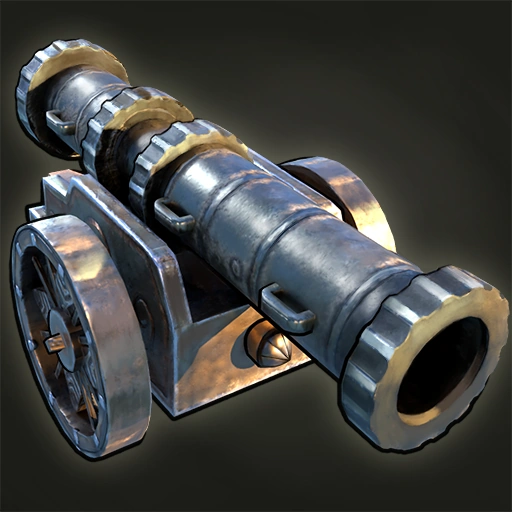
Recorded values
- Available
- Industrial Age · Factory (Ottomans)
- Training
- 100 sec · 7 population · 70 XP per train
- Durability & mobility
- 475 hit points · 75% ranged resistance · 3.5 / 1.4 speed · 32 line of sight
- Bombard attack
- 500 base damage · range 28 · attack interval 8.0 · area of effect 5 · bonus damage: 2.5x vs. Fixed Gun, 16; 1.5x vs. Ship; 0.5x vs. Cavalry; 0.5x vs. Shock troops; 0.5x vs. Arrow Knight, 16; 0.4x vs. Artillery
Role & counters
Ottoman access can include Factory production and shipments or technologies, depending on the version. The cannon’s area damage can pressure a defended position, while Culverins and Cavalry can threaten it before it reaches firing position. Keep an escort near the guns.
When to field it
Build the supporting army first, then bring Great Bombards to a target the opponent must defend. Scout for Culverins or Cavalry before moving forward and avoid letting the guns travel alone. Protect the Factory or shipment source so the artillery plan can continue.
Access and production
The Great Bombard is the Ottoman replacement for the Heavy Cannon. It is an Industrial Age artillery unit trained at the Factory or delivered by a Home City shipment; the Ottoman player cannot produce it from an ordinary Artillery Foundry. Its listed cost is 100 Wood and 600 Coin, it takes 100 seconds to train in Definitive Edition, and it occupies seven population. A Factory produced Bombard may look free because the building does not charge the listed resources in the same way as a standard unit queue, but the Factory spends time gathering resources. At an average resource rate of 5.5 per second before Factory improvements, a 100 second production queue represents substantial forgone income. This hidden opportunity cost can exceed the printed unit cost. The Chinese Engineering School cards can shorten Factory production time, while a Home City shipment provides a different delivery route. Decide between the two based on whether Factory time or the shipment is more valuable to the current economy and army timing.
Attack profile and siege role
A Great Bombard has 475 hit points, 75 percent ranged resistance, line of sight 32, and a large cannon attack dealing 500 damage at range 28 every eight seconds. Its attack affects an area of five, so a well placed shot can hit grouped infantry or buildings. It is especially dangerous to structures and Fixed Guns, and its 1.5 multiplier against Ships gives it a meaningful coastal role. Its damage is reduced against Cavalry, Shock troops, Arrow Knights, and other Artillery. The gun therefore wants an infantry screen and time to aim at a target, not a close engagement with fast units. Great Bombards are slow in both movement modes: limbered movement is speed 3.5, while bombard mode is 1.4. They must unpack and reposition carefully, so a retreat route and escorts matter. The eight second interval is slower than many field guns; each shot needs to count, especially when a target can move out of the impact area.
Protecting and using the guns
The Bombard's size, population cost, and slow movement make it a high value target. Keep it behind Heavy infantry or other units that can stop Cavalry from charging into the artillery line. Scout before moving through forests or narrow passages, since an ambush can prevent the gun from limbering away. Against a fortified position, bring more than one Bombard when the economy supports it: the area attack and enormous building damage can collapse a structure in a few volleys, but a single gun fires slowly and may be disrupted by defensive fire. Against an army, focus on infantry clusters rather than chasing individual units. Its low multipliers against Cavalry and Artillery mean it should not duel enemy guns or mounted attackers without support. Use its 32 line of sight to help identify targets, but do not mistake vision for safety; faster scouts and screening units are still needed to reveal approaching threats.
Upgrades and alternate access
Imperial Bombard is the Imperial Age improvement, costing 1,500 Wood and 1,500 Coin and increasing hit points and damage by 50 percent. Because the upgrade is costly, it is most useful when the player expects to field the Bombard for a sustained siege or when preserving a surviving gun is important. The Russians can receive an Imperial Bombard called the Tsar Cannon through its Home City Card; the shipment also lowers the cost of Imperial artillery upgrades and can be sent twice. That shipment is Russian access to a special artillery reinforcement, not ordinary Ottoman production. In The Asian Dynasties and Definitive Edition, the Great Bombard also appears in specific Consulate arrangements. The Indian Consulate can obtain Ottoman units through its alliance, while certain revolutions can receive an Ottoman Expeditionary Army shipment containing Great Bombards. These routes do not make the Great Bombard a standard unit for every civilization.
Patch and game context
The unit belongs to Age of Empires III and remains an Ottoman signature in the Definitive Edition. The original release trained it in 115 seconds; Definitive Edition reduced that time to 100 seconds. Older strategy notes may use the earlier timing or may describe the factory output as free without accounting for lost gathering time. The Great Bombard's low mobility and long reload make it a siege specialist rather than a flexible field cannon. Its historical inspiration also fits that role: very large bombards were difficult to reposition and were often used for fortification or coastal defense. In a match, treat its printed 500 damage as a powerful but intermittent area attack, protect the artillery, and plan the attack around the time needed to move, unpack, fire, and withdraw.
Battlefield preparation
Before moving a Great Bombard, clear the route and identify where its escorts will stand during deployment. Its high cost and long train time make an unexpected loss difficult to replace. Keep infantry between the gun and likely cavalry approaches, and use other ranged units to stop attackers from freely focusing the Bombard. When the target is a building, avoid firing at the edge of range if a small reposition can put more structures inside the area of effect. After firing, allow the gun to reload behind its screen rather than advancing alone. If the opposing force retreats, do not chase with bombard mode; limber only when the route is safe and the army can move with it.
Ottoman heavy artillery
The Great Bombard is a powerful Ottoman artillery unit associated with the Factory and Industrial Age. It is built to deliver heavy ranged and siege damage against fortified positions and other large targets, making it a late-game answer when ordinary infantry fire cannot break a defended line. A Great Bombard has 475 hit points and 75% ranged resistance, but its high cost and slow movement make it a substantial commitment. It occupies seven population and requires 100 Wood and 600 Coin, with a 100-second production time in the listed profile.
Escort and deployment
Treat the Bombard as a protected siege asset rather than a self-sufficient army. Its slow pace makes it vulnerable when caught away from supporting troops, and losing one wastes a large resource and population investment. Bring units that can intercept cavalry and infantry approaching the gun, then focus its fire on structures or other priority targets. Its Factory access means it belongs to an established late-game economy; plan the Coin reserve and population space before queuing it. Exact availability can depend on the Ottoman setup and version, so confirm that the Factory offers it in the active ruleset.