Coin
Coin is one of the three standard resources in Age of Empires III, alongside Food and Wood. It pays for many military units, technologies and Age advances. Its in-game name is Coin; older Age of Empires titles use Gold for a comparable economic role, but the resources and systems should not be conflated.
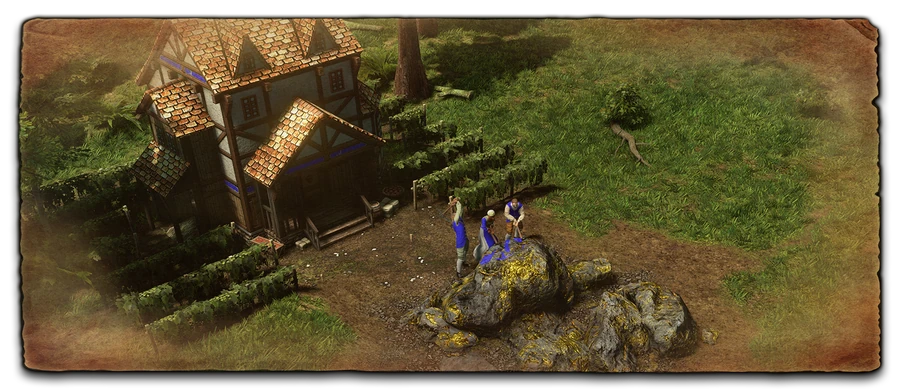
How it works
Settlers gather Coin from mines. Other sources depend on civilization and edition and can include Banks, Estates, shipments, trade effects or automatic production. These alternatives have different setup costs and rates; they do not make mining irrelevant on every map. Coin is also a major part of the cost of many cavalry, artillery and late-game options.
Player decision
Plan Coin gathering around the next unit queue and Age-up rather than accumulating it without a use. Scout nearby mines and protect workers on exposed deposits. If a civilization offers passive or renewable Coin, compare its investment with the match length and use the freed workers on resources that are currently limiting production.
Mines and finite deposits
The standard mine deposits described for Age of Empires III contain different amounts of Coin: Tin Mines hold 1,500, Copper and Silver Mines hold 2,000 each, and Gold Mines hold 5,000. A Settler or another eligible gatherer works a mine by being assigned to it; the deposit is finite and is exhausted as workers collect from it. Deposit size affects how long a site can support an economy, but it does not by itself establish which mine is safest or most valuable: distance from the Town Center, nearby cover, enemy access and the number of workers all affect the practical return. Market improvements and Home City effects can increase gathering, while civilization bonuses may change the rate or provide a different source.
Alternative Coin sources
Mining is the normal direct source, but the game offers several alternatives whose availability depends on map, civilization, card and release. Dutch Banks generate Coin passively after the required investment; Estates and other civilization-specific buildings can provide a long-term income path. Shipments, resource crates, Trading Posts, treasures and special age-up or revolution rewards can add Coin without sending Settlers to a mine. On some maps, Fishing Boats and Caravels can gather Coin from whale spots. Certain special mechanics create deposits: a United States Coal Prospector Wagon can build a Coal Mine worth 2,000 Coin, Berber trade can provide Salt Mines worth 10,000, and a South Africa Revolution route can provide a Diamond Mine worth 100,000. These exceptional deposits are tied to their named mechanics; they are not ordinary map mines.
Whaling and water economies
Whaling lets Fishing Boats collect Coin from eligible sea animals, including Humpback, Beluga and Minke Whales. The source describes each spot as an effectively continuing supply, but only up to four Fishing Boats may gather from one spot at a time. Whaling is slower than mining, so water access is a strategic option rather than an automatic replacement for a rich nearby mine. It requires a usable shoreline, a Dock or naval unit where specified, and protection against raids. Check the map’s actual whale placement and the current unit’s gathering access before assigning a large fleet; an empty coast cannot sustain this plan.
What Coin pays for
Coin appears in the costs of many military units, especially cavalry and artillery, and in a wide range of research and Age advances. Its importance tends to increase as armies move into later Ages and acquire more expensive unit lines. A resource plan should therefore follow the next intended spend: gather enough Coin to maintain the unit queue or reach the chosen Age while preserving the Food and Wood needed for workers, buildings and supporting troops. A large Coin stockpile is not useful if the army cannot afford its Food component or lacks the production building required to spend it.
Managing depletion and worker safety
Because ordinary mines run out, a player who mines continuously should look ahead to replacement deposits. Scout beyond the first mine and note whether the next source lies near the base, along a Trade Route or across an exposed approach. Move a few workers to a new site before the old one is exhausted when the army can protect both; a sudden relocation after depletion can leave the economy idle. In a pressured position, a safer source or passive income can be worth accepting a lower raw rate. Walls, outposts and an escort have their own cost, so compare the defense investment with the time workers will remain at the deposit.
Upgrades and civilization differences
Market research, cards and civilization-specific technologies do not all improve Coin in the same way. Some raise the work rate of mining; others add a trickle, create a new source or change the availability of an economic building. Read the affected source in the technology description: an upgrade for mines should not be assumed to improve Banks, Estates, whales or trade income. Dutch passive production can free workers for Food or Wood, while a civilization without that option generally needs to protect gatherers or use the sources on its map. The best choice depends on the match length, the player’s current bottleneck and whether the alternative income repays its setup cost.
The starting mine is only one part of the economy
A nearby deposit can be the fastest way to reach an early unit or Age cost, but the mine is finite and the workers on it are vulnerable. Count the remaining Coin as part of the plan: if the selected units consume it quickly, scout the next deposit while the current one is still usable. Moving workers before depletion can preserve production, although sending them farther from the base may require an escort or defensive building. A mine’s nominal contents should be compared with the time needed to reach and protect it. A large Gold Mine in the opponent’s territory is not automatically a better investment than a smaller safe deposit at home.
Passive income through Banks
The Dutch Bank is a major alternative to assigning Settlers to mines. The current project data lists a standard Bank at 350 Food and 350 Wood, generating 2.75 Coin per second, with a five-Bank limit and a 30-second construction time. Dutch Merchants construct Banks; other civilizations may gain access through a specific Revolution or card. Passive generation lets workers gather Food and Wood instead, but the building’s up-front cost has an opportunity cost and the Bank can be destroyed. The value depends on how long it operates and whether the Dutch can keep their Villagers and buildings safe. Other passive sources, including Estates and civilization-specific structures, have their own costs and rates and should not be assumed to match a Bank.
Haciendas, Estates and controlled production
Some civilizations can produce Coin from a dedicated economic building rather than relying only on mines. Estates and Haciendas offer different ways to allocate the economy, and the available options vary by civilization, card and release. A building that can switch between resources gives flexibility when a unit plan changes, while a fixed Coin producer is easier to plan but may be less responsive. Check whether the building requires Villagers, a shipment or a specific Age, and how much construction investment it demands. Compare the long-term yield with the Coin that could have been gathered from a protected mine during the same period. Do not add the building’s output to mine gathering in a calculation unless the workers or production slots needed for both can actually be sustained.
Trade Routes, shipments and crates
Trade Routes and Home City deliveries can supply Coin without mining, but their value depends on the rules in effect. A trade post follows the map’s route and may provide a resource or progression benefit; Independence alters Experience-related behavior, so use the mode-specific rules. Resource shipments and crates arrive as a finite addition to inventory rather than a permanent trickle. They can bridge a gap before an Age advance or unit queue, but relying on them for every later purchase leaves the economy dependent on card timing. A plan built around a shipment should include the next income source after the delivered Coin is spent.
Treasures and one-time rewards
Exploration can reveal Coin treasures or a special reward that contains Coin. These deliveries can accelerate an opening because they add resources without a long mining assignment, but the reward is finite and may have guardians or require the Explorer to travel away from the base. Compare the value of a contested treasure with the health and time needed to secure it. The Explorer can collect nearby rewards while scouting the mine line, giving the player information as well as resources. Once a treasure is collected, it does not provide a continuing source; make sure the economy can still afford later Coin expenses.
Choosing workers and protecting income
A mine works best when enough workers can gather without crowding or exposing the whole economy. Assigning every available Settler to Coin can pay for a short military timing, but may stop Town Center production or leave too little Food for the same units. Keep track of the full unit cost, population space and required production building. Against cavalry raids, use nearby anti-cavalry defenders, safe paths and an appropriate fallback point; against siege, consider whether a passive source further from the frontline is safer. If the enemy controls a central deposit, contesting it may be more valuable than mining it immediately. The economic value of a source includes whether workers can remain on it.
A practical Coin budget
Start with the next known expense: a particular batch of units, a technology or an Age-up. Keep the expected Coin cost in view and gather enough to pay it without interrupting the other resource needed for that purchase. If the plan changes after scouting, move workers gradually rather than allowing a large surplus in the resource no longer limiting production. When Coin income exceeds current spending, use the excess for an upgrade or additional unit line only if the Food, Wood, population and production capacity are available. Late-game armies often use more Coin, but this does not make a fixed number of Coin workers correct for every civilization or map.
Comparing documented gathering rates
The source’s baseline-rate table helps compare alternatives. A standard mine yields about 36 Coin per minute per Settler or Villager; Dutch Settlers are listed at 41.4, Coureurs des Bois and Cree Coureurs des Bois at 44.4, and Settler Wagons at 72 before bonuses. Estates and Rice Paddies are listed at 25 per minute per Settler or Villager, 31.25 for a Coureur des Bois and 50 for a Settler Wagon, with a ten-worker cap. A regular Fishing Ship produces about 30 per minute from a whale, with up to four ships per whale. Trade Route posts upgraded to Stagecoach or Trade Cart average about 120 per minute per post, while a Bank is listed at 165 per minute and a Factory at 330. These are reference rates; map, upgrade, civilization, patch and collection conditions may alter what a player actually receives.
Shrines and Japanese income
Japanese Shrines can be assigned to generate Coin automatically. The listed baseline is 6 Coin per minute per Shrine, and the Heavenly Kami card and Toshogu Shrine improve Shrine income. Huntable or Herdable animals tasked to a Shrine also raise its production, so nearby livestock and safe Shrine placement affect its return. A Toshogu Shrine generates 21 Coin, Wood and Food per minute in the source table and increases ordinary Shrine gathering rates by 33%; it can contribute directly while improving the surrounding network. The Porcelain Tower can be set to Coin and generates an Age-dependent rate, listed at 150 per minute in Commerce, 240 in Fortress, 330 in Industrial and 360 in Imperial. These Wonders are not ordinary mine substitutes: they require their civilization-specific access and investment.
Specialized mine buildings
The Ethiopians can place a Mountain Monastery on a mine and collect Coin automatically from that deposit. The source lists its rate at 0.86 per second in the current entry, with an older pre-update value of 0.72; it also prevents enemy Villagers from gathering from that mine while allowing the owner’s Villagers and Abuns to work there. Its mode can be set to Coin alone or Coin together with Influence. The Athos Monastery is another mine-side option available through the Athos Monasteries technology at a Trading Post or a Tambo placed on a House of Phanar palace. It gathers Coin at 0.6 per second and also trains the constructing civilization’s healers. These buildings affect placement decisions because the mine itself becomes a valuable, contested site.
Consulates, Taverns and other trickles
Several buildings supply Coin over time rather than through worker collection. The Japanese Consulate can generate a 0.8-per-second trickle while allied with the Dutch; the source gives this as 48 per minute. Taverns and Saloons are listed at 0.6 per second, or 36 per minute. A German Consulate alliance for the Chinese can grant a late-game trickle upgrade equivalent to Capitalism, and Japanese players can purchase Nanban Trade through a Spanish alliance and retain it after changing allies. These are separate alliance and technology mechanics, not generic Consulate income. A trickle can continue while workers gather another resource, but its rate should be judged against the age, export cost and time needed to obtain it.
Trading Posts and minor civilizations
An upgraded Trade Route can create a substantial Coin stream, with a listed average near 120 per minute per Trading Post. Actual output varies with route length, sites and match conditions. Some Native settlements instead improve gathering from a particular source: Quechua benefits apply to mines, Huron to Fishing Boats, Klamath to all gatherer types, Navajo to all gatherer types and livestock generation, Sufi to all gatherer types, and Udasi to Estates. Mapuche Trading Posts can grant 100 Coin every two minutes the match has lasted, up to 1,500 at 30 minutes in the Fortress Age according to the source entry. These alliances require a Trading Post at the correct settlement and depend on map availability; scouting the actual map determines whether the investment is possible.
Cards that change Coin income
Home City Cards affect Coin in several distinct ways. Capitalism gives Spain, Germany and the Ottomans a permanent 1.25-Coin-per-second trickle in the listed Exploration Age access. Lakota Earth Bounty provides a Coin and Wood trickle, while Sumptuary Laws for China and Japan adds small trickles of Coin, Food, Wood, Export and Experience; the team version stacks with the individual card. British TEAM Wool Staple Ports can raise Coin trickle from Herdables assigned to Japanese Shrines. Other cards improve a gathering rate, add Coin to each later shipment, provide crates, or exchange one resource for another. Before choosing a card, identify whether its benefit is recurring, a one-time delivery, a rate modifier or a conversion; these cannot be compared by the headline Coin amount alone.
Resource exchange and conversions
Some cards or state rewards exchange a stored resource for Coin. Fur Trade exchanges Food at a 1.25-to-1 rate, while the Dowager Express exchanges Export at 1.6 Coin per Export in the listed source. Inca Camayos exchanges current Food for an equal Coin amount. Japanese Red Seal Ship exchanges Coin for Export at 0.83 Export per Coin, and Swedish Oxenstierna Reforms exchanges Coin for Food at 1.25 Food per Coin. Mexican Cerro de Mercado provides 350 Coin and converts Wood at a 1.25-to-1 rate. These are explicit conversion rules tied to the named civilization or card. They can solve a short-term shortage, but spending the source resource may delay buildings, units or technologies that also need it.
Shipments and civilization-specific crates
Coin crate shipments vary by civilization and destination Age. In the standard roster, every civilization can send 300 Coin in the Exploration Age, with 600 and 700 Coin options in the Colonial Age; the Fortress Age 1,000 Coin shipment excludes Spain in the source list. Portuguese and Russian access includes a 1,600 Coin shipment in the Industrial Age, while Ottoman team shipments can send Coin to allies in later Ages. Other nations use mixed-resource crates, deposits into Lombards, an additional Villager or a gathering bonus alongside Coin. Mexican cards include a Coin shipment that improves land Villager mining, and Italian Finance cards deposit Coin into Lombards. The full card description and deck access determine whether a shipment is a one-time boost or part of a larger economic effect.
When to choose a passive source
A passive source is most useful when its continuing output lasts long enough to repay construction, research or export cost. Compare its rate with the workers it frees and the mine income those workers would otherwise collect. A Bank or Factory can generate more Coin over time than a small worker group, but it requires access, resources and protection. A Shrine or Consulate trickle may be lower but can fit into an existing civilization plan. A Treasure Ship in a campaign scenario is a captured objective, not a trainable economy building; its listed generation applies only after the scenario’s capture conditions are met. Always keep campaign-only sources separate from ordinary skirmish access.
Campaign vessels and captured Coin
Some campaigns use a Treasure Ship as a fixed scenario objective. The ship must be captured by defeating the guard force and destroying the relevant outpost; it then produces Coin under that mission’s rules. It is not a normal naval unit, cannot be trained in a standard Dock queue and should not be counted as a universal skirmish income source. Other campaign objects and map-specific rewards can have their own conditions. When a guide mentions a ship that generates Coin, confirm the mission and version before applying that information to a random-map economy.
Use Coin crates efficiently
A Home City Coin shipment arrives at the shipment point in crates that workers must unpack. The source lists crate collection as a fast gathering activity, but the shipment is still a finite amount. Bring workers to the crates when they arrive and return them to their intended resource afterward. In a contested base, keep the workers safe while unpacking rather than leaving them exposed for a small time saving. Mixed-resource crates can be more valuable than Coin-only delivery when Food or Wood is also limiting, while a dedicated Coin shipment is more direct when a specific Age or army queue is blocked by Coin.
Use the source, not its appearance
A gold-colored deposit is only one of several Coin sources, and a named structure may gather, trickle or deliver the resource in different ways. Compare its documented rate, cap, duration and prerequisites before moving workers or spending on an upgrade. A mine runs out; a passive building continues while it survives; a shipment or treasure is a one-time grant; and a conversion consumes another resource. Distinguishing these behaviors helps prevent a short-lived windfall from being mistaken for a sustainable economy.
Resource mix and timing
If a Coin shipment arrives before a planned age-up, reserve the needed amount instead of spending it on optional research. If the army changes after scouting, reassign workers to the resource that now limits the counter units. The economy should follow the current plan.
Check map and civilization access
Before assigning workers, identify the source’s actual map location and whether the civilization can use its listed building, card or alliance. A rate from a special mine or settlement cannot be assumed on another map.
Keep versions separate
The Definitive Edition and earlier releases can differ in rates, access and named cards. Apply the figures above to the stated current profile, and keep campaign-only methods separate from ordinary matches.
Budget the next purchase
Reserve enough Coin for the next unit group or technology before shifting workers elsewhere. Reassess that budget after each shipment or mine depletion.
Summary
Protect income and time upgrades.
Finite mines and renewable water income
The four standard mine appearances are Tin, Copper, Silver and Gold, with different amounts of Coin in each deposit. Villagers and other eligible gatherers mine a deposit until it is exhausted; Market upgrades and civilization-specific shipments can improve the work rate. Special sources can extend access: United States cards can provide Coal Prospector Wagons, a Berber alliance can make Salt Camel access available, and the South Africa Revolution can provide a Diamond Prospector Wagon. These are faction- or shipment-specific options, not ordinary mine spawns. At sea, Fishing Boats can gather from whale spots, which are renewable; up to four boats can work a single spot at once. Whaling is slower than mining an available land deposit, but can sustain Coin after mines are depleted. Canoes and Marathan Catamarans gather from whales more slowly than other fishing ships. Choose between mines and water by comparing travel distance, safety, gatherer limits and whether the match is likely to outlast nearby deposits.
Make gathering match the next purchase
Coin is often the limiting cost for Cavalry, artillery, advanced research and Age advancement, but assigning every available Villager to mines can leave Food or Wood too low to use the Coin. Check the next unit batch and technology before moving workers, then maintain enough complementary income to keep production active. If a mine is exposed, a nearby Outpost or army escort can protect the workers; when its remaining stock is low, prepare the transition before the final Coin is collected. Passive buildings such as Banks, Estates or civilization-specific alternatives require their own investment and do not have identical rates, limits or access. Compare their payback with the expected match length. Trade Route income, crates, Treasures and Home City shipments are intermittent or map-dependent additions, while a mine is a finite gathering site. Treat each source according to its actual duration and rules instead of counting every source as equivalent steady income.
Resource for advanced units and technologies
Coin is one of the core resources in Age of Empires III. It commonly pays for advanced military units, artillery, upgrades and age advancement, making it a frequent bottleneck once the first army is established. Villagers collect Coin from mines or civilization-specific sources such as Estates, Banks, Lombards and shipments. The exact buildings and gathering rules vary, so follow the civilization entry for its economic system.
Plan mining and long-term income
Mines provide finite access to Coin and can be exposed far from the base. Secure nearby mines, use safe drop-off points and move workers when a site is depleted or threatened. Estates and other infinite sources usually require a larger Wood or Coin investment but can support a long game. Keep enough Coin for the army’s next production batch before spending it on optional upgrades; a technology that delays the counter unit can cost more than its resource price.