Caravel
The Caravel is a Portuguese warship that combines naval combat with transport utility. It is available earlier than the heaviest ships and can help protect fishing or contest a route across water.
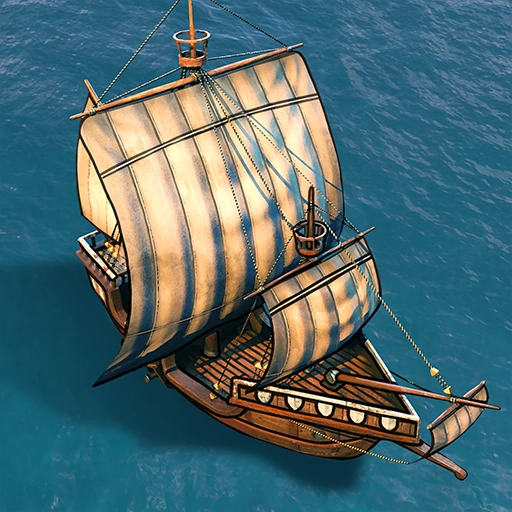
Recorded values
- Available
- Commerce Age · European Dock (Europeans and Indians) ; Port (Ethiopians)
- Training
- 40 sec · 40 XP per train
- Durability & mobility
- 800 hit points · 50% ranged resistance · 8.5 speed · 26 line of sight
- Ranged attack
- 75 base damage · range 20 · attack interval 2.0 · area of effect 1 · bonus damage: 0.5x vs. Artillery
- Broadside attack
- 50 (2) base damage · range 20 · attack interval 0.05 · area of effect 1 · bonus damage: 2.0x vs. Ship
- Long-range attack
- 100 base damage · range 40 · attack interval 20.0 · area of effect 4 · bonus damage: 6.0x vs. Building; 0.5x vs. Artillery; 0.2x vs. Villager · requires Gunboats card
- Ability
- Transports land units; Gathers from fishes and whales
Role & counters
Caravels are built at the Dock and can carry land units. Their value depends on a connected water objective; a ship does not solve a land fight by itself. Naval access and ship balance vary by map and edition.
When to field it
Use one to protect a fishing economy, move troops across a coastal gap or scout an approach. Add naval production only when the map’s water can repay the investment, and escort transports during a crossing. Keep a fleet near the shoreline if enemy ships can interrupt gathering.
Availability and naval profile
The Caravel is a Commerce Age military ship available to most European civilizations, the Indians, and Ethiopians who select the Portuguese Alliance. The Ottomans use the Galley instead, while the Maltese have the Order Galley. It costs 300 Wood and 100 Coin, takes 40 seconds to build, and has a standard limit of five; the Ethiopian Portuguese alliance limits its Dock production to two. The ship has 800 hit points, 50 percent ranged resistance, speed 8.5, and carries up to 50 land units. Its ordinary ranged attack deals 75 damage at range 20 every two seconds, with half damage against Artillery. A Caravel is fast and versatile for its cost, but weaker in durability than major warships. On many water maps the player begins with one, so the first task is to use that free ship rather than leave it idle near the Dock.
Scouting, transport, and fishing
A Caravel can scout coastlines, transport Villagers and soldiers, gather Food from Fish, and gather Coin from Whales. Its gathering rates are 0.67 Food per second from Fish and 0.5 Coin per second from Whales. This gives the ship value even when it is not fighting: it can reveal shore approaches, move a force between land areas, or contribute income on a water map. The hold capacity of 50 allows it to carry a large expedition, but a full transport is a valuable target and should not sail alone into enemy warships. Unload at a safe shore where troops can move toward their objective. A Caravel can also withdraw to a Dock for repairs, and its modest hit point pool makes repairing it more practical than losing it. Keep track of the ship's current job so that a transport does not drift away from the army or a fishing vessel does not become trapped near enemy defenses.
Naval combat and abilities
The Caravel's regular cannon is useful against other ships but deals reduced damage to Artillery. Its Broadside Attack fires two 50 damage shots at nearby targets and has a 60 second cooldown; each shot deals double damage against Ships. This ability can swing a short naval exchange, so use it when an enemy vessel is in range and cannot retreat immediately. Some Finnish revolutions can unlock Long-range Bombardment Attack through the Gunboats Home City Card. That ability fires a 100 damage shell at range 40, has an area of effect four and a 90 second cooldown, and can only target Buildings. It deals six times damage to Buildings but reduced damage to Artillery and Villagers. Because the ability has a long cooldown and a narrow target role, save it for a valuable coastal structure rather than an ordinary ship. Asian civilizations can also obtain a Caravel and Petards through the Portuguese Consulate's Exploration Fleet technology.
Weaknesses and fleet support
Caravels are vulnerable to stronger ships of the line such as Galleons, Frigates, and Monitors, as well as defensive fire from Town Centers and upgraded Outposts. Artillery or even a concentrated group of land units can destroy one that remains within range. Use speed 8.5 to scout and reposition, but retreat when a larger fleet can focus fire. A Caravel is most effective when heavier allies absorb attention and it contributes its fast regular attack from a safer angle. It can harass Fishing Boats and weak coastal positions, but it should not try to fight a fortified harbor alone. If carrying troops, keep the transport away from combat until the landing is ready. On a water map, the starting Caravel can establish early vision and gather while the player builds a stronger navy; its flexibility makes it useful, but its low durability sets a clear limit on how aggressively it should be used.
Practical investment choices
The Caravel's low resource cost makes it tempting to produce in numbers, but its population and Dock time still compete with other ships. Build it when scouting, transport, or fishing is useful, and add heavy warships when the opponent commits to naval combat. A single Caravel can deliver a small raiding force or secure a fishery; several can coordinate transports and harassment, but they remain vulnerable to focused fire. Use the two-shot Broadside when the target is a ship and the long-range ability only when a structure justifies the cooldown. If the sea is uncontested, the ship's gathering and transport roles may be more valuable than its combat damage. If the sea is controlled by the enemy, protect it behind the fleet or keep it in port until a safe task is available.
Water map opening
On a water map, check the starting Caravel immediately and assign it a specific task. It can scout the coastline for safe landings, escort Fishing Boats, collect Fish or Whale income, or carry an early group across a channel. The best task depends on whether the opponent has naval production nearby. If no enemy ships are visible, keep the Caravel moving and use its line of sight to reveal docks and shoreline defenses; if a Galleon or Frigate appears, retreat toward friendly ships or a Dock. Do not forget a Caravel that has been ordered to fish, because a working ship can be caught by a patrol. A damaged vessel can often be repaired at a Dock and returned to scouting or transport, preserving the original investment.
Small warship for exploration and transport
The Caravel is a small, maneuverable ship useful for exploring water, fishing and transporting units. Its mobility and lower commitment make it practical for early naval presence, while its cannon attack can defend a landing or fishing area. A Galleon is more durable and can train units aboard, but the Caravel can deliver strong cannon damage in the appropriate comparison. Use the ship for a clear water objective rather than sailing it alone into a larger fleet.
Protect fishing and choose a safe landing
Caravels can support a transport route or escort fishing boats, but concentrated warships and coastal defenses can destroy them. Scout the water before committing resources, keep other ships nearby and avoid pausing in enemy firing range while transporting troops. Their value depends on map access: on land maps, those resources usually strengthen the ground army more. Use a Caravel to control a route or support a landing, then withdraw when the opponent adds heavier naval units.