Dragoon
The Dragoon is Fortress Age light ranged Cavalry: a fast gunpowder horseman that attacks from range and is designed primarily to counter heavier mounted units. The standard profile costs 90 Food and 90 Coin, takes 38 seconds to train, uses two population slots, and has 200 hit points with 20% ranged resistance in Definitive Edition; the older release used 30% ranged resistance. It moves at speed 7.25 and has 15 Line of Sight. Its ranged attack deals 22 damage at range 12 every three seconds. The ranged attack receives a 3.0 multiplier against Heavy Cavalry, a 2.25 multiplier against Hand shock troops, and a 2.0 multiplier against Artillery, while dealing half damage to Villagers. Its melee attack deals 11 damage at a 1.5-second rate, with the same strong bonuses against Heavy Cavalry, Hand shock troops, and Artillery; its siege attack is only 9. Exact values can vary by civilization, patch, card, age upgrade, and Dragoon variant. The unit’s central strength is the combination of speed, range, and counter multipliers: it can threaten Cavalry, disengage from slower melee riders, and punish artillery if it reaches the guns. Its weaknesses are cost, limited siege output, and vulnerability to Skirmishers and other ranged Infantry that receive bonus damage against it. A Dragoon is therefore a mobile specialist, not a substitute for every kind of Cavalry or Infantry.
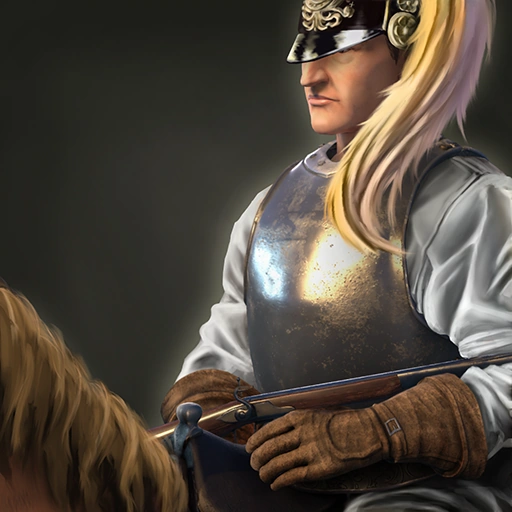
Recorded values
- Training
- 38 sec · 2 population · 18 XP per train
- Durability & mobility
- 200 hit points · 20% ranged resistance · 7.25 speed · 15 line of sight
- Hand attack
- 11 damage · 1.5 attack interval · bonuses: 3.0x vs. Heavy cavalry; 2.25x vs. Hand shock trooper; 2.0x vs. Artillery
- Ranged attack
- 22 damage · 12 range · 3.0 attack interval · bonuses: 3.0x vs. Heavy cavalry; 2.25x vs. Hand shock trooper; 2.0x vs. Artillery; 0.5x vs. Villager
- Siege attack
- 9 damage · 6 range · 3.0 attack interval
Role & counters
Keep Dragoons at the edge of combat and choose a target their multipliers favor. Against Heavy Cavalry they can shoot from range and then move away before a melee charge connects. They are about half a speed point faster than most melee Cavalry, making that retreat possible if the player watches the approach and does not let the unit become surrounded. Their mobility also permits a flank against artillery; when the guns are exposed, closing into melee can be especially effective because the Dragoon receives bonus damage against Artillery. Do not leave them in melee with ordinary Infantry or send them to attack buildings: their siege damage is very low, and their expensive two-population profile loses value when used on an unsuitable target. Skirmishers and foot archers are dangerous because their anti-ranged-Cavalry bonuses can overcome the Dragoon’s speed if the horsemen are trapped or forced into a direct exchange. Musketeers can also counter Dragoons, but their shorter range usually makes them less threatening than dedicated Skirmishers. A mixed army helps solve this problem: keep Dragoons behind durable Heavy Infantry, add Skirmishers to fight enemy ranged Infantry, and use artillery or siege units for structures. The Dragoon then performs the tasks that the rest of the army cannot do as safely: intercept cavalry, threaten exposed guns, and chase or disengage when the battle changes. Its 0.5 ranged multiplier against Villagers reduces its direct damage to workers, but its speed can still make it a useful raider when it finds isolated targets. Withdraw before town-center fire or a defensive force turns that raid into an expensive loss.
Training & availability
Most Dragoons are trained at a Stable after the player reaches the Fortress Age; some civilizations or campaign scenarios also provide access through a Fort, Galleon, Steamer, Home City Card, revolution, or scripted force. The standard European line is available to British, French, Italians, Portuguese, and Spanish, as well as Mexicans; each civilization can have separate cards, upgrades, or production timing. Portuguese players can obtain Dragoons earlier in the Commerce Age by sending the TEAM House of Aviz Home City Card. The Order of Aviz card adds four points to Portuguese Dragoon range and Line of Sight, changing how safely they can control distance. Portuguese Dragoons can take the Royal Guard upgrade and receive the Dragoon Combat card for additional hit points and damage. The British can also build toward a 30% improvement, but that result uses three separate Home City Cards: Cavalry Damage, Cavalry Hitpoints, and Cavalry Combat. Spanish Dragoons have a Cavalry Combat card worth 15%; the Missionary’s Unction effect can further raise their damage. Age upgrades and civilization-specific research must be confirmed for the current release. The Dragoon’s standard bonus against Hand shock troops changed from 2.75 to 2.25 in Definitive Edition, and the unit’s ranged resistance changed from 30% to 20%, so older guides can describe a tougher Dragoon with stronger anti-shock damage. Portuguese, British, Danish, and campaign-specific upgrade routes can also produce different final totals; do not compare fully upgraded units without matching their cards and version. Promotion cards add another condition: the Danish Order of the Elephant lets Dragoons earn Defence Promotion ranks by defeating enemy military units, up to three ranks, while a Polish revolt to the Duchy of Warsaw creates Krakuses and enables Skill Promotion. These promotions reward preserving units that have already won fights, but are not part of every civilization’s normal Dragoon progression.
When to field it
Build Dragoons when the opponent’s composition includes substantial Heavy Cavalry, or when mobility is needed to defend multiple routes and punish exposed artillery. Their Fortress Age timing makes them a response to heavier mounted armies rather than a universal opening unit. If the enemy invests in Skirmishers, foot archers, or Musketeers, add another unit type and avoid direct trades. Keep the expensive cavalry in a group large enough to threaten its intended target, but split only when each detachment can still escape. Against artillery, look for a safe approach and use the Dragoon’s ranged and melee bonuses rather than leaving it under gunfire. Against Settlers, use surprise and an open retreat path; their reduced damage multiplier makes a prolonged raid inefficient. Before sending a civilization-specific shipment or changing age, confirm whether it unlocks normal production, sends a fixed group, changes the unit into a named counterpart, or merely improves existing Dragoons. Each has a different effect on the army after the first engagement.
Practical direction
Civilization differences make the Dragoon’s role more varied than its standard profile suggests. The Dutch normally use Ruyters instead of Dragoons, but a Dutch revolt to Brazil can unlock Dragoons after the Guard of Honor Home City Card is sent. The Inca can use Tupac Rebellion to turn Bolas Warriors into Veteran Dragoons. Ottomans and Russians ordinarily field Cavalry Archers instead; Swedes use Hakkapelits. The Ottomans can obtain Dragoons through the Romania revolution after sending Roșior Dragoons. Russian Counter Dragoons are a special shipment and upgrade path: St. Petersburg Dragoons sends nine Guard Counter Dragoons and replaces Cavalry Archer Home City shipments with that unit; the Counter Dragoon also has additional damage against Light ranged Cavalry. The United States in Act III of the campaign can upgrade Dragoons to Imperial, which is a scenario-specific option rather than a standard skirmish access rule. These substitutions matter when reading an opponent’s army: the faction’s usual mounted unit may fill a similar role but use different bonuses and cards. Revolutions can replace or modify the Dragoon directly. Prussia and the German Confederation field Litauer Dragoons, which replace War Wagons or Prinz Chevaulegers in relevant production and map sources. They have one more point of ranged attack range and reduced hit points, and their melee rate of fire is slower. The Duchy of Warsaw fields Krakuses: Guard Dragoons with Skill Promotion and reduced hit points, replacing Cavalry Archers in the listed sources. Brazil’s Independence Dragoon is a Dragoon upgrade that uses a lance for a stronger melee attack but loses the standard melee damage multipliers; the Guard of Honor card gives access to the upgrade and controls whether it can be trained for Dutch or Portuguese revolutions. Romania’s Roșior Dragoon trades some durability for attack and speed: it has 15% more attack and 10% more speed but 15% fewer hit points. On revolting to Romania, one can appear at each Outpost or Blockhouse built by the player, and the Roșior Dragoons card can provide more. Those tradeoffs make the Roșior useful for rapid pressure but increase the risk of losing it to concentrated fire. Consulate and expedition units are related versions, not standard stable production. Portuguese Legion Dragoons—called Jinetes before Definitive Edition—start with 10% more hit points and damage. Indians and Japanese can receive Portuguese Legion Dragoons through the Portuguese Brigade expedition. Maltese Commanderies can train Order Dragoons, and The War Minister shipment can send five; this unit uses the Guard Dragoon model and French Dragoon dialogue, despite its Portuguese-style name and role. Counter Dragoons are another counterpart, with their own automatic age upgrades and Consulate access: Chinese players can receive them by allying with Russia, while Russian and Swedish routes can be connected to the Finland revolution. A Consulate Guard Dragoon starts with 10% more hit points and damage but trains 65% more slowly than the ordinary Dragoon. Haudenosaunee can obtain a shipment through Canadian Loyalists; Poles through Mirów Dragoons; the United States through Armand’s Legion, which also permits Fort training. Canada and Argentina have related Home City Card access. These routes are limited by ally, revolution, shipment, or campaign and should not be represented as general Dragoon availability. Upgrade tiers and cards determine the value of keeping Dragoons in the army. Veteran, Guard, and Imperial research raises their hit points and damage, but the exact available tier and cost depend on civilization and named counterpart. Portuguese cards can extend range and improve combat statistics; British improvements are distributed across Cavalry Damage, Cavalry Hitpoints, and Cavalry Combat rather than a single card. The Danes’ Defence Promotion raises hit points after kills, while the Duchy of Warsaw’s Skill Promotion increases range and rate-of-fire performance as ranks are earned. A Home City shipment can be worthwhile when it delivers a complete unit group immediately, whereas an upgrade is more valuable when continued production will use the improved stats. The source article’s final-stat examples assume fully upgraded civilizations and effects, so they should not be treated as the base Dragoon’s damage. Always compare like with like: same game version, same age, same cards, same civilization, and the same unit counterpart. Portuguese, British, and Spanish cards can produce markedly different Dragoon profiles. TEAM House of Aviz is the Portuguese route that permits Commerce Age Dragoons; Order of Aviz adds four range and four Line of Sight, giving the unit more room to fire before closing. Dragoon Combat raises Portuguese hit points and damage by 20%, and Portuguese Dragoons can receive the Royal Guard upgrade. The British have a comparable total improvement of 30%, but it is distributed among Cavalry Damage, Cavalry Hitpoints, and Cavalry Combat cards, so the player must commit several shipments rather than rely on one. Spanish Dragoons receive a 15% improvement from Cavalry Combat, and the Missionary’s Unction effect can further increase their damage. The source’s fully upgraded examples list Portuguese or British Dragoons at 52.8 ranged damage and 460 hit points, while Spanish Dragoons under Unction reach 60.5 ranged damage and 430 hit points. Those figures are end-state illustrations, not base statistics: they combine civilization access, upgrades, and card effects. When assessing an enemy Dragoon, use the visible model, civilization, and current upgrades instead of assuming the standard 22 ranged damage. Promotions also give two civilizations a way to improve surviving Dragoons through kills. The Danish Order of the Elephant Home City Card grants a Defence Promotion: each eligible military victory increases hit points, with Bronze, Silver, and Gold ranks providing 5%, 10%, and 15% respectively, to a maximum of three defeated enemy units. The Poles can revolt to the Duchy of Warsaw, where the Dragoon becomes a Krakus and can gain Skill Promotion. The three ranks add range and reduce the attack interval: Bronze adds one range and reduces rate of fire by 5%; Silver adds one range and reduces it by 15%; Gold adds two range and reduces it by 25%. In this context, a lower rate-of-fire interval means the unit attacks more frequently. These promotion systems reward keeping veterans alive, but they are tied to the card or revolution and are not ordinary age upgrades shared by all civilizations. Several versions replace the Dragoon while preserving its broad mounted ranged role. The Portuguese Legion Dragoon is named Jinete before Definitive Edition and starts with 10% extra hit points and damage; the Portuguese Brigade Consulate shipment can provide eleven. The Counter Dragoon also begins with 10% additional hit points and damage and has its own automatic age progression. Russians can receive nine Guard Counter Dragoons through St. Petersburg Dragoons, which also changes later Dragoon-type shipments from Cavalry Archers to Counter Dragoons and gives them a 1.2 bonus against Light ranged Cavalry. Chinese players can gain Counter Dragoons through Russian Expeditionary Company or Army shipments at the Consulate. The Consulate Guard Dragoon is another counterpart: it starts stronger, but trains 65% more slowly. These shipment counts and access conditions matter because they determine whether a player can reinforce the mounted line continuously or only receive a limited force. The revolutionary forms also change how the unit should be positioned. Litauer Dragoons are associated with Prussia and the German Confederation and replace other mounted units in the listed production sources; compared with Guard Dragoons they exchange durability and melee attack speed for extra ranged reach. Krakuses are Guard Dragoons whose Skill Promotion improves their firing profile at the cost of hit points. Brazil’s Independence Dragoon uses a lance for its hand attack; unlike the ordinary Dragoon, it does not rely on the usual melee damage multipliers. Romania’s Roșior Dragoon gains attack and movement speed but loses hit points. The Romanian revolution also places a Roșior Dragoon at each qualifying Outpost or Blockhouse already built, and the Roșior Dragoons card can send more. This means building the relevant infrastructure before revolting can matter to the transition, while the reduced durability argues for avoiding stationary fights afterward. The unit’s name and presentation reflect a wider cavalry history, although its in-game role is specifically defined by its ranged attacks. The Dragoon icon shows a rifle, but the standard unit uses a dragon firearm; early concept art and some counterpart icons instead depict a rifle. Portuguese Royal Guard and Consulate Dragoons were called Jinetes before Definitive Edition, a name connected with the Portuguese Legion; the Wiki notes that the Portuguese form would be Ginete. Danish Royal Guard Dragoons reference the Jydske Dragonregiment, while the Polish Krakus reflects the Krakusi cavalry tradition. Romanian Roșiori historically used sabres or lances, even though their game unit is represented as ranged cavalry with a pistol. These historical references explain why counterpart models, names, and weapons do not always match the standard Dragoon exactly. In actual play, prioritize their listed stats and attack bonuses over the visual equipment. The standard profile also gives 18 experience for training and 18 experience when the unit is killed, and its two population slots make losses more expensive than those of ordinary Infantry. This is another reason to avoid using Dragoons as disposable scouts: they can reveal a route and then fall back, but should not be sacrificed merely to confirm an enemy position. Their ranged resistance protects them from ranged attacks, not from every source of damage, and the Definitive Edition value is lower than in the original release. A comparison between an original-era Dragoon and a current one should therefore account for both the resistance change and the revised anti-Hand shock multiplier, rather than attributing the difference to a civilization card. Several named models also refer to historical formations beyond the generic European horseman. The Portuguese Jinete name in older releases is linked to the Portuguese Legion; Definitive Edition uses Legion Dragoon for the counterpart. The Russian Consulate Dragoon model was revised in update 14.43676 to resemble Russian dragoon uniforms from 1805–1807. Before that change, the earlier Kalmuck name was likely an allusion to a Kalmyk cavalry regiment that fought in the Napoleonic era. The United States Armand’s Legion shipment refers to Charles Armand Tuffin, a French officer who led cavalry during the American Revolutionary War. Danish Royal Guard Dragoons take their name from the Jydske Dragonregiment, and the Polish Krakus represents the Krakusi cavalry tradition. These are presentation and historical references attached to specific variants, not proof that every variant has the same equipment or battlefield statistics. The Dragoon remains most reliable when its movement is used deliberately. A player who keeps the unit on attack-move in the middle of a large fight may lose the distance needed to kite; manually select a target, fire, and retreat when a melee unit closes. Against artillery, move in only when the guns are exposed or occupied, since the approach can put the cavalry inside the enemy army’s range. When defending several resource sites, small groups can move quickly between threats, but splitting too far reduces the multiplier damage needed to remove Heavy Cavalry. For an attack, hold Dragoons behind the main line until the opponent commits its cavalry, then focus fire the mounted threat. When the enemy responds with Skirmishers, preserve the Dragoon group and let the army’s own anti-infantry units answer. This use of movement and target selection is what turns the unit’s range into an advantage rather than simply placing an expensive horseman at the edge of a formation.
Ranged cavalry and anti-cavalry duty
Dragoons are mobile ranged Cavalry intended to control other mounted units and support an army that needs to reposition quickly. Their speed lets them screen Skirmishers and artillery, punish exposed Cavalry and withdraw before slower infantry can close. They are not a substitute for Heavy Cavalry: their ranged attacks and target bonuses define a different role, and they can be vulnerable to units designed to counter ranged Cavalry. Keep them moving around the edge of a fight, focus fire on mounted threats, and avoid trading them into massed Skirmishers or buildings.
Population, cost and civilization variants
A Dragoon commonly uses more population and a mixed Food-and-Coin budget, so sustained production can compete with artillery and age advancement. Exact cost, range, attack, resistance and multipliers vary by civilization, upgrade and version; use the stat panel for the relevant faction instead of importing another Dragoon’s numbers. Some civilizations field named variants or Royal Guard versions with changed statistics and cards. Add Dragoons when scouting reveals cavalry or when the army needs mobility, then combine them with infantry that can engage enemy ranged units. Their speed is most useful when the player has room to maneuver and a safe reinforcement route.
Micro and battlefield positioning
Keep Dragoons behind a durable front line and use their movement to refuse a bad engagement. Focus on enemy Cavalry rather than spreading damage across the formation. If the opponent commits to anti-ranged Cavalry counters, withdraw and redirect resources into infantry, artillery or siege. Dragoons can raid isolated Villagers, but defensive buildings and limited siege make them poor choices for a direct base assault. Their best contribution is often preventing enemy Cavalry from reaching friendly guns and ranged infantry.
Definitive Edition resistance and bonus changes
The current Dragoon has 20% ranged resistance; before the Definitive Edition it had 30%. Its hand and ranged attacks currently use a 2.25× multiplier against Hand Shock Troops, compared with 2.75× before Definitive Edition. The change affects both attack modes, so older counter tables overstate the Dragoon’s damage against this target. Its current 3.0× bonus against Heavy Cavalry and 2.0× bonus against Artillery remain distinct matchup values and should not be confused with the historical Hand Shock Troop modifier.