Hussar
The Hussar is the standard European melee Heavy Cavalry in Age of Empires III and a central mounted unit for civilizations that do not replace it with a regional alternative. It reaches vulnerable targets quickly, deals strong hand damage and has the largest hit point pool among the basic cavalry described in the Wiki. Its straightforward profile makes it useful for early raids, screening, pursuit and flanking, while its population cost and resource demand make careless losses expensive. A Hussar is not a universal answer to every infantry unit: Heavy Infantry, Light ranged Cavalry and Ranged Shock troops can punish a direct charge. The unit is strongest when it can choose its approach, reach fragile targets, then withdraw before the opponent forms a counter line.
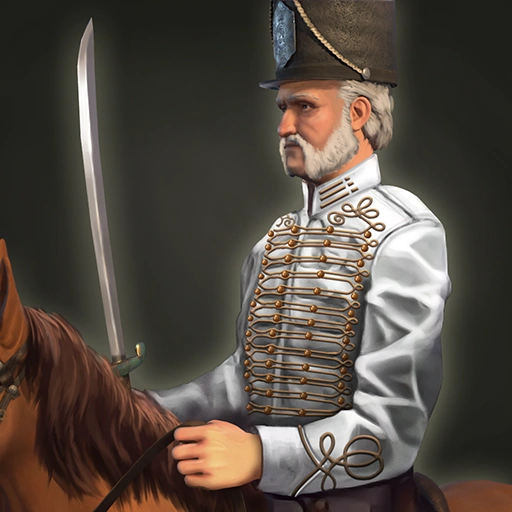
Recorded values
- Training
- 40 sec · 2 population · 20 XP per train
- Durability & mobility
- 320 hit points · 20% ranged resistance · 6.75 speed · 15 line of sight
- Hand attack
- 30 damage · 1.5 attack interval
- Siege attack
- 20 damage · 6 range · 3.0 attack interval
- Trample attack
- 20 damage · 2.0 attack interval
Role, cost & combat profile
A standard Hussar is available in the Commerce Age. It costs 120 Food and 80 Coin, takes 40 seconds to train and uses two population. It has 320 hit points, 20% ranged resistance, movement speed 6.75 and line of sight 15. The hand attack deals 30 damage at a 1.5 second interval. Its trample attack deals 20 damage over an area of 3, with a 2.0 second interval; the ordinary siege attack deals 20 damage at range 6 every 3.0 seconds. Training or defeating one grants 20 experience. The combination of two population and 320 hit points gives it more staying power than a fragile raider, but the price is 200 total resources and an entire population slot for a single unit. Its hand attack is its key way to damage units; use the trample area when several targets are close enough to benefit, rather than assuming that every attack automatically hits a group. Range 6 on the siege attack lets it contribute against structures when the field is clear, but its siege damage does not replace artillery against a defended building.
Raiding, army use & unit history
The Stable is the normal land production building. A Fort can also train Hussars, while some naval or special production routes offer the unit in specific civilization lists, including Galleons and the Dutch Fluyt. The Hussar is used by the United States and most European civilizations, but it is replaced in several rosters: Germans use the Uhlan, Ottomans use the Deli, and Russians use the Cossack. John Black’s Mercenaries use the Uhlan in Act II: Ice. These are not just alternate names for the same army plan: their cost, population, bonuses and shipment links can differ. Check the selected civilization and scenario before assuming the ordinary Hussar is trainable. A Royal Guard or special Hussar variant also has its own card or upgrade context; the generic baseline remains the reference for the unit shown here. Civilization and map technologies can improve health, damage, resistances, speed, sight, cost or training time. The source lists health bonuses such as Cavalry Cuirass and Comanche Horse Breeding at 10%, and Cree Tanning, Navajo Weaving and Tar Kilns at 5%. Yoga adds 5% attack, while Pillage improves the siege multiplier against buildings and Wind Horses reduces the attack interval. Apache Endurance and Comanche Mustangs each improve speed by 5%; Wind Horses also lists a flat speed bonus. Town Watch adds 3 line of sight. Sudanese Quilted Armor improves hand resistance, while Pancerz improves ranged resistance. Several map or civilization effects lower Coin cost or shorten cavalry training; these effects are conditional and do not all appear in a standard deck. Confirm the technology name, civilization and affected source before counting an improvement in a build plan.
Availability, upgrades & related cavalry
Hussars are particularly effective against Light Infantry, counter-skirmisher units and Artillery. Their movement speed lets them cross ground that slows foot troops, threaten ranged units in melee, and punish an unguarded cannon before it can reposition. They also pressure Settlers because workers cannot withstand a sustained mounted attack. Use a small group to raid a resource line, force workers to garrison, and then escape; the economic interruption can be valuable even if the Hussars do not destroy every target. Conversely, Heavy Infantry, Light ranged Cavalry and Ranged Shock troops are listed counters. Do not leave Hussars trading in front of a massed anti-cavalry line, and do not chase ranged Cavalry that can fire while retreating. Pair the cavalry with Infantry that can confront those counters: the Hussars can circle toward exposed artillery or workers while the foot army controls the center. Against early artillery, speed can close the distance, but moving through a prepared screen can cost the entire force. Scout the escort and choose a flank. In late-game battles, Hussars are less often the main damage unit. Massed Musketeers or Dragoons can deliver enough fire to weaken them before they reach hand range, and the Hussar lacks the broad area attack and raw melee strength of the Cuirassier against a large group of vulnerable Infantry. It can still soak initial artillery or Skirmisher fire, cover a flank, finish a damaged group or remove expensive siege pieces. The correct role depends on what the opponent is producing, not on the Cavalry label alone.
Matchups and timing
Start the Hussar queue as soon as the Stable completes if the opening plan depends on mounted pressure, then add additional units as Food and Coin arrive so the first group finishes together. A queue reserves resources and begins training earlier; waiting until a full group is affordable can delay the timing. At the same time, avoid committing the entire economy to cavalry if the opponent can field a counter before the first raid reaches its target. Send the first Hussars to scout the edge of the enemy base, find an exposed gathering site and test whether the opponent has Pikemen or other Heavy Infantry in position. If the route is open, attack workers or ranged units and leave before a larger force can trap the cavalry. If the entrance is guarded, do not feed Hussars into a narrow choke: keep them alive to threaten a different route or support the main army. The source notes that a raid of about ten Hussars can be enough to threaten a worker line, but the best group size depends on the target, upgrades, garrison access and opposing response. Even a smaller force can force a Town Center garrison and interrupt gathering; a larger group may be needed to overcome a protected location. Treat a forced garrison as temporary economic pressure, not guaranteed worker kills. The Wiki raiding example estimates that a standard Hussar needs seven hits to defeat a Settler with the listed protection and recommends roughly ten Hussars as a practical group for a worker-line raid. Treat this as an estimate for the described matchup, not a fixed kill count: worker hit points, civilization bonuses, upgrades, garrison range and return fire all affect the result. A smaller detachment can still interrupt gathering or force an opponent to respond, while a larger group is more likely to overwhelm a protected route but costs more population and leaves fewer units for the main army. Scout first, choose an exit route, and do not trade the group for workers if the opponent has already garrisoned and organized a counter. A garrisoned Settler also enables a Town Center to attack, so check whether the enemy structure can fire before lingering near its range. Hussars are not dedicated siege units, but they can attack a building when no better target is available. Their listed siege value is 20 damage at range 6, so they can contribute during a push after defenders have been cleared. Pull them away if artillery, Towers or a production building can focus them; preserving the force for another raid is often more useful than trading it into a structure. They can also construct military buildings when that worker function is provided by a related unit or civilization feature, but an ordinary Hussar should be used as cavalry, not mistaken for a Settler. In an army, keep Hussars separate from slow artillery or infantry until the engagement begins. A control group on a flank can threaten the back line and draw enemy fire, while the main infantry formation keeps the opposing anti-cavalry units busy. If the cavalry is sent in first, the defender can focus it down before the rest of the army arrives. If it is held too long, the opponent may stabilize behind buildings and artillery. Time the charge after the frontline is occupied or when an exposed cannon creates a clear opportunity. The Spanish can strengthen Hussars through Unction, giving them a meaningful combat damage increase when Missionaries support the army. This is a civilization-specific interaction and should not be assumed for other European factions. The source also records a Danish Defence Promotion through the Order of the Elephant card. Promotions and Home City effects can alter the health or other attributes, so compare the displayed in-game values with the standard baseline before applying an old guide. Cards that lower cavalry training time or change Hussar statistics may be civilization-specific or map-dependent; an upgrade name in an improvement list does not mean every player can research it. In version comparisons, Hussar is formally Heavy Cavalry in the final classification even though some legacy descriptions call it Light Cavalry. The term Light ranged Cavalry describes ranged mounted units such as Dragoons and Cavalry Archers; it is a separate class and not a correction to the Hussar’s melee role. Development-era descriptions used the old name differently, which explains older text that groups Hussars with Cossacks, Uhlans, Stradiots or Kanya Horsemen as light cavalry. Use current class tags and bonus multipliers when evaluating a match-up. Royal Guards and regional variants use different names and historical presentation. The British Life Guards identity, German Hussar model changes and Danish Royal Guard presentation are cosmetic or civilization-specific context; they do not alter the standard 320 hit point baseline stated above. The core decision remains simple: build Hussars when mobility, raids, anti-Light-Infantry pressure or an artillery flank helps the current plan, and support them against the Heavy Infantry and ranged Cavalry that can defeat a head-on charge. The European upgrade chain further defines the unit’s timing. Veteran Hussars are a transition research costing 200 Wood and 200 Coin for a 20% increase to hit points and damage. Guard Hussars follow in the Fortress Age for 600 Wood and 600 Coin, adding 30% and requiring the Veteran upgrade; only the listed civilizations can take it. Britain has the Life Guard path, which produces King’s Life Guards and gives a further 10% to hit points and damage over Guard Hussars after the Veteran prerequisite. These investments are strongest when Hussars remain a major part of the army. If only a small group is used to raid, the same Wood and Coin may be more valuable in artillery, Infantry or economic upgrades. Check which rank the selected civilization actually offers, because one faction’s Royal Guard name cannot be assumed for another. The Danes have an additional card-based promotion. Order of the Elephant enables a Defence Promotion when Hussars defeat enemy military units; it can stack through three ranks, granting +5%, +10% and +15% hit points at Bronze, Silver and Gold respectively. This is a combat-earned effect, so it rewards a cavalry group that survives engagements, but it does not arrive as a guaranteed starting bonus. Protect an experienced group and make the promotion part of a sustained army rather than sacrificing units for a rank. This is separate from the standard Veteran and Guard research. Some civilizations obtain the Hussar or a close variant through a card instead of a normal Stable line. The Russian Georgian Hussars shipment sends 17 Guard Hussars with hit point regeneration and can be sent again in the Imperial Age for 34 in total. It is a large finite delivery, not permission to train Hussars continuously from a Russian Stable. In the German March Revolution, Settler Wagons can be converted into Guard Hussars, changing part of the economy into military population. The Inca Tupac Rebellion card converts Chimu Runners into Guard Hussars. The American campaign and the Knights of St. John scenario faction also have their own upgrade limits, so a campaign build should follow the current scenario roster. These cases explain why a page that says a civilization has Hussars may refer to a shipment, a conversion or a campaign-only force rather than the standard European production route. The Hungarian revolution creates the Magyar Hussar. It retains the Hussar role but has a distinct profile: the current listed version costs 120 Food and 80 Coin, takes 40 seconds and uses three population; it has 640 hit points, 20% ranged resistance and speed 6.75. Its hand attack is 45, trample attack 30 and siege attack 30, compared with the standard 320 hit points, 30 hand damage, 20 trample damage and 20 siege damage. The revolution therefore changes both individual durability and population efficiency, and the ordinary two-population Hussar panel should not be applied to it. The card and scenario that provide it determine availability. A Home City deck may also contain fixed Hussar shipments and general cavalry support. The source lists European shipments of 3, 4, 5, 7 or 8 Hussars and combat cards such as Cavalry Hitpoints, Cavalry Damage, Cavalry Combat and Riding School, alongside civilization-specific cards including Order of the Elephant, Dutch States Army, Georgian Hussars, Magyar Hussars and Junín Hussars. Some entries are team cards or require a particular revolution and are not interchangeable. A shipment provides a one-time force, a technology changes troops already trained or trained later, and a card may unlock a special unit path. Read the card description and age requirement before planning a Stable queue around it. The Hussar name also represents distinct historical styles in the game. Its standard role draws on mounted sabre cavalry used for scouting, intelligence gathering, flanking, screening and pursuit. British Life Guards, Danish Royal Guard Hussars, Russian Georgian Hussars and Chilean Hussars of Death have separate visual or national references. These historical details help identify the unit variant, but the practical match-up still comes from the game’s current class, resistance and attack values. The original game description called Hussars Light Cavalry even though the final class is Heavy Cavalry; Definitive Edition corrected the displayed wording. Patches also changed Ottoman access: the Ottomans trained Hussars in older releases, then update 13.27885 replaced them with Delis. Old guides that list Ottoman Hussars, older Life Guard prices or outdated Georgian Hussar models refer to earlier states. For a current match, use the unit and upgrade choices shown in the civilization’s own menu.
Fast heavy Cavalry and the Food-Coin cost
The Hussar is a Commerce Age heavy Cavalry unit available to most European civilizations and the United States, with civilization-specific replacements or exclusions. It costs 120 Food and 80 Coin, trains in 40 seconds and uses two population. The unit has 320 hit points, 20% ranged resistance, speed 6.75 and sight 15. It is trained at a Stable or Fort, and the Dutch can also train it from a Fluyt. Its 30-damage hand attack fires every 1.5 seconds; a 20-damage Trample attack affects an area of three, and its Siege attack deals 20 damage. This package lets Hussars raid workers, pressure exposed artillery and punish ranged Infantry, but their cost and population use make each loss significant. Keep production matched to the enemy’s anti-Cavalry count.
Raid, screen and withdraw
Hussars move quickly enough to threaten an exposed economy, but they should not be sent through a defended chokepoint without scouting. Use them to force the opponent to protect workers, then pull back before anti-Cavalry Infantry or massed ranged fire can surround them. In the main army, they can screen Skirmishers and artillery from lighter units and use their durability to absorb some fire. The Trample attack is most useful against a compact group; do not chase a spread-out formation expecting its area damage to land. Civilization-specific substitutions matter: Germans have Uhlans, Ottomans have Delis and Russians have Cossacks in the relevant roster, while the United States has its own access. Read the active civilization’s page before importing a Hussar build order.
Cavalry raid and counter roles
Hussars are Commerce Age Heavy cavalry produced at a Stable, with Forts and selected naval routes providing additional access. Their 6.75 speed lets them raid exposed workers, pursue vulnerable ranged units, flank a slower force or reach artillery before it can reposition. With 320 hit points and 20% ranged resistance, they can absorb some fire, but their two-population cost and combined 120-Food, 80-Coin price make losses significant. Heavy Infantry, Light ranged Cavalry and Ranged Shock troops can punish a direct approach, so scout the escort and choose a flank.
Trample and late-game use
The 30-damage hand attack is the primary attack against units, while a three-area trample attack can hit clustered enemies and the 20-damage siege profile can contribute against an exposed structure. Use trample when several targets are close enough to be affected; do not assume each attack hits the full group. Hussars remain useful late in a match for raiding, screening and finishing damaged units, but they are not always the army’s main damage source. Pair them with infantry that handles their counters and artillery for defended buildings. Some civilizations replace Hussars with units such as Uhlans, Delis or Cossacks, so check the roster before applying the generic profile.