Cuirassier
Cuirassier is the French Heavy Cavalry unit, prized for its powerful melee area attack. Its sweep can damage several nearby enemies, so compact infantry formations are especially vulnerable when the cavalry reaches them. Cuirassiers are expensive and use three population each, making them a high-impact but costly commitment. Their durability does not remove class counters: anti-cavalry bonuses, focused fire and well-positioned ranged units can still punish them.
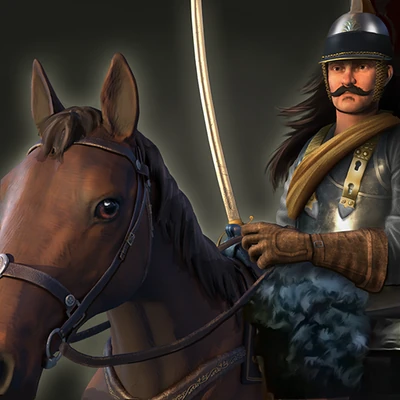
Recorded values
- Available
- Fortress Age · Stable; Fort; Galleon
- Training
- 55 sec · 3 population · 30 XP per train
- Durability & mobility
- 425 hit points · 20% ranged resistance · 6.25 speed · 15 line of sight
- Siege attack
- 25 base damage · range 6 · attack interval 3.0
- Hand attack
- 25 base damage · attack interval 1.5 · area of effect 2
- Trample attack
- 17 base damage · attack interval 2.0 · area of effect 4
Role & counters
Use the Cuirassier to exploit a gap in the enemy line or strike clustered units after a screen has engaged. Its area damage rewards fighting near several targets, but a charge into prepared Pikemen or Musketeers can quickly trade away a valuable unit. Use ranged support to weaken counters and preserve a retreat path when the opponent responds.
When to field it
Train Cuirassiers when the French economy can support their Food and Coin cost and scouting shows an opportunity to reach the enemy formation. They can protect vulnerable ranged troops and pressure a flank, but should not be treated as a universal answer. Their three-population cost makes losses especially important to weigh against the army’s remaining capacity.
Statistics and French access
The Cuirassier is the French Fortress Age Heavy Cavalry unit. It costs 150 Food and 150 Coin, takes 55 seconds to train, and uses three population. Its current profile is 425 hit points, 20% ranged resistance, speed 6.25, and line of sight 15. It can be trained at Stables, Forts, and Galleons. The hand attack deals 25 damage every 1.5 seconds in an area of two; its Trample attack deals 17 damage every two seconds in an area of four. Its siege attack deals 25 damage at range six every three seconds. These values make it a durable area-damage unit, but the resource and population costs mean that a lost Cuirassier is difficult to replace.
Area damage against clustered armies
Unlike many Heavy Cavalry units, the Cuirassier's ordinary hand attack already deals area damage. That makes it effective against tightly packed Infantry and lets it pressure several targets during the same engagement. Trample mode expands the area but trades away damage and exposes the unit to more incoming damage. Use ordinary attacks when the Cuirassier needs to stay in the fight, and switch to Trample when a dense formation can be hit and the unit has a safe route through it. Its melee-only attacks require it to reach the target, so ranged support should screen the approach.
Strengths, counters, and support
The Cuirassier's high hit points and area attack make it a strong threat to Infantry and exposed Artillery. It is still vulnerable to Heavy Infantry and Light Ranged Cavalry, including units with anti-Cavalry multipliers. Dragoons and War Wagons can damage it from range, while Pikemen can punish it if it is forced into melee. Pair Cuirassiers with Skirmishers or other ranged Infantry that can remove those counters. Do not send a costly group into a prepared Pike and Dragoon formation simply because the unit has high health. Use the Cuirassiers to attack a flank, break through a thin screen, or catch artillery once the enemy's counters are engaged elsewhere.
Veteran and Gendarme upgrades
Cuirassiers receive a Veteran upgrade automatically, adding 20% hit points and damage. The Gendarmes technology costs 850 Wood and 850 Coin and upgrades them to Gendarme Cuirassiers with a Guard-level improvement; the Imperial Gendarmes upgrade then costs 1,500 Wood and 1,500 Coin and adds 50% hit points and damage after the Guard upgrade. These improvements make a surviving group much more effective, but French players still need population and Coin for replacements and support. The Thoroughbreds Home City Card reduces Cuirassier training time by 15% under its listed rules. Check the current Definitive Edition upgrade tree before applying older values from pre-DE guides.
Cuirassier compared with Hussar
A Cuirassier costs more and uses more population than a standard Hussar, but it has substantially higher health and area damage. Hussars are cheaper and easier to field in larger numbers, while the Cuirassier can damage a packed Infantry line and absorb more attention. The French unit remains vulnerable to the same broad anti-Cavalry classes, so its added durability does not make it invulnerable. Use Hussars when a mobile, lower-cost Cavalry force is sufficient; invest in Cuirassiers when the army can support their cost and the opponent's formation offers value to area damage.
Population and resource planning
Three population per unit is a meaningful commitment, especially when the French army also needs Skirmishers, Dragoons, or Artillery. A Cuirassier group can absorb population quickly and consume both Food and Coin at a steady rate. Prepare the economy before queueing a large mass and leave space for counters that protect the Cavalry. Since training takes 55 seconds, losses cannot be replaced instantly. Preserve wounded units when possible and avoid trading them into Pikemen if the same force could flank artillery or attack Villagers elsewhere.
Using the unit in a combined-arms push
A practical push keeps Cuirassiers behind a ranged line until the opposing formation commits. Skirmishers can pressure Heavy Infantry, while Dragoons or other anti-Cavalry units can challenge enemy mounted counters. Once the screen is occupied, send Cuirassiers into the flank or target exposed Artillery. Their area attack is most effective when enemies are grouped, but a formation that is too tightly committed may also be caught by enemy anti-Cavalry. Keep a retreat path open and use Trample selectively rather than leaving the entire group in the more vulnerable stance.
Training, map access, and naval transport
French Stables provide the standard production route, while Forts offer a forward source and Galleons can train land units near the coast under their transport rules. A forward Fort can shorten the reinforcement route but is expensive to establish and should be protected. Water maps can allow a Galleon to supply Cuirassiers near a landing, though the ship must be positioned safely. These access points do not change the unit's role; they change where the French can build or deliver the Heavy Cavalry.
Version context
The Cuirassier appeared in the original game as a French unique Heavy Cavalry unit and remains part of Definitive Edition. Its upgrade names and balance values have changed over time. Current figures list 425 hit points, 25 hand damage, a 17-damage Trample attack, and a 55-second training time; an older guide may show 500 hit points, 30 damage, or a 60-second train time. Use the current values for Definitive Edition and treat older numbers as historical.
Choosing when to invest
Cuirassiers are worthwhile when their durability and area attacks answer a real matchup need and the French economy can afford them without neglecting counters. They are not a substitute for every other unit: heavy cost, three population, and anti-Cavalry vulnerabilities all matter. Scout the opponent, build the support line, and use the Cuirassiers to take an engagement on favorable terms rather than trading them automatically into the front.
Unit role and engagement choices
The Cuirassier is the French heavy Cavalry unit: a high-health melee attacker with an area attack that can punish compact groups. Its 425 hit points and 20% ranged resistance let it stay in a fight longer than ordinary light Cavalry, while its speed allows it to reach exposed Infantry or gatherers. The unit occupies three population and costs both Food and Coin, so losing several in a poor engagement can stall the rest of the army. Use Cuirassiers to break through a weak flank, pressure artillery after the screen is distracted, or force ranged units to reposition. Avoid sending them alone into prepared Pikemen or massed anti-Cavalry fire.
Area damage and trample mode
The Cuirassier's regular hand attack strikes a small area, so tightly grouped enemy units can take damage from one swing. Its trample attack trades attack speed and movement for a broader area hit, making it useful when several Infantry are packed together. Trample is situational: against a single durable target or a formation spread apart, the ordinary attack may be more efficient. The attack's area effect does not make the Cuirassier an anti-Artillery specialist, and it does not remove the need to protect it from dedicated anti-Cavalry units. Position it where its splash reaches several targets without surrounding the horsemen.
French access and upgrades
France trains Cuirassiers at the Stable, and access can also come through a Fort or a Home City shipment. The French Gendarme and Imperial Gendarme technologies improve the unit in later ages. These upgrades complement the French economic identity, including the durable Coureur des Bois, but they still require the resources and time to reach the relevant age and research the technology. If a match is decided before the upgrade arrives, add Cuirassiers only when the current army can use their health and area damage immediately. Other civilizations' mercenary or campaign access should not be mistaken for standard French production.
Counters and combined arms
Pikemen and other anti-Cavalry Infantry threaten a Cuirassier through strong melee damage, while Dragoons and other ranged Cavalry can kite or focus it from a distance. Artillery can also punish a slow approach if the horsemen are exposed. Pair Cuirassiers with ranged Infantry that can pressure Pikemen, and use skirmishing units to draw enemy fire before committing the charge. If the opponent is building a dedicated counter, stop adding heavy Cavalry until the supporting force can answer it. Cuirassiers are durable, but their cost and three-population size make repeated losses especially punishing.
Reading the attack profile
The Cuirassier has separate hand, Trample, and siege attacks. Its regular hand strike deals 25 damage over an area of two at a 1.5-second interval; Trample deals 17 over an area of four every two seconds. Against a compact group, the broader Trample hit can spread damage across more targets, while the hand attack delivers more damage to a smaller area over time. Its 25-point siege attack is a modest contribution against a structure and should not be mistaken for a dedicated siege unit. Choose the attack behavior for the formation and let proper artillery handle a fortified target.
Population and replacement cost
Three population per Cuirassier makes army capacity an important part of its price. A small group can occupy the room needed for several lower-population Infantry, and the 150 Food plus 150 Coin cost competes with French Villagers, upgrades, and supporting units. Before queuing another batch, check whether the army needs more area damage or whether its missing piece is anti-Cavalry support. The French economy can sustain an expensive force over time, but a sudden loss of Cuirassiers still creates a gap that may take multiple production cycles to refill. Preserve veteran units and fight where their area attack can affect multiple enemies.
French Heavy Cavalry with area damage
The Cuirassier is French Heavy Cavalry known for high durability and an area-of-effect hand attack. It can damage several infantry units in a crowded engagement and force an opponent to spread or add anti-Cavalry support. The unit’s large resource and population commitment makes it a powerful centerpiece rather than a low-risk raider. Keep it with ranged support and choose a target where the splash attack can connect.
Avoid pikes, guns and unsupported charges
Cuirassiers can be stopped by concentrated anti-Cavalry units, artillery and defensive fire. Use them to collapse on ranged infantry or exploit a gap after the front line is engaged; do not charge through a prepared screen. Their cost also competes with Villagers and age advancement, so scout before maintaining a large Stable queue. Support them with units that handle anti-Cavalry infantry and with siege if the goal is to destroy buildings.