Cossack
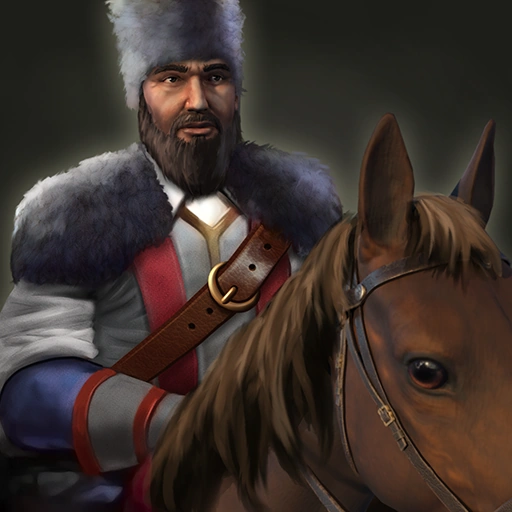
The Cossack is the Russian light cavalry option, providing a relatively economical mounted unit for raiding, flanking and chasing exposed ranged troops. Its mobility lets Russian forces threaten parts of the map that infantry cannot reach quickly.
Recorded values
- Available
- Commerce Age · Stable; Fort; Galleon
- Training
- 35 sec · 1 population · 15 XP per train
- Durability & mobility
- 225 hit points · 30% ranged resistance · 6.75 speed · 15 line of sight
- Siege attack
- 15 base damage · range 6 · attack interval 3.0
- Hand attack
- 26 base damage · attack interval 1.5
- Trample attack
- 18 base damage · attack interval 2.0 · area of effect 3
Role & counters
Cossacks can cross the map faster than Russian infantry and attack targets that lack anti-cavalry protection. Prepared Musketeers or Pikemen can defeat them in a direct fight, so their strength comes from choosing the engagement. Russian Blockhouses and infantry can support their pressure.
When to field it
Use Cossacks to raid, surround retreating units or respond to exposed workers while Strelets and other infantry occupy the front. Pull back before anti-cavalry can pin them down, and avoid trading them into a prepared line. Scout routes so raids do not run into hidden defenders.
Russian one-population cavalry
The Cossack is the Russian Commerce Age heavy cavalry unit and replaces the Hussar in the Russian roster. It costs 75 Food and 75 Coin, trains in 35 seconds and uses one population. It has 225 hit points, 30% ranged resistance, speed 6.75 and line of sight 15. The hand attack deals 26 damage every 1.5 seconds; Trample deals 18 in an area of three every two seconds, and its siege attack deals 15 at range six every three seconds. These stats are lower than a typical Hussar, but the lower price, shorter training time and one-population cost let Russia field a larger number. Use Cossacks to raid Settlers, intercept Artillery and pressure an exposed flank. Their speed allows them to disengage from a losing fight, but heavy infantry and Light Ranged Cavalry are dangerous counters. A Cossack mass can defeat enemy hand cavalry through numbers, especially after upgrades, yet the player should not send it into a prepared anti-cavalry line. Pair it with Streltsy or Cavalry Archers to soften heavy infantry and other cavalry before the Cossacks close. Oprichniks can add siege pressure against buildings while the Cossacks protect them. The one-population cost is the unit’s strategic advantage. It gives Russia room to field a large cavalry force alongside infantry and artillery without consuming population as quickly as two-population cavalry. This can create an overwhelming late-game group, but it requires Food and Coin income to sustain replacements. Keep the force moving and avoid trading it into buildings or ranged fire where a larger population-efficient army loses units without dealing enough damage. Upgrade progression includes Veteran Cossacks in the Fortress Age for 200 Wood and 200 Coin, adding 20% hit points and damage. Guard Cossacks require Veteran and cost 600 of each for 30%; Imperial Cossacks require Guard and cost 1,500 each for 50%. Russian cavalry cards and technologies can further improve the unit. Because the upgrades apply across the mass, a large Cossack army can scale well if the player can afford the investment. China can obtain a Siberian Cossack counterpart through the Russian Expeditionary Company at the Consulate. It starts with 10% more hit points and damage than the standard profile and should be treated as a separate allied unit source. The Russian Cossack remains a conventional Stable, Fort or Galleon unit. Use its speed, low population and train time to keep pressure on the map, then fall back when the opponent fields units designed to stop cavalry.
Keep the cavalry mass supplied and mobile
The Cossack’s speed and one-population cost make it useful for repeated raids. Split the force into small groups only when each route is safe; a large mass is easier to control and can punish a defensive mistake. If the enemy builds Light Ranged Cavalry, Heavy Infantry or a Town Center defense, withdraw and use Streltsy or other ranged support to remove the counter before returning. The short 35-second training time helps replace losses, but each Cossack still needs both Food and Coin.
Use the population advantage in the late game
One population per Cossack leaves more room for artillery and infantry than a two-population cavalry force. Keep that advantage by retreating damaged groups instead of feeding units one at a time into heavy counters.
Support the raid with Russian infantry
Streltsy can weaken Heavy Infantry before Cossacks engage, while Oprichniks add structure damage. The combined force covers more targets than a cavalry mass alone.
Target exposed units instead of defended buildings
Cossacks deal only 15 siege damage, so a defended building can occupy the cavalry without producing much value. Focus on Settlers, Artillery or units that have been separated from their screen, then retreat before a Town Center or anti-cavalry force can concentrate fire. Their one-population cost helps Russia sustain repeated raids, but does not make them expendable.
Choose upgrades according to army size
The Veteran, Guard and Imperial upgrades apply to every Cossack in the army, so their value grows with the number of units already produced. Research them when the economy can afford both the upgrade and replacement cavalry. A large group can turn the one-population cost into a strong late-game advantage, but an upgraded force still needs to avoid Heavy Infantry and Light Ranged Cavalry. Cossacks train quickly from Stables and can also be produced at Forts or Galleons. These production options let Russia reinforce a raid from a forward position or a transport, but keep the building protected while the queue completes. The unit’s speed is useful for moving between targets; withdraw when the opponent assembles a counterforce.
Preserve the raiding group
A retreat keeps the one-population cavalry available for another pass and denies the opponent an easy counterattack.
Russian one-population cavalry in practice
The Cossack costs 75 Food and 75 Coin, takes 35 seconds to train and uses one population in the listed Russian profile. It has 225 hit points, speed 6.75 and a 26-damage hand attack every 1.5 seconds. Its efficiency comes from converting population into a larger number of Cavalry bodies, not from having the durability of a high-population heavy horse. Use that headcount to threaten exposed Villagers, chase isolated ranged units or cover several approaches, while keeping the force together when enemy anti-cavalry can engage. Its 18-damage Trample attack has an area of three, so it can add pressure against a compact group, but the ordinary hand attack remains the more controlled choice when focusing a priority target. Cossacks do not replace anti-cavalry infantry or artillery: their value is mobility and population efficiency, and a defended base can make a raid cost more than the workers it removes.