Cavalry Archer
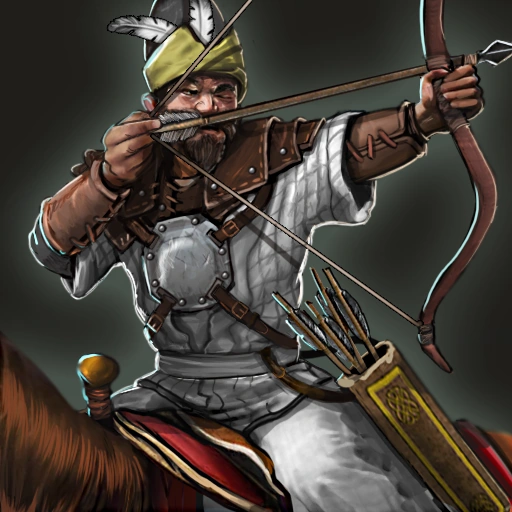
Cavalry Archer is a ranged cavalry role used by several civilizations and Native allies. Its mobility lets it attack from a distance and reposition before slower units can force a melee engagement. The exact statistics, access and upgrades vary with the civilization or alliance providing the unit, so the name describes a shared battlefield role rather than one universally identical roster entry. It is generally suited to pressuring Heavy Infantry, while specialized anti-cavalry units can threaten it.
Recorded values
- Training
- 36 sec · 2 population · 16 XP per train
- Durability & mobility
- 265 hit points · 30% hand resistance · 7.0 speed · 14 line of sight
- Ranged attack
- 13 base damage · range 12 · attack interval 1.5 · bonus damage: 3.0x vs. Heavy cavalry; 2.25x vs. Hand shock trooper; 2.0x vs. Artillery; 0.5x vs. Villager
- Siege attack
- 8 base damage · range 6 · attack interval 3.0
- Hand attack
- 6.5 base damage · attack interval 1.5 · bonus damage: 4.5x vs. Heavy cavalry; 3.5x vs. Hand shock trooper; 2.0x vs. Artillery
- Trample attack
- 6.5 base damage · attack interval 2.0 · area of effect 3 · requires Polish Horsemanship card
Role & counters
Maintain distance and use movement to kite infantry or shift between exposed targets. Ranged Cavalry can be caught by units with bonuses against their class, and a Cavalry Archer that is trapped in melee loses the benefit of its range. Check the specific settlement or civilization page for how the unit is obtained and what improvements apply in that version.
When to field it
Field Cavalry Archers when the opponent relies on infantry that can be punished at range and the map offers space to maneuver. Avoid charging into Pikemen or Musketeers; use other troops to screen or draw those counters away. Because statistics differ among rosters, compare the version-specific entry before committing to a large force.
Training profile and ranged attack
The Cavalry Archer is ranged cavalry available to the Ottomans, Russians and Poles in the Fortress Age. It costs 100 Food and 60 Coin, takes 36 seconds to train and uses two population. Its current profile lists 265 hit points, 30 percent hand resistance, speed 7 and line of sight 14. The ranged attack deals 13 damage at range 12 every 1.5 seconds, with a 3 times multiplier against Heavy cavalry, 2.25 against Hand shock troops and 2 times against Artillery; damage against Villagers is reduced to one half. The unit fires more often and costs less Coin than a Dragoon, but each shot does considerably less damage and its movement is slower.
Cavalry and artillery counter role
Cavalry Archers can pressure Heavy cavalry and artillery through their ranged multipliers. Their 30 percent hand resistance and high hit points also let them survive longer against hand cavalry than a more fragile ranged unit. Use them to keep mounted opponents occupied and to threaten exposed artillery, while avoiding unnecessary contact with Heavy infantry that can meet the cavalry in melee. The unit is not a replacement for every Dragoon role: its slower speed and longer animation delay make hit-and-run attacks less effective. Keep a retreat route open and focus fire before the opponent closes.
Attack delay and positioning
Cavalry Archers have a longer animation delay before firing than Dragoons, which reduces their ability to move and shoot continuously. They still have speed 7 and can reposition around a battlefield, but repeated turns during combat can reduce the number of shots delivered. Set the group to attack from a safe angle, focus on cavalry or artillery and move only when the enemy counter approaches. The ranged attack deals half damage to Villagers, so the unit is inefficient as a raid force compared with dedicated raiders. Use mobility to choose a favorable target rather than to chase workers through defenses.
Civilization-specific cards
Russian Home City cards can change the Cavalry Archer’s resource cost and improve its durability or hand attack. Landed Gentry changes its Coin cost to Wood in the described setup, freeing Coin for artillery and upgrades. Boyars and TEAM Kamchatka Expeditions can add hit points, while Sovnya improves the hand attack and can add area damage under its card effect. Ottoman Akincis changes the unit’s relationship to Villagers and can support economic pressure. These are civilization-specific options; check the card entry and current version before applying them to another Cavalry Archer.
Training access and composition
The Cavalry Archer can be obtained in the Commerce Age through selected Home City cards such as TEAM House of Aviz or Landed Gentry, though ordinary production begins in the Fortress Age. This timing can change the army’s early response to cavalry or artillery. Pair the archers with infantry that protects them from hand units and artillery that pressures buildings. Since each Cavalry Archer uses two population, compare the force with a cheaper infantry screen and avoid overproducing them when the opponent has few mounted targets.
When to choose Cavalry Archers
Choose Cavalry Archers when the opponent relies on Heavy cavalry, Shock troops or artillery and the civilization’s cards make the unit affordable. Their high hit points and ranged attack allow them to support a mixed army, but their target multipliers and animation delay reward deliberate focus fire. If the enemy brings Skirmishers or Heavy infantry, use another unit to handle those threats and keep the Cavalry Archers out of melee range. Preserve injured units because replacing a two-population cavalry group is expensive.
Ranged and hand attack choices
The Cavalry Archer’s main shot deals 13 damage at range 12, while its hand attack has strong multipliers against Heavy cavalry, Shock troops and Artillery. The ranged attack applies a threefold multiplier against Heavy cavalry, 2.25 against Hand shock troops and double damage to Artillery, but only half damage to Villagers. Use the ranged shot from a safe distance and only enter melee when a target has already been weakened or the hand attack multiplier makes the exchange favorable. The Polish Horsemanship card adds a trample attack with an area effect, which is a card-specific option rather than a shared cavalry ability.
Use the lower Coin cost well
The Cavalry Archer costs 100 Food and 60 Coin, less Coin than many Dragoon comparisons, and fires more frequently despite lower damage per shot. This can make it an efficient answer when the army needs repeated pressure on heavy cavalry or artillery. It is slower than a Dragoon and has a longer animation delay, so do not copy a Dragoon hit-and-run pattern. Keep it with infantry or another unit that can block hand attackers, and use its two-population cost carefully.
Protect the ranged cavalry from infantry
Despite hand resistance and high hit points, Cavalry Archers should not fight Heavy infantry in melee. Use their speed to keep distance and let friendly infantry engage the hand units. Focus their ranged fire on cavalry or artillery while the screen prevents a direct counterattack.
Target priorities and engagement control
The Cavalry Archer is a mobile ranged unit whose attack is tuned toward mounted and artillery targets. Its ranged attack deals 13 damage at range 12 every 1.5 seconds, with a 3 times multiplier against Heavy Cavalry, 2.25 times against hand Shock Infantry and 2 times against Artillery. Its hand attack also carries class multipliers, so it can punish a target that is already engaged, but the unit should usually preserve its ranged role. The 0.5 times multiplier against Villagers makes it a poor choice for economic raids compared with dedicated raiders. Use speed 7 and sight 14 to scout approaches, rotate between flanks and keep pressure on exposed artillery. With two population per unit, a large group uses population quickly; produce enough to threaten the enemy composition while retaining slots for infantry and siege. A Cavalry Archer has 265 hit points and 30 percent hand resistance, but these defenses do not make it a Heavy Cavalry substitute. Focus fire on one valuable target, keep distance from Heavy infantry, and withdraw when enemy anti-cavalry units can reach the group.
Using mobility without taking a bad fight
Move around the edge of an engagement and attack a high-value mounted target, then pull back before Heavy Infantry can close. The unit is useful for chasing artillery after the main line opens a path, but it should not run through a protected base to reach a target. Its lower speed than a Dragoon also means it cannot always disengage from the same positions; leave a retreat route before firing.
Lower-cost ranged cavalry for sustained fire
Cavalry Archers are a lower-cost alternative to Dragoons, using less Coin and slightly more Food in the documented comparison. Each shot deals less damage than a Dragoon’s, but the faster firing rate can yield higher sustained damage. They move more slowly than Dragoons and have a distinct firing cadence, so do not assume the two units can perform exactly the same raid or retreat. Use Cavalry Archers when the economy favors their resource mix and the army benefits from repeated ranged attacks.
Keep the mounted archers away from infantry counters
Cavalry Archers can pressure enemy Cavalry and support a mobile formation, but their ranged role exposes them to light infantry and artillery. Keep a front line nearby, focus fire on suitable mounted targets and withdraw if Skirmishers take the field. Their lower Coin cost does not make them a generic replacement for Heavy Cavalry or a Dragoon; choose by the relevant unit multipliers and civilization upgrades. A mixed force gives them time to fire while other units control the approach.
Speed and anti-shock matchup changes
The current Cavalry Archer moves at 7.0 speed, compared with 6.75 before update 13.27885. Its ranged profile has a 3.0× modifier against Heavy Cavalry and 2.0× against Artillery; against Hand Shock Troops it now uses 2.25×, compared with 1.75× before the Definitive Edition. Because the unit is supplied by different civilizations and Native allies, its costs, access and upgrades can still depend on the roster that provides it. Treat these matchup values as the shared profile recorded here, then check the civilization or alliance entry for availability. Its mobility matters most when it can kite while protected; if caught in melee, it loses the advantage of ranged reach.