Poles
A European civilization from The Baltic Powers, representing the Polish-Lithuanian Commonwealth.
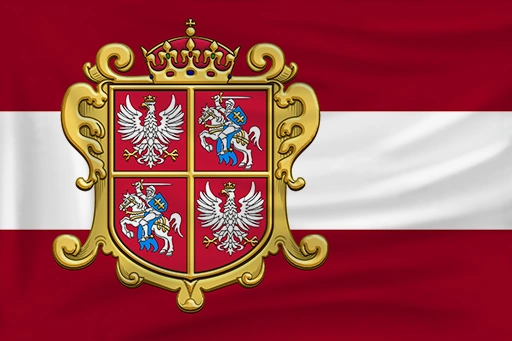
Economy & identity
The Folwark supports an agrarian economy and the Sejm adds a distinctive political building. Economic momentum can fund an expensive cavalry transition.
Military & matchups
Winged Hussars are the standout heavy cavalry unit, with Piechurs and Retainers adding support roles.
Practical direction
Build the food economy before a large cavalry switch and scout for anti-cavalry units that can punish it.
Civilization identity and opening
The Poles are a European civilization added in Definitive Edition with The Baltic Powers. Their starting economy includes 400 Food, 200 Wood, six Settlers, and a Hetman. The Hetman is a hero who can explore, fight, build Town Centers and Trading Posts, and construct the Sejm; if incapacitated, he can be rescued rather than permanently lost. Polish buildings other than Walls cost 15 percent less Wood and take 15 percent less time to build, but have 18 percent fewer hit points, with Town Centers excluded from the health penalty. This bonus encourages rapid expansion and multiple support buildings, while the reduced durability means forward structures need an army nearby. The civilization's Wood savings help fund its specialized buildings and military production, but the player should still balance early Wood spending against Villagers, age advancement, and the first defensive line.
Sejm and Folwark economy
The Sejm replaces the Capitol and is built by the Hetman. It produces a chosen resource based on the number of Settlers, so its output scales with the economy rather than requiring a fixed group of Villagers to gather at the structure. This makes the Sejm a way to convert a large Settler count into flexible resource income, and its technologies can improve gathering rates. The Folwark replaces both the Mill and Livestock Pen. It is an infinite Food source, supports ten population, can train basic soldiers, and offers specializations that change its contribution. A Folwark can therefore combine long term Food production with a military or support function, but each site costs Wood and benefits from protection. Decide whether the Sejm should produce the resource needed for the next age or whether Villagers should gather it directly; similarly, place Folwarks where their Food income and production access can be defended. These two buildings make the Polish economy structurally different from a standard European Mill and Farm plan.
Unique military roster
The Polish army includes several units with distinct jobs. Piechur is a versatile rifleman described as effective against infantry. Retainers are affordable Hand cavalry intended to fight other Cavalry. Winged Hussars are fast Heavy cavalry with extra attack range and a powerful lance charge. The Hetman provides scouting and construction rather than replacing a full army unit. The civilization also has Royal Guard versions of the Pikeman, Piechur, Retainer, and Cavalry Archer, using the names Scytheman, Kurpie Marksman, Vanguard, and Pancerny respectively. Those upgrades make familiar classes stronger while preserving the need to combine them. A force of Piechur and Winged Hussars can threaten different targets, but cavalry still needs protection from anti-cavalry infantry and the rifle line still needs a screen from melee attackers. Build the army around the enemy roster and use the cheaper building construction to add production where reinforcements can arrive in time.
Age choices and revolutions
At each Age, the Poles choose a politician from the available group. Commerce Age options include The Governor, The Philosopher Prince, The Inventor, The Naturalist, and The Logistician. Later pools include choices such as The Exiled Prince, The Mercenary Contractor, The Marksman, The Scout, The Tycoon, The Pope, The Viceroy, and The Cavalry Marshal, with further Imperial Age options such as El Presidente, The General, The Knight, and The Royalist. The selected politician changes the reward and timing of an age-up, so choose one that supports the next plan rather than following a fixed sequence. Polish revolutions include the Cossack Hetmanate and Livonia in the Fortress Age, and the Duchy of Warsaw, Hungary, and United States at later transitions. Revolting changes the civilization's economy and roster; it should be chosen with a clear plan for the units and cards that become available.
Cards, buildings, and tactical tradeoffs
Polish Home City cards support the Hetman, Folwark, Sejm, and specialized army. A Factory Wagon shipment is limited to one in the Polish deck. The civilization's 15 percent cheaper and faster buildings can help establish additional production, but the lower hit points make rushed forward placement risky. Use the Hetman to place a Trading Post or Town Center when the route is safe, then avoid leaving the hero exposed while it constructs. Folwarks provide an alternative to ordinary Mills and Livestock Pens, and can train basic soldiers; their location therefore matters to both the economy and reinforcement path. The Sejm's resource production is linked to Settler population, so its yield grows as the economy develops. The Poles are strongest when these systems support one another: early expansion establishes safe territory, Folwarks maintain Food, the Sejm adjusts resource income, and specialized troops answer the opponent's army. The defining tradeoff is speed and flexibility against building durability and resource competition.
Building durability and expansion
The Polish building bonus is most effective when construction supports a larger plan. A cheaper, faster Folwark can secure a safe Food area, while additional military production shortens the distance reinforcements travel. The lower hit points are the cost of that speed: an isolated War Hut or forward production building can fall quickly under focused siege. Build the first structures within range of the army, then expand when scouting shows the opponent cannot immediately punish the investment. Town Centers are excluded from the building health penalty, which makes them a more reliable anchor for a second economy. The Hetman's ability to place a Trading Post or Town Center helps the Poles establish territory, but the hero should not be left under attack while construction finishes. Use the bonus to expand deliberately, not to build in every exposed location.
Roster timing in practice
Use age-up choices to align these economic buildings with unit access. If the next fight depends on Retainers, establish the production needed to replace cavalry before sending the first group far from home. If Piechur are the priority, keep them behind a frontline that can prevent enemy cavalry from reaching the riflemen. Winged Hussars are a powerful mobile option, but their lance charge is most valuable when the target has already been pinned or forced to retreat. The Polish roster works through complementary roles, and its building discount helps maintain those production paths; it does not remove their resource cost or population requirements. Choose a politician and card sequence that arrives before the composition is needed, then stop investing in a unit line once the opponent's counters make it inefficient.
Compare the core unit costs and combat profiles
The Polish Commerce Age roster draws on three different resource and battlefield profiles. A Piechur costs 70 Food and 40 Coin, trains in 33 seconds and has 120 hit points; its 16-damage ranged attack is strongest against Light ranged cavalry, Ranged shock troops and infantry, but deals reduced damage to Cavalry and Shock troops. A Retainer costs 90 Food and 50 Wood, trains in 35 seconds and has 210 hit points with 7.0 speed. Its 22-damage hand attack is useful against Artillery and Cavalry, but only deals half damage to Heavy infantry. A Winged Hussar costs 130 Food and 150 Coin, takes 50 seconds to train and has 360 hit points with 6.75 speed; its 30-damage hand attack and Lance Charge gain a 1.5 multiplier against Infantry. The different bills let the Poles choose between a ranged line, Wood-funded mobile cavalry and expensive heavy cavalry. Match the choice to the enemy: use Piechurs against infantry and ranged cavalry, Retainers to pressure exposed guns or mounted units, and Winged Hussars to flank vulnerable foot troops. None of these profiles removes the need to scout and protect against the unit classes that counter it.