Stradiot
Stradiot is Heavy Cavalry available from the Fortress Age through several civilization-specific buildings. Its high hit points and strong hand attack make it a costly mounted unit for chosen engagements.
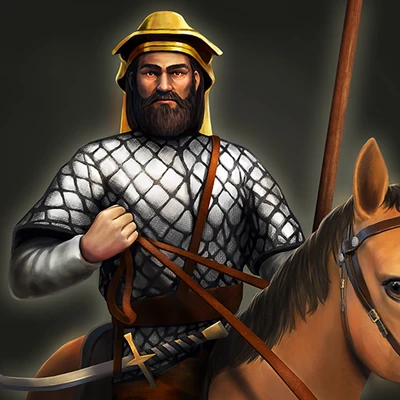
Recorded values
- Cost
- 300 Coin
- Available
- Fortress Age · Tavern (Europeans) ; Monastery (Asians) ; Saloon (Americans) ; Palace (Africans) ; Lombard (Italians)
- Training
- 50 sec · 3 population · 30 XP per train
- Durability & mobility
- 585 hit points · 30% ranged resistance · 7.25 speed · 15 line of sight
- Hand attack
- 56 damage · 1.5 attack interval
- Siege attack
- 30 damage · 6 range · 3.0 attack interval
- Trample attack
- 37 damage · 2.0 attack interval
Role, availability & values
It can be recruited from a Tavern for Europeans, Monastery for Asians, Saloon for Americans, Palace for Africans or Lombard for Italians. The recorded profile has 585 hit points, moves at 7.25 speed and has 30% ranged resistance. It costs three population and 300 Coin, takes 50 seconds, and deals 56 hand, 30 siege and 37 trample damage.
Matchup & timing
Use Stradiots to flank or pressure exposed targets, then withdraw when anti-cavalry units can pin them down. Their three-population cost makes losses expensive. Check the production building available to the selected civilization and avoid treating the unit as a universal Stable option.
Mercenary profile and recruitment
The Stradiot is Fortress Age mercenary Heavy Cavalry available through the standard Age of Empires III mercenary system. It costs 300 Coin, uses three population and takes 50 seconds to train. Its profile has 585 hit points, 30% ranged resistance, speed 7.25 and line of sight 15. Europeans hire it at a Tavern, Asians at a Monastery, Americans at a Saloon, Africans at a Palace and Italians at a Lombard. These high-population units are expensive but train faster than many ordinary late-game replacements. The Stradiot has no attack bonus, so its strength comes from a solid baseline attack and speed rather than a specialist multiplier. Confirm mercenary access and population before queuing a large group.
Role and comparison with other cavalry
The Stradiot is positioned between the Mameluke and Hackapell in hit points and attack, and it behaves like an improved Hussar. Unlike units with a dedicated bonus, it relies on its general attack profile and ability to reach a target quickly. Its speed 7.25 makes it one of the faster Cavalry options, allowing it to raid, catch artillery or shift to a threatened flank. That speed does not make it a safe answer to every target: Heavy Infantry and Light Cavalry are listed weaknesses, and the mercenary tag leaves it exposed to Spies and Ninja. Use the Stradiot for mobility and flexible pressure, while specialist counters handle the opponents it struggles to trade against.
Combat and target choice
Stradiots are effective against Artillery and Light Infantry, especially when they can reach a firing line from the side. Their lack of attack bonuses means they do not erase a specialist counter just by charging. Send them around the opponent’s formation, focus on artillery or isolated ranged units, and retreat before Heavy Infantry or Light Cavalry can pin them. The 30% ranged resistance helps against volleys during an approach, but melee counters remain dangerous. A group that attacks buildings can contribute to a siege, yet a dedicated siege force will complete that work more efficiently; the Stradiot is most valuable when its speed changes which target it can reach.
Dutch Red Lancers variant
Dutch players can turn Stradiots into Red Lancers by sending Religious Freedom and researching Red Lancers at the Church. This version gains a 1.2× hand-attack multiplier against Infantry and a 0.9× multiplier against Heavy Infantry, becomes available at the Tavern and is tagged as Lance Cavalry. The variant changes the target profile and recruitment path, so it should be distinguished from the standard Stradiot when discussing counters. The upgrade is conditional on the card and technology and does not make every Dutch Stradiot a Red Lancer automatically. Check that the required Home City shipment and Church research are complete before expecting the variant’s bonuses.
Mercenary management
A Stradiot’s three population and 300-Coin cost make it a deliberate investment. Use its speed to avoid unfavourable fights, keep it away from anti-Cavalry Infantry and mercenary-hunting units, and support it with ranged troops that can weaken its counters. If the opponent is investing heavily in Heavy Infantry or Light Cavalry, reduce Stradiot production and spend on another unit type. For raiding, divide a few riders to pressure separate routes only when they can escape; a small detachment caught by a counter force can be lost before reinforcements arrive. Preserve the units that survive several engagements rather than repeatedly rebuilding from a protected but slow queue.
Raiding without overextending
Speed lets Stradiots threaten a Mill, isolated Settlers or exposed artillery and then rotate to another front. Keep the raid close enough to friendly vision to detect a counterattack, and do not chase into narrow ground where Heavy Infantry can pin the cavalry. The unit has no attack bonus, so a raid depends on target access and repeated movement rather than a single explosive hit. If the opponent has positioned Light Cavalry or anti-Cavalry Infantry near the economy, use the Stradiots to draw that force away while another group attacks, or hold them with the main army. A mercenary’s three population makes careless losses especially costly.
When the Dutch upgrade is worth it
Red Lancers add an Infantry bonus and become Lance Cavalry, which can make the Dutch variant more relevant against an Infantry-heavy opponent. The 0.9× multiplier against Heavy Infantry remains a caution: the bonus is not uniform across every Infantry class. Research the Church technology only after the Religious Freedom card has been sent and when the resulting matchups justify the investment. If the army needs a general anti-Cavalry screen or is facing heavy counters, the upgrade alone will not solve those problems. Use Red Lancers as a conditional variant in the Dutch roster rather than applying its effects to all Stradiots.
Separate the standard and Dutch versions
Only the Dutch Religious Freedom and Red Lancers research path grants the Infantry multipliers and Lance Cavalry tag. A standard Stradiot has no attack bonus, even when trained by the Dutch before that upgrade. This distinction matters for target selection: ordinary riders rely on speed and baseline damage, while Red Lancers gain a conditional edge against some Infantry. Check the technology state in the current match before choosing a charge.
Respect mercenary counters
Spies and Ninja are dangerous because they receive bonuses against mercenary units. Avoid sending Stradiots into an area where those specialist units are waiting, even if ordinary ranged fire seems manageable. Scout the route, use speed to withdraw and keep support nearby when attacking artillery or Light Infantry.
Plan around the 50-second queue
The training time means a lost Stradiot will not return immediately. Keep a reserve and avoid sending the whole group into a fight where Heavy Infantry, Light Cavalry, Spies or Ninja are already waiting.
Check the enemy’s specialist roster
Before committing a mercenary group, scout for Spies or Ninja as well as ordinary anti-Cavalry units. Stradiots excel through mobility, but their mercenary status gives those specialist counters a direct role against them.
Fast mercenary Heavy Cavalry
The Stradiot is a fast mercenary Heavy Cavalry unit whose hit points and attack sit between the Mameluke and Hackapell in the documented comparison. It has no special attack bonuses, but its speed and damage make it effective against artillery and light infantry. Use it to reach exposed guns or threaten ranged units, while keeping it away from dedicated anti-Cavalry forces.
Mercenary access and replacement planning
Stradiots depend on the available mercenary source, which can be random or limited by the map, card or faction. Check the camp and population cost before building a strategy around them. Their speed encourages raids, but a failed attack can lose a costly unit that is difficult to replace. Pair them with a front line and ranged support, and switch to ordinary Cavalry production if the opponent is massing counters or the mercenary supply is exhausted.