Treasure guardian
A Treasure guardian protects a map Treasure. Guardians can be human, animal, or naval units, and their strength generally signals the value of the reward. They do not become hostile until attacked, but attacking one in a group can draw the whole group into the fight.
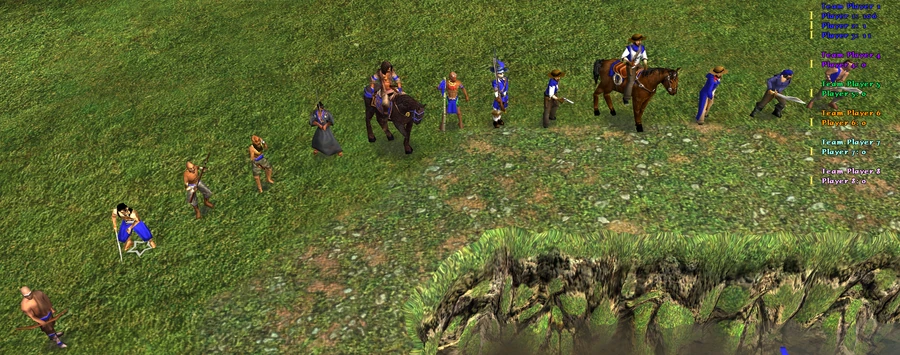
Guardian behavior
Defeat the guardian, then collect the Treasure with a qualifying unit. If attackers move too far from a damaged guardian, it retreats to its post and immediately restores its health, so keep the fight within the Treasure area. Explorer abilities, including Sharpshooter where available, can change how safely a hero clears a guarded reward.
Treasure decisions
Inspect the guardian group before engaging and compare the reward with the time and health the fight may cost. Early Treasures can accelerate the economy or improve the Explorer, but a difficult group can delay scouting or leave the hero vulnerable.
How guardians behave
Treasure guardians are special neutral units that protect a treasure on the map. They do not attack until a player attacks them; when one member of a group is hit, the other guardians respond as well. If the attacker moves away and stops dealing damage, the guardian returns to its treasure and instantly restores its hit points. Guardians move at a speed of at least six and can range from human renegades to wildlife and water animals. More difficult groups generally guard more valuable rewards, so assess the number and types before committing an Explorer or army.
Class and damage rules
Guardians can be Infantry, Cavalry or naval units, but treasure guardians form their own class for counter calculations. They do not receive or inflict ordinary military counter bonuses while fighting standard troops. Explorers, War Chiefs, Monks and tame animals have attack bonuses against them, which makes heroes the natural first choice for clearing a treasure. If a War Chief converts a guardian, the captured unit receives a 40% hit-point penalty and deals only 0.1× damage against Villagers and buildings. Converted guardians can still add manpower early, but their reduced economic pressure makes them poor long-term raiders.
Choose the right hero ability
Explorers can use Sharpshooter to kill a single guardian, War Chiefs can convert one guardian, and Monks can stun guardians. These abilities provide different rewards: a kill clears an obstacle, a conversion adds a temporary unit and a stun creates an opening for the army. Treasure guards can still be sniped by enemy Heroes after a War Chief converts them, so do not leave converted units exposed. Cards or technologies such as Folk Heroes and Wild West can further buff eligible converted guardians, but their age and building conditions should be checked before planning around that interaction.
Avoid the reset radius
A guardian that is pulled too far from its treasure returns to its post and heals to full hit points instantly. Keep the fight within the treasure’s area and avoid kiting so far that the guardian disengages. The guardian usually runs in the direction opposite the shot that hit it, so an Explorer can maneuver to keep it from reaching the edge. This matters most when a unit has low damage or when the treasure contains several guardians. If the fight resets, allow the hero to recover and start again with a better position rather than chasing the full-health guard across the map.
Ranged hero kiting
Some guardians have long attack-animation delays or large obstruction radii, allowing a ranged Hero to fire and step back before the attack connects. Black Bears, Coyotes, Mad Dogs and Wolves are examples whose animations can create that opening. Start near the treasure boundary so the guardian approaches, take a shot, then move during the guardian’s attack animation without drawing it outside its return radius. The timing varies by guardian, and a failed step can leave the Hero exposed; use the basic approach against an isolated weak guard and bring additional units for a dangerous group.
Treasure difficulty and army planning
A treasure’s reward is balanced against the guardians protecting it. Wildlife often guards easier treasures, while renegade human units tend to protect more difficult rewards. The variety includes land animals, water animals and human guards, so a unit that handles one treasure may not be suited to another. Scout the group first, then decide whether an Explorer can clear it alone, whether a Monk or War Chief ability is available, or whether military support is needed. Claiming several safe treasures early can generate resources and map control, while repeatedly losing Heroes to an oversized guard group gives the opponent time to expand.
Attack as a group
When one guardian is attacked, members of its group respond together. Avoid sending a fragile Settler or Explorer into a cluster without a plan. Let the Hero draw the group into a controlled position, use a stun or Pacify effect if available, and focus damage on one guardian at a time. Each kill reduces the number of attackers, making the rest of the fight easier. If the force is too small, disengage before all units take damage; moving beyond the treasure radius will reset the guardians, so retreat to a nearby safe point and return when ready.
Converted guardians are temporary support
A War Chief can convert one guardian and use it as an additional unit, but the conversion applies a 40% hit-point penalty and reduces damage against Villagers and buildings to 0.1×. That makes the guardian more useful for early manpower or future treasure fights than for raiding an economy. Human guardians may still be sniped by enemy Heroes after conversion. Keep the converted unit near the War Chief and avoid risking it against ordinary military counters; its value lies in the extra body and any eligible Folk Heroes or Wild West buffs.
Match the method to the treasure
A lone animal can often be cleared by an Explorer using range and the guardian’s attack animation delay, while a group of renegade human units may require a larger escort. Monks can stun and Explorers can Sharpshooter a single target, but those abilities do not automatically clear every guardian in a group. Some units attack from water and cannot be approached like land wildlife. Inspect the treasure reward and guard type before committing the army; if the reward is not worth the expected loss, leave it for a later age when stronger units are available.
Protect the Hero while collecting
Guardians retaliate against the first attacker and the full group responds. Keep the Explorer, Monk or War Chief within support, and do not let a treasure attempt turn into an isolated Hero loss.
Do not cross the boundary during a ranged fight
Kiting works only while the guardian stays inside its treasure radius. Watch its retreat path and reposition so it continues approaching instead of resetting and healing.
Neutral units protecting map Treasures
Treasure Guardians are special neutral units that protect Treasures on land and water maps. They do not become hostile until attacked, but the first attacker draws retaliation and groups respond together. Guardians move quickly—at least speed six in the documented profile—and can range from human units to animals or ships. In general, a more difficult group of guardians protects a more valuable reward, so scout the group before committing the Explorer.
Pull the group carefully and finish the fight nearby
If units that are damaging a guardian move too far away, it returns to its Treasure and immediately heals to full hit points. Avoid spreading damage across the map or chasing a guardian away from its site. Use the Explorer and supporting units to focus one group, then collect the reward before engaging another. A Treasure’s value can include resources or experience, so bring enough force to secure it without losing the units needed to defend the opening.