Amazonia
Amazonia is a river map built around the Amazon, which separates opposing sides in team and free-for-all matches. In multiplayer layouts, both banks can contain a Trade Route with three Trading Post sites and Native settlements; the exact distribution can vary. The river also holds Fish, making its waters both an economic area and a military corridor.
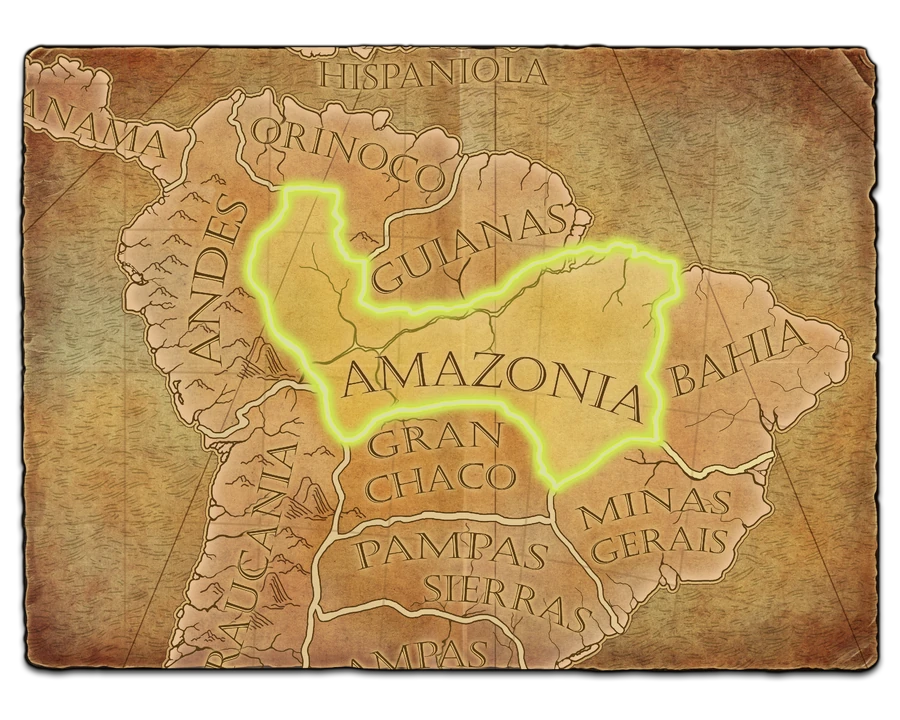
Map character
Scout the banks, river crossings and route sites before moving siege or workers across the water. Naval control can help move troops and protect crossings, but ships and shore defenses can threaten a landing force. One side of the river may have fewer trees, which can constrain Wood gathering and the ability to build defenses along the bank.
What to scout
Plan around the river as an active front rather than a passive barrier. Secure the crossing or shoreline needed for the attack, protect the route sites your side can reinforce, and avoid spending heavily on naval units unless they can defend fishing, transport or the landing. Watch for enemy Outposts and artillery covering the bank.
River crossings, Trade Routes and fishing
Amazonia’s Amazon River divides opposing sides in team and free-for-all matches. In team games, teammates are placed on one bank and opponents on the other; free-for-all layouts distribute players across both banks. Multiplayer layouts can place a Trade Route with three Trading Post sites on each side and Quechua, Tupi or Zapotec settlements. The river also contains abundant Fish, creating an economic reason to contest the water as well as a transport route for land armies. Naval control can protect Fishing Ships and carry troops, but enemy Outposts or cannon on the shore can punish ships and landing forces. In some one-versus-one layouts one side has very few trees, limiting both Wood income and shore defenses. Check the bank before committing to a wall or naval plan, and keep a reserve near likely crossing points. In team matches, shore defenses that threaten ships can protect a shared river front; in free-for-all games they may be more valuable around the player’s own settlement.
Team and free-for-all layouts differ
In team games, teammates begin on the same bank and opponents across the Amazon; free-for-all layouts distribute players evenly between both sides. When multiple human players are present, each bank can have a Trade Route with three Trading Post sites and Native settlements such as Quechua, Tupi or Zapotec. Fish are plentiful, but the river can draw fleets into costly naval fights. In team matches, shore defenses can protect a landing; in free-for-all games, place them near the settlement that needs cover. Scout both banks before choosing which route and crossing to defend.