Bengal
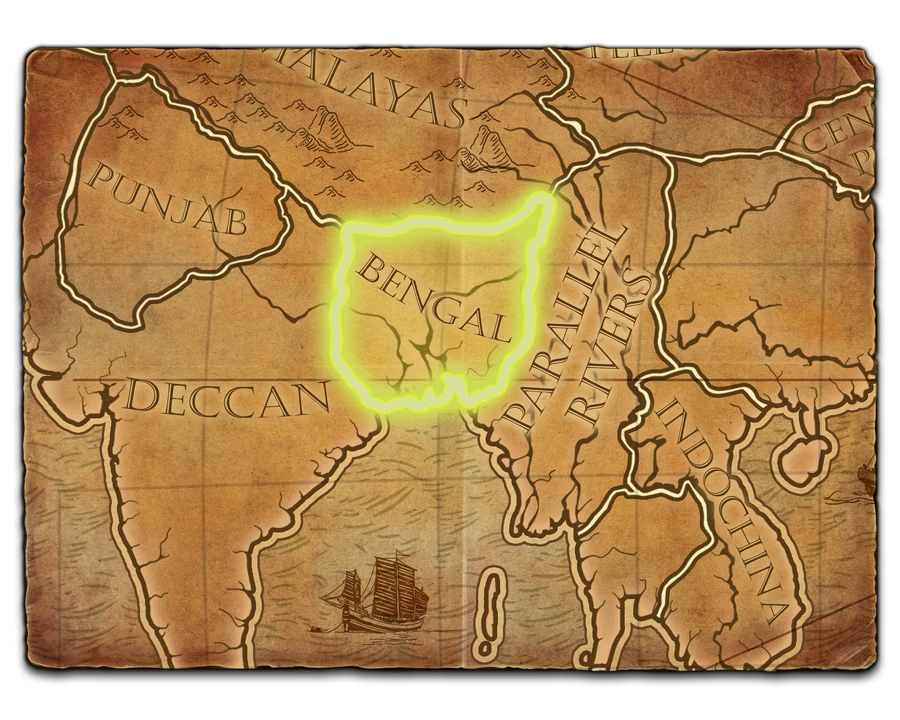
Bengal is a Definitive Edition map inspired by the Bay of Bengal region. Opposing players begin on broad, flat plains, with two settlements south of each starting area. Marshes separate the starts from surrounding lowlands, while swamp and mangrove terrain constrict movement and make a simple wall line unreliable. The map’s open opening gives way to a more difficult contest for routes, settlements and safe expansion.
Map character
Each side can scout its two southern settlements early. Bengal’s listed Native ally is the Bhakti Temple: placing a Trading Post, or an Inca Tambo, at its site unlocks the alliance. Its options include Tiger Claw, War Elephant and technologies such as Vegetarianism, so the site can support either an army choice or a berry-based economy. The map’s outlaw roster includes Marathan Dacoit and Thuggee; availability depends on the civilization’s outlaw building and the match rules. Beyond the plains, swamp and mangroves narrow approach lanes and complicate building placement, so scout crossings before sending Villagers or siege through them.
What to scout
Use the open starting ground to establish production, then decide whether the southern settlements are worth an early Trading Post investment. A Bhakti alliance can add a specialized unit or gathering upgrade, but the choice should match the army and available food sources. Outlaws offer another map-specific option, though they are not a universal barracks roster. Avoid planning a continuous wall across flooded ground; instead, defend usable passages and keep mobile troops near the openings revealed by scouting. The generated layout can change the safest expansion route, so verify it in the match before committing workers or the main army.
Open starts lead into constrained terrain
The opposing flat plains make early access straightforward, but swamp and mangrove terrain beyond them can redirect later movement. The southern settlements are visible objectives, while the forested and flooded areas complicate attempts to seal the map. Use the early open space to build a stable economy, then adapt once scouting reveals the usable crossings and gaps.
Settlement control and wetland routes
The two southern sites on each side create an early choice between securing a nearby Native ally and spending resources elsewhere. If the Bhakti site is accessible, its alliance offers more than a generic map bonus: the available units and technologies can change what the army produces or how it gathers. The swamp and mangrove belt then affects how safely that investment can be defended. Explore the practical crossings first, place forward buildings on reliable ground and leave room to reroute if the opponent takes a different passage.
Outlaws are map and civilization dependent
Marathan Dacoit and Thuggee belong to Bengal’s outlaw selection, but their recruitment is tied to the civilization’s appropriate building and the active rules. They should be treated as optional roster choices rather than standard units guaranteed to every player. Check access and population cost before using them to fill a specific battlefield role; the map name alone does not make either unit an automatic part of the opening army.