GUIDE · BATTLE STRATEGY
Born of Fire Town Center triage plan
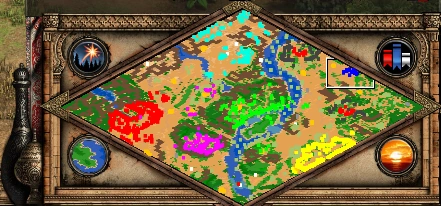
Born of Fire opens with two Town Centers under pressure. Save the northern one first when possible, then use the safer eastern economy to wall gaps and decide whether to pursue the Relics or defeat the enemy bases.
Overview
Born of Fire opens with two Town Centers under pressure. Save the northern one first when possible, then use the safer eastern economy to wall gaps and decide whether to pursue the Relics or defeat the enemy bases.
Plan and execution
Micro the starting troops to save the northern Town Center, which preserves nearby gold and stone, and approach Chand Bardai by the river to add his healing support. If holding both Town Centers stretches the army too thin, keep the eastern base: its wood supply makes it practical to replace missing buildings. Establish an economy, wall the eastern gaps between the Mills and gold, and place a Castle near the Mills to stop Nagarjuna’s attacks. Then choose the Relic objective or a direct military route based on where the Relics spawned and which enemy position is weakest.
Risks and adaptation
Trying to save every structure can cost the force needed to stabilize one base. Chand Bardai heals but cannot convert or collect Relics, so do not use him for those tasks. The Relic locations vary, and walling should protect resource approaches without trapping your own expansion.
- Focus
- Choosing the safer economy and relic route
- Signature / category
- Plan and execution
- Release / context
- Age of Empires II system
- Region
- Battle strategy
- Classification
- Battle strategies