Sheep
Sheep is a herdable animal used as an economic resource. It provides 50-300 Food and may fatten over time when the selected civilization or livestock building supports that mechanic.
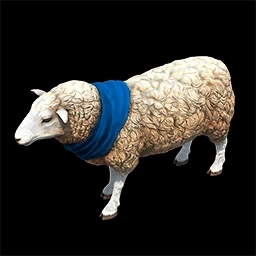
Recorded values
- Cost
- 100 Food
- Available
- Exploration Age · Livestock Pen (Europeans and the United States) ; Farm (Native Americans)
- Training
- 10 sec
- Durability & mobility
- 20 hit points · 4.0 speed · 9 line of sight
Role, availability & values
Production is available through Livestock Pen (Europeans and the United States) or Farm (Native Americans). It has 20 hit points. It moves at 4.0 speed. Training costs 100 Food; it takes 10 seconds to train. Other profile values: 50-300 Food resource, up to 8 gatherers, fattening: 0.2/s, 0.25/s at Livestock Market, and 0.5/s at Livestock Pen, Farm, Village, Hacienda.
Matchup & timing
Sheep provide a 50–300 Food stock and can be produced through European and United States Livestock Pens or Native American Farms. Use their mobility to keep the herd near a protected food economy, then track the remaining stock as it is gathered or fattened. They are a finite resource source, not a replacement for arranging the next Hunt or Farm.
Food stock and fattening
Sheep are herdable animals that provide between 50 and 300 Food depending on their weight. They have 20 hit points, speed 4 and line of sight nine, and can be trained for 100 Food in listed livestock systems. A Sheep fattens over time when assigned to a Livestock Pen, Farm, Village or Hacienda, with rates depending on the building and civilization; the listed values range from 0.2 Food per second naturally to higher rates at specialized structures. Fattening converts time and protection into a larger Food stock, so gather it only when the animal is safe from enemy units and the workers can use it before the game ends. European and United States players access Sheep through a Livestock Pen, while Native American Farm rules can provide another route. Some civilizations use different livestock such as Cows or Llamas, and cards may change the available animals. Keep Sheep behind defenses because they are vulnerable to raids and can be stolen or killed. The animal’s low health means the Food source should be protected, but moving it to a secure area may be more valuable than letting it graze near the enemy. Use livestock when the economy can afford the Food and time required to fatten the herd, and avoid assuming that every civilization can train or fatten Sheep at the same rate. The Livestock Market and relevant Farms or Haciendas have different gathering and growth values; check the civilization-specific entry.
Livestock use and rates
Sheep provide 50–300 Food depending on how much they have fattened. They are available through a Livestock Pen for Europeans and the United States or a Farm for Native Americans under the listed rules. A Sheep has 20 hit points and can move at speed 4, so it is easy to lose if left near enemy units. Fattening rates vary: the baseline listing is 0.2 Food per second, while a Livestock Market provides 0.25 and a Livestock Pen, Farm, Village or Hacienda can provide 0.5 under the relevant civilization conditions. The animal costs 100 Food and takes 10 seconds to train where production is available. Decide whether time spent fattening will return more Food than gathering immediately, and protect the herd while it grows. Some civilizations use Cows or Llamas instead, and cards such as Ranching can change access. Sheep are not a universal food source for every faction.
Safe livestock handling
Use a pen or Farm to fatten Sheep only when the herd can be protected for long enough. If enemy scouts approach, move the animals behind defenses or gather the Food before they are lost. Livestock mechanics differ from Indian herdable rules and from Inca Llamas.
Harvest timing
A fattened Sheep is worth more Food, but waiting creates a risk that an opponent will steal or kill it. Gather the animal when the extra Food no longer justifies the exposure or remaining match time.
Livestock planning
Sheep are most valuable when the player has time and protection to fatten them. Check whether a Livestock Market, Pen, Farm or Hacienda applies to the civilization, and gather before an enemy can steal the herd.
Animal safety
Sheep have only 20 hit points, so keep them inside a protected livestock area. If the herd is exposed, gather its Food rather than risk losing the entire stock to a fast raid.
Gather now or fatten
Choose between immediate gathering and fattening based on safety and match length. A Sheep near enemy scouts is more valuable as Food now than as a larger but vulnerable herd later.
Herdable food and fattening
Sheep are livestock that can yield between 50 and 300 Food depending on their state when slaughtered. They may fatten over time at 0.2 Food per second, with faster rates at certain buildings: 0.25 per second at a Livestock Market and 0.5 per second at a Livestock Pen, Farm, Village or Hacienda where the rule applies. The longer a sheep remains alive in a compatible pen, the more food it can provide, but keeping it safe and waiting for the added value both have costs. If Food is needed immediately, gather it; if the economy and map allow, fattening can turn spare livestock time into a larger later return.
Obtaining and protecting livestock
Europeans and the United States can use a Livestock Pen, while Native Americans have the listed Farm route. A sheep costs 100 Food and takes 10 seconds to produce where those options are available, so its purchase is an investment rather than free food. It has 20 hit points and moves at four speed, making it vulnerable to raids and easy to lose if left outside the base. Keep sheep near the compatible livestock building, check which civilization rules affect its growth and gather it when its food value is needed. The number of workers gathering at once can reach eight, so assign enough to finish the animal promptly without pulling too many Villagers away from other tasks.