Club Warrior
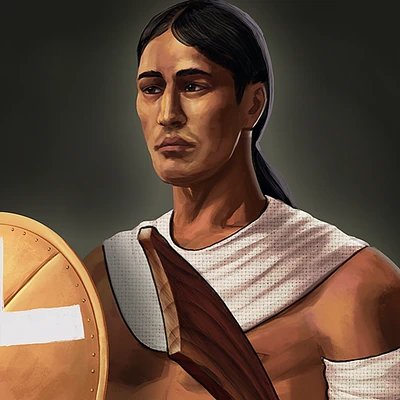
Club Warrior is Lakota Heavy infantry in Age of Empires III, available from the Commerce Age; obtained through War Hut, Fort, American Citadel. Its listed ability is Builds Teepees (with the "Nomadic Expansion" card) ; Builds War Huts and Corrals (with the "Aggressive Policy" card).
Recorded values
- Available
- Commerce Age · War Hut; Fort; American Citadel
- Training
- 29 sec · 1 population · 9 XP per train
- Durability & mobility
- 120 hit points · 20% hand resistance · 5.0 speed · 12 line of sight
- Hand attack
- 11 damage · 1.5 attack interval · bonuses: 4.0x vs. Cavalry; 3.0x vs. Shock troops
- Siege attack
- 30 damage · 6 range · 3.0 attack interval · bonuses: 1.5x vs. Resource enclosure; 1.5x vs. AbstractWall
Role, availability & values
Production is available through War Hut, Fort, or American Citadel. It has 120 hit points. It moves at 5.0 speed and uses 1 population. Training costs 50 Food and 40 Wood; it takes 29 seconds to train. Attack profile: Hand attack deals 11 damage. Siege attack deals 30 damage. Hand attack bonuses: 4.0× against Cavalry and 3.0× against Shock troops. Siege attack bonuses: 1.5× against Resource enclosure and 1.5× against AbstractWall. Special ability or role: Builds Teepees (with the "Nomadic Expansion" card) ; Builds War Huts and Corrals (with the "Aggressive Policy" card).
Matchup & timing
Hand attack is especially effective against Cavalry (4×), Shock troops (3×). Siege attack is especially effective against Resource enclosure (1.5×), AbstractWall (1.5×). Hold the melee attack for Cavalry and Shock troops when they enter contact; reserve the siege attack for Resource enclosure and AbstractWall. Keep a frontline between this unit and threats that can reach it safely.
Lakota anti-cavalry infantry
The Club Warrior is Lakota Commerce Age heavy infantry costing 50 Food and 40 Wood. It trains in 29 seconds, uses one population and has 120 hit points, 20% hand resistance, speed 5 and line of sight 12. Its 11-damage hand attack deals 4× damage against Cavalry and 3× against Shock troops, making it a low-cost close-range screen for Lakota units that would otherwise be vulnerable to a charge. The 30-damage siege attack also gains 1.5× against Resource Enclosures and walls, so a group can contribute to a push after the battlefield is clear. Club Warriors must reach melee range before their counter bonuses matter; use their speed to intercept cavalry but keep them protected from ranged fire and artillery. Their one-population cost allows several to support a mobile army, but they should not replace ranged units that can damage targets from a distance.
Construction cards and field utility
Club Warriors can gain building abilities through specific Home City Cards: Nomadic Expansion allows Teepee construction, while Aggressive Policy allows War Hut and Corral construction. These are card-gated abilities, not baseline functions of every Club Warrior. If the deck includes one of these options, use a safe unit to establish a forward site that supports the intended army plan; otherwise rely on ordinary Lakota builders and structures. The War Hut, Fort and American Citadel are listed production sources, with access depending on the game mode. Train Club Warriors when scouting shows cavalry or Shock troops, then keep the group close enough to screen the rest of the force. Their 5.0 speed lets them move with infantry and respond to a flank, but they remain melee units and can be kited. Use the siege attack on exposed structures or defensive enclosures only after clearing defenders. If the opponent switches away from cavalry, reduce production and invest in units that match the new threat. The Club Warrior’s strength is efficient anti-cavalry pressure combined with optional construction utility, not a universal frontline attack.
Card effects are optional, not baseline
Two Home City Cards can change the Club Warrior’s utility. Nomadic Expansion grants the ability to construct Teepees; Aggressive Policy grants the ability to build War Huts and Corrals. These abilities should only be included in an army plan when the chosen deck actually contains and ships the relevant card. They do not make every newly trained Club Warrior a builder at the start of the match. A Teepee can support a forward position, while War Hut or Corral construction can create access to military production, but each task takes units away from combat and exposes the builder. Escort the Club Warrior during construction and choose a site the Lakota force can defend. If the card is not available, use the unit for its normal anti-cavalry role and assign buildings to the regular builder units. Keep card-based abilities separate from the baseline stats when comparing guides or making a roster plan.
Choose production based on the opponent
A Club Warrior’s bonuses target Cavalry and Shock troops. If the opponent shifts to ranged infantry, artillery or other classes, stop making the unit in bulk and use its speed to defend rather than attack. The low Food-and-Wood cost makes a small reserve practical, but its melee reach still requires support and good positioning.
Use the siege attack after clearing defenders
The Club Warrior’s 30-damage siege strike helps against an exposed building, but its melee range places it in danger near a defended base. Clear the army first, then let the Lakota infantry contribute to the structure push.
Keep the Lakota builder safe
Card-granted construction can establish a forward site, but the unit is exposed while building. Bring an escort, choose a location within reinforcement distance and return the Club Warrior to the army after the structure is complete.
Melee counter to Cavalry and Shock Infantry
The Club Warrior is a Native melee unit effective against Cavalry and Shock Infantry. Its hand attack and useful siege damage let it function as a front-line counter while adding pressure against buildings. The Lakota profile is similar to a Pikeman’s role, though its damage against other targets and exact upgrades differ. Use Club Warriors to keep mounted units away from ranged support and artillery.
Protect the club line from ranged counters
Club Warriors need to reach melee range, so light infantry and artillery can weaken them before they connect. Pair them with ranged units that can remove Skirmishers and keep the formation together around a defensible approach. Their siege attack is useful after the enemy is held in place, but they should not replace dedicated siege against a defended base. Check the alliance, map and Home City Card that provides them before planning continuous production.