Indian strategy
The Indian economy trains Villagers for Wood rather than Food and does not use herdable animals as a food source. This changes early resource assignments and supports a roster with powerful cavalry and distinctive support options.
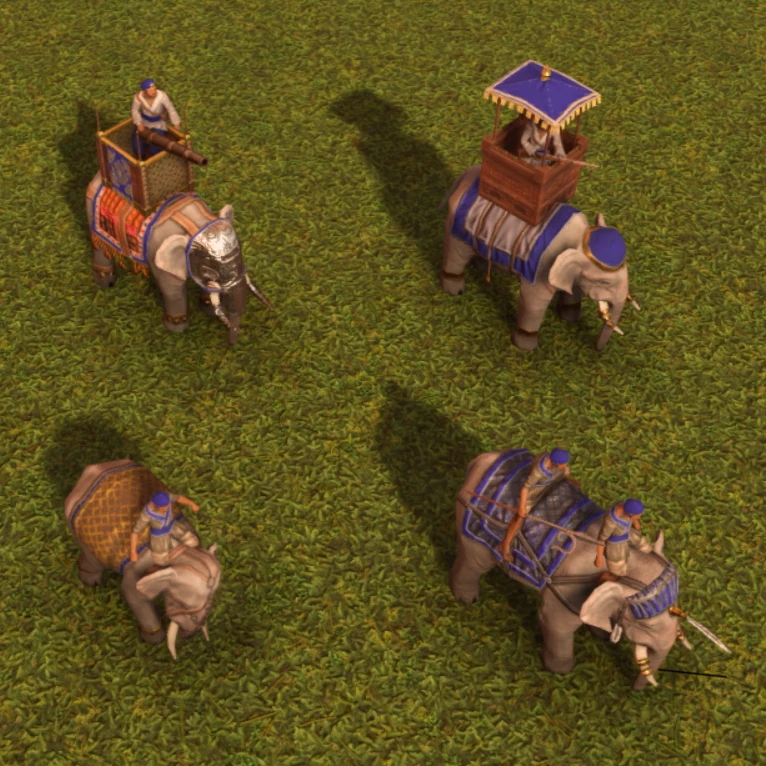
Civilization identity & tools
Villager production therefore competes with buildings and units for Wood. Herdables contribute experience rather than food, and the Home City and age-up choices can supply useful early support. Indian cavalry can be powerful, but it needs infantry or other answers when facing dedicated anti-cavalry units.
Matchups & timing
Track Wood closely before starting additional Villagers, and scout for the food and coin needed to keep production moving. Choose cavalry when the opponent's composition and map leave room for maneuver; add a counter plan before engaging anti-cavalry.
Practical plan
Balance Villager production against military buildings and avoid assuming herdables will cover food costs. Use scouting and shipment timing to maintain pressure without interrupting the economy.
Wood-based Villager economy
Indian strategy begins with an unusual resource constraint: Villagers are trained for Wood rather than Food. That means worker production directly competes with Houses, military buildings and other Wood expenses, so assign gatherers carefully and avoid spending the entire Wood reserve on construction. Herdable animals do not provide the same Food role as in many other civilizations; under Indian rules they contribute Experience, while Food must come from suitable map sources or other mechanics. Scout for Food and Coin early so the Town Center can continue producing Villagers and the army can meet its costs. The civilization’s cavalry and distinctive support options can become powerful, but cavalry needs a plan against dedicated anti-cavalry. Use the Explorer to identify resources, Treasures and Native settlements before selecting a build order. Home City shipments and age-up choices can support the opening, but they should fit the resource state and map rather than follow a generic sequence. Keep Wood income high enough for workers while funding the first military production, and expand to safe resources before nearby Hunts or mines are exhausted. In battle, use mobility to select engagements and support cavalry with units that can handle Pikemen or other counters. The Indian economy rewards planning because every new Villager has a visible Wood opportunity cost.
Resource sequence and military support
Because Indian Villagers cost Wood, an opening must balance worker production against the first House, military building and any needed economic structure. Avoid idling the Town Center while waiting for Wood: gather enough to keep Villager production active, then redirect workers to Food and Coin for the next army or age-up cost. Herdable animals contribute Experience under Indian rules rather than functioning as an ordinary Food stockpile, so do not plan to feed a unit queue from them. The Explorer can reveal a safe Food source, locate a Native settlement or clear a Treasure for resources and Experience. Use Home City shipments to bridge shortages or provide units, and protect the shipment timing by not spending every resource on optional buildings. Indian cavalry can exploit open terrain and punish exposed units, but a cavalry-only plan is vulnerable to Pike or other anti-cavalry pressure. Add infantry or ranged support to answer those counters, and scout before committing to a direct charge. The exact roster and economic bonuses vary between The Asian Dynasties and Definitive Edition updates, so check the active unit and technology entries. A strong plan keeps Villager production uninterrupted, secures nearby Food and Coin, and spends Wood with the worker cost in mind.
Wood-based Villager production
The Indian economy trains Villagers for Wood rather than Food, changing how early workers are assigned. Wood therefore competes directly with Houses, military buildings and units, while Food and Coin must be gathered for the production and age-up plan. Herdable animals provide experience rather than Food under the standard Indian rule, so an opening that relies on slaughtering livestock does not transfer from other civilizations. Home City shipments and age-up choices can ease the initial pressure, but a player still needs to scout the map and find sustainable food and Coin sources. Track Wood before queuing more Villagers so production does not stall the infrastructure needed to support them.
Cavalry, support and counterplanning
Indian cavalry can create strong mobile pressure, but the army still needs answers to dedicated anti-cavalry troops. Scout the opponent before choosing a large cavalry investment, and add infantry or other support that can hold the line while cavalry attacks from a flank. Resource allocation should follow the plan: workers on Food sustain units, Coin funds expensive troops or technologies, and Wood covers production structures and Villagers. Use shipments to bridge a resource shortage or support a timing, rather than assuming the Home City solves the economy indefinitely. The best strategy changes with the map, opponent and available cards; keep a fallback army composition if the intended cavalry route is countered.