Kancha House
The Kancha House is Inca housing that also produces Food automatically. It lets the Inca expand population while adding passive income instead of using the ordinary House model.
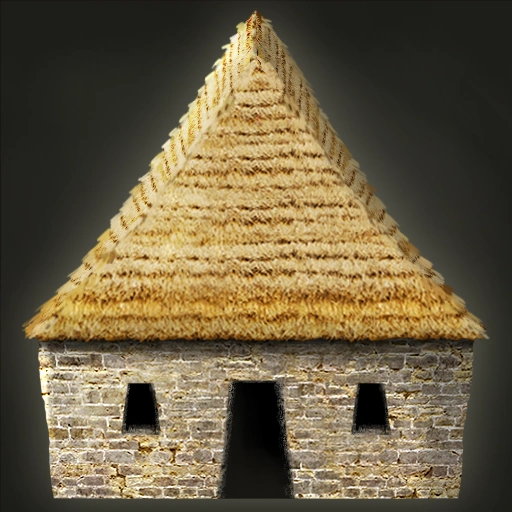
Recorded values
- Cost
- 170 Wood
- Available
- Exploration Age; Revolution (Peru)
- Population support
- 16
- Function
- Provides population; Auto gather food 0.6/s; Auto gather wood 0.6/s (with the "Autarchy" card); Trains Peruvian Dogs (with the "Chiribaya Dogs" card)
- Construction
- 18 sec · up to 8 builders · limit 12
- Structure
- 1,700 hit points · 18 line of sight · 4x4 footprint
Function
Each supports 16 population and generates 0.6 Food per second. It costs 170 Wood, takes 18 seconds to build, and the Inca can construct up to 12. The Autarchy Home City Card adds 0.6 Wood per second; Chiribaya Dogs enables the building to train Peruvian Dogs.
Placement & timing
Build steadily to avoid population blocks and retain enough Wood for military production. Losing several structures at once reduces housing and passive Food together.
Passive Food and card-enabled options
The Kancha House generates 0.6 Food per second while supporting 16 population, allowing the Inca to turn housing into a steady passive Food source. It costs 170 Wood, takes 18 seconds to build and has a limit of 12. Twelve completed houses therefore provide up to 192 population support and 7.2 Food per second before other bonuses, but they also require a large Wood investment that competes with War Huts and military production. The Autarchy Home City Card adds 0.6 Wood per second, while Chiribaya Dogs enables the building to train Peruvian Dogs. Its 1,700 hit points make it more than a paper house, but multiple losses remove population space and ongoing income at once. Build enough to keep the army from hitting the population cap and let the passive income accrue, while spreading placement so a single siege push cannot erase the entire economic investment.
Wood budget and steady-state economy
Kancha Houses reward a long horizon: the 0.6 Food-per-second trickle continues without Villagers assigned to the building, and the Autarchy card can add the same rate in Wood. A full set of twelve would provide 7.2 Food per second, or 7.2 Food and Wood per second with Autarchy, before considering any other effects. Reaching that cap costs 2,040 Wood and gives 192 population support. Those totals show why the building is strongest as planned infrastructure rather than a last-minute response to low Food. Spread the structures so the Inca keep housing and income if one area is attacked, and avoid sacrificing the War Hut or frontline army needed to protect the economy.
Passive income across the match
A Kancha House combines population support and automatic Food income, so its return continues while Villagers work elsewhere. Each house supports 16 population and generates 0.6 Food per second. The Autarchy Home City Card adds 0.6 Wood per second, turning the structure into a wider passive economy, and Chiribaya Dogs lets it train Peruvian Dogs under its card rules. The Inca can build up to twelve. These effects make the building more than a population shelter, but they do not remove its 170-Wood price or the need to protect it. Losing houses reduces both housing and passive production at once.
Placement and investment
Build Kancha Houses where they can be defended and where their population capacity will prevent a production block. Their 18-second construction time lets an Inca player replace housing more quickly than some larger structures, but builders still spend time away from gathering and 170 Wood is also needed for military buildings and upgrades. Maintain enough houses for the planned army while leaving resources for the next production or age transition. If using Autarchy, the Wood income arrives only through the card's effect; do not include it in an economy plan that has not sent that shipment.