Sipahi
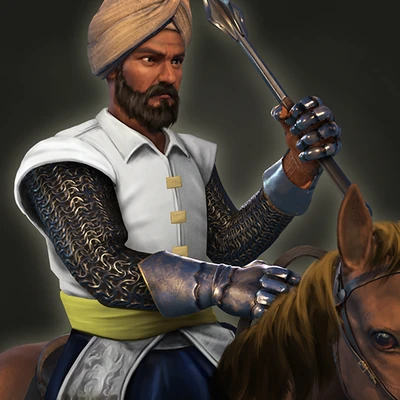
The Sipahi is Ottoman heavy cavalry, unique to Age of Empires III. Despite its Fortress Age unit classification, it is obtained through Home City shipments or as an Industrial Age advancement reward rather than a normal Stable queue. The unit was called Spahi before the Definitive Edition update that changed its name.
Recorded values
- Cost
- 400 Food
- Available
- Fortress Age
- Training
- 40 sec · 3 population
- Durability & mobility
- 750 hit points · 20% ranged resistance · 6.5 speed · 15 line of sight
- Hand attack
- 35 damage · 1.5 attack interval
- Siege attack
- 28 damage · 6 range · 3.0 attack interval
- Trample attack
- 23 damage · 2.0 attack interval
Role, availability & values
The listed profile has 750 hit points, 20% ranged resistance, 6.5 speed, a 35-damage area hand attack and a 28-damage siege attack. Sipahis regenerate health while idle. They can run down light infantry and artillery, but heavy infantry and light cavalry are dangerous answers; the lower-damage, slower Trample mode generally gives up value compared with their ordinary area attack.
Matchup & timing
Send a Sipahi shipment when a decisive cavalry force can reach the opponent’s ranged line or artillery, and keep it moving between engagements so regeneration can work. Use the unit to punish exposed light infantry, then disengage from anti-cavalry troops. Original Age of Empires III had a finite shipment limit; Definitive Edition added repeatable Sipahi shipment cards, so check the edition when planning a long match.
Access and current profile
The Sipahi is Ottoman Heavy cavalry available only through Home City shipments or certain Age-up rewards; it is not trained from a Stable. A standard Sipahi costs 400 Food in the current Definitive Edition profile, takes 40 seconds to arrive, occupies three population, and has 750 hit points, 20 percent ranged resistance, speed 6.5, and line of sight 15. The unit has a 35 damage area hand attack with radius three, a 23 damage trample attack over a similar area, and 28 siege damage at range 6. It is a powerful reinforcement, but the limited shipment supply and three population cost mean it should be sent when the army can make immediate use of it. Its large hit point pool helps it survive the approach, while the mace attack can strike multiple nearby enemies.
Target selection and counters
Sipahis are effective against Skirmishers, archers, Shock troops, and Artillery once they reach melee range. Their area attack can damage several units at once, making them threatening against a compact ranged formation. They do not have a ranged attack, so reaching those targets safely is the central challenge. Heavy infantry and Light cavalry can counter them, and ranged fire can weaken the cavalry during its approach. Use the speed and hit points to flank rather than running directly through a prepared line. If the enemy has anti-cavalry infantry protecting artillery, wait until allied units engage the screen, then send Sipahis around the side. Their siege attack contributes to structure pressure, but it is not a substitute for dedicated artillery.
Trample and ability management
Trample Mode is usually a poor default for Sipahi. It uses the same area of effect as the normal hand attack but deals less damage and attacks more slowly. Use it only when the situation benefits from the mode's movement or target behavior, and switch back to the standard melee attack when sustained damage matters. Sipahis passively regenerate 0.25 percent of their hit points per second after being idle for 3.5 seconds. Pull a damaged unit away from combat and let it recover rather than sacrificing it for one more attack. The recovery is gradual and does not make the unit immortal; if it is surrounded or pursued, move it to a safe position first. A surviving shipment unit can contribute throughout the match, so preserving it often has more value than trading it for a low cost target.
Shipment and upgrade value
Five Sipahis can be shipped in a Fortress Age Home City card for a substantial Food cost, creating one of the Ottoman's strongest single reinforcements. An Industrial Age age-up reward can also provide them. Guard Sipahi is the Industrial Age upgrade, adding 30 percent hit points and damage; Imperial Sipahi adds 50 percent in the Imperial Age. These upgrades are most valuable when the player has preserved enough Sipahis to justify the resource expense. Since their availability is limited, plan the shipment around a timing attack or a major defensive response rather than using it as ordinary replacement production. Compare the Food cost with Villager production, age advancement, and the next unit shipment. If the opponent is massing Heavy infantry or Light cavalry, the Sipahi investment needs support from units that can remove those counters.
Patch and name changes
The unit was named Spahi before update 14.43676, which also changed its Food cost from 280 to 400 and its kill experience value from 28 to 40. Definitive Edition raised its ranged resistance from 10 to 20 percent. Older references may therefore make the unit look far cheaper and more vulnerable than it is now. The current name and profile should be used for modern Ottoman strategies. Sipahi remains a Home City unit with a limited supply, not a repeatable Stable cavalry line. Include its delivery method and shipment timing when describing a build order so players do not plan on training it from a building that cannot produce it.
Planning a shipment attack
A Fortress Age Sipahi shipment can swing a fight because several durable cavalry arrive together, but the timing should be prepared in advance. Keep enough Food for the shipment and position allied units where they can stop Heavy infantry from intercepting the Sipahis as they move toward the front. If the opponent is defending behind walls, use other siege units to create an opening before sending the cavalry into a narrow entrance. The Sipahi's area attack is more valuable against clustered units than against a single isolated Villager. Send the shipment when it can reach the battle quickly, and avoid calling it in while the army is retreating or when the enemy can control the arrival area. The unit's regeneration helps after a successful fight, so pull survivors back instead of trading them for a low value target.
Countering a Sipahi force
Opponents should avoid letting the Ottoman cavalry reach an isolated ranged line. Heavy infantry and Light cavalry can punish the Sipahis, while focused ranged fire can reduce their health before they connect. If the Sipahis retreat, do not chase them into an area where the Ottoman army can counterattack; their idle regeneration rewards disengagement. Keep anti-cavalry units close to artillery and protect the approach rather than waiting until the Sipahis are already in melee.
Age-up reward tradeoff
Choosing Sipahis as an Industrial Age reward adds a concentrated military force but gives up the alternative reward for that transition. Compare the cavalry with the economy or units offered by the other choices, and select it when the next battle needs durable melee pressure. The Home City shipment is better when the player wants to time the force separately from aging.
Ottoman heavy cavalry shipment
Sipahi are powerful Ottoman Heavy Cavalry most commonly delivered through Home City shipments or other civilization-specific options. They provide a strong mounted force without requiring a full Stable queue at the moment they arrive. Their health and attack make them effective at breaking into infantry lines or threatening exposed ranged units, but their population and replacement cost are high.
Use the arrival as a timing, not a solo army
A Sipahi shipment can create a sudden power spike, but anti-Cavalry units and defensive structures can still stop the charge. Rally them with Janissaries or other support, focus a high-value target and withdraw when the opponent’s counters arrive. Check the current card’s unit count and cost conditions, since those differ by version and deck. Keep producing ordinary units so the army can continue after the shipment is spent.