Mahout Lancer
Mahout Lancer is Indian elephant Heavy Cavalry from The Asian Dynasties. It combines a large health pool with an area attack and bonus damage against Cavalry, making it a powerful contact unit rather than a fast raider. Its trample attack can damage several nearby enemies, but the elephant occupies multiple population and demands a substantial investment. Concentrated anti-cavalry fire can still remove it, especially when it reaches the enemy without support.
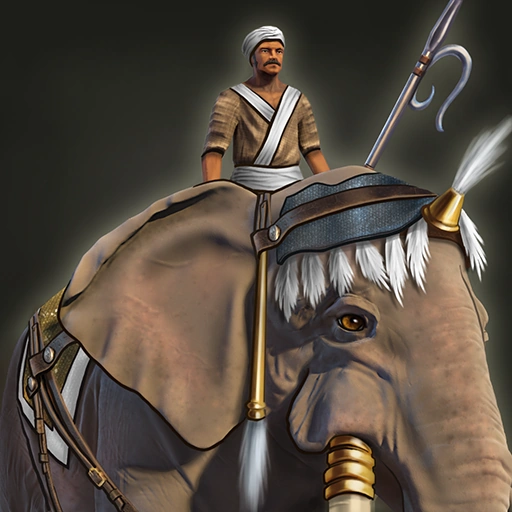
Recorded values
- Available
- Fortress Age · Caravanserai; Fort; Agra Fort (with the Delhi Gate upgrade) ; Galleon; Palace (Ethiopians)
- Training
- 60 sec · 7 population · 65 XP per train
- Durability & mobility
- 917 hit points · 30% ranged resistance · 6.0 speed · 15 line of sight
- Hand attack
- 28 damage · 1.5 attack interval · bonuses: 2.0x vs. Infantry; 1.0x vs. Villager; 0.5x vs. Heavy infantry
- Siege attack
- 100 damage · 3.0 attack interval
- Trample attack
- 20 damage · 2.0 attack interval · bonuses: Same as hand attack
Role & counters
Bring Mahout Lancers into combat behind a screen or after the opponent’s strongest counters have been distracted. Their trample attack is most useful when enemies are grouped within its area, while their cavalry bonus gives them a specific role against mounted targets. Avoid chasing faster ranged units across open ground, and preserve a route for the elephants to withdraw if the engagement turns unfavorable.
When to field it
Choose them when the Indian army can afford expensive frontline cavalry and scouting shows a target their area attack can punish. Support them with ranged infantry such as Gurkhas or other units that can help deal with anti-cavalry defenders. Their large population use means production should be balanced against the rest of the army.
Current statistics and attack profile
The Mahout Lancer is a Fortress Age Indian elephant cavalry unit. It costs 400 food and 250 wood, takes 60 seconds to train, and occupies seven population. Its profile has 917 hit points, 30% ranged resistance, speed 6.0, and line of sight 15. The hand attack deals 28 damage every 1.5 seconds over an area of 2, with a 2.0 multiplier against infantry, a 1.0 multiplier against Villagers, and a 0.5 multiplier against heavy infantry. Its trample attack deals 20 damage in an area of 3 every 2 seconds and uses the same multipliers. The siege attack deals 100 damage every 3 seconds. The high health and area damage allow it to remain in melee against ordinary infantry and artillery, while the large population and resource cost mean that a few lost elephants can represent a major share of the army.
Role, counters, and battlefield commitment
Mahout Lancers are heavy cavalry that can break through archers, Skirmishers, and artillery once they reach the enemy line. Their movement speed of 6.0 is fast for an elephant and comparable to some other heavy cavalry, so they can reinforce a fight without the slow approach associated with many siege units. Their 100 siege damage also makes them useful against buildings when artillery is unavailable. They are not an answer to every target: heavy infantry receives half damage, and Villagers take only normal damage despite the Lancer's high cost. A large army of Mahouts can lose to an equal-population force with the correct counters because each elephant uses seven population. Mix them with cheaper cavalry or ranged units, and use the elephants where their wide-area attack hits multiple infantry. Heavy cavalry with ranged support or heavy infantry can help bring them down.
Mansabdar aura and Home City support
The Mansabdar Mahout is trained at the Charminar Gate and has an Imperial Service aura that increases nearby Mahout Lancers' hit points and damage by 10%. Keep the Mansabdar in the center of the elephant group so the aura reaches the units that need it, but do not expose it alone to heavy infantry. The Indian Home City deck can also send two or three Mahout Lancers in the Fortress Age, making shipment cards a way to add elephants without waiting for a full production queue. Elephant combat cards can raise their health or attack. Professional Handlers reduces elephant population by one; the Mansabdar's population is only reduced to 13 under that card's effect. These choices can make a late-game elephant group more practical, but do not eliminate the need to plan for the resource and population burden.
Training locations and civilization access
The Indians train Mahout Lancers at a Caravanserai or Galleon after reaching the Fortress Age. The Agra Fort can train them after receiving the Delhi Gate upgrade. Ethiopians can access them through the Indian alliance and may train them at a Palace. Their base profile and access should be distinguished from the related Sowar and Jat Lancer: the Mahout is a high-cost elephant with area melee and siege attacks, while those units serve different cavalry roles. The Asian Dynasties introduced the Indian unit, and Definitive Edition changed several values, including the Villager multiplier and the trample attack's damage and area.
Late-game investment decision
Mahouts are best committed when the enemy relies on targets they counter and the Indian economy can afford the repeated 400-food and 250-wood cost. If the opponent pivots to heavy infantry, light ranged cavalry, or a population-efficient anti-cavalry mass, transition toward Sowars, Jat Lancers, or consulate cavalry instead of continuing to replace elephants. Trample Mode does not improve the attack: it slows the unit without increasing its area or damage. Use the normal attack and positioning to exploit the actual area values, and keep the elephants out of artillery fire while they close.
Support composition and population management
A Mahout group needs a plan for its seven-population footprint. Professional Handlers reduces that burden by one for ordinary elephants, while the Mansabdar version remains expensive at thirteen population under the card's stated effect. Add ranged cavalry or heavy infantry to cover targets that the Mahout's low damage against heavy infantry cannot handle, and use the elephant's attack radius to strike clustered archers rather than chasing scattered Villagers. The Mansabdar aura is a modest 10% improvement, so its value comes from supporting several nearby elephants, not from making one isolated unit overwhelmingly stronger.
Comparing elephants with other cavalry
The Mahout Lancer's high health and area attack make it resemble a Cuirassier in broad role, but the two units are not interchangeable. Mahouts deal a lower base hand attack than Hussars or Cuirassiers and pay for their durability with seven population and a large food-and-wood investment. Their infantry multiplier and trample area are what let them outperform ordinary cavalry against groups of archers and Skirmishers. They do not have the Spanish Lancer's effectiveness against heavy infantry, and their Villager multiplier is only 1.0. Use them where their area attack gets multiple hits; against scattered targets, a cheaper cavalry unit may do more damage per population.
Heavy cavalry impact and vulnerability
The Mahout Lancer is a large, high-impact cavalry unit whose strength is close combat against suitable targets. It can break a formation after the anti-Cavalry screen is distracted, but its size and cost make a direct approach easy to punish with ranged fire. Use terrain and supporting troops to shorten its exposure, then withdraw before the opponent surrounds it. A charge is most effective against valuable infantry or artillery, not cheap units across the map. Keep a screen nearby against enemy cavalry and specialist counters.
Training and army composition
Mahout Lancers need a stable resource supply and population room, so they fit as a deliberate part of an Indian army rather than an automatic opening unit. Their heavy cavalry role complements ranged units that soften infantry and reveal counters. Against massed anti-Cavalry, add ranged damage and avoid frontal charges; against Skirmishers or artillery, threaten the back line while another force holds the front. Continue production only while the economy can replace losses. High battlefield presence does not make them cost-efficient when trapped by pikes, guns or buildings.