Gurkha
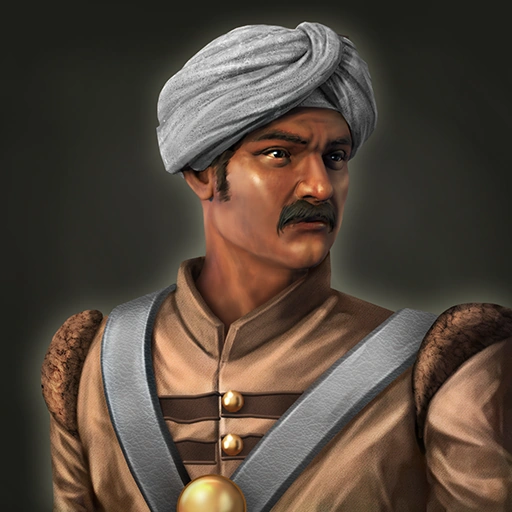
The Gurkha is Indian ranged infantry with a skirmisher role against Heavy Infantry. It adds ranged pressure to an Indian army while other units, especially Sepoys, can protect it from cavalry and close attacks.
Recorded values
- Available
- Commerce Age · Indian Barracks; Fort; Agra Fort; Galleon; American Citadel
- Training
- 33 sec · 1 population · 12 XP per train
- Durability & mobility
- 115 hit points · 30% ranged resistance · 4.0 speed · 24 line of sight
- Hand attack
- 8 damage · 1.5 attack interval · bonuses: 2.5x vs. Heavy infantry; 2.0x vs. Light ranged cavalry; 2.0x vs. Ranged shock trooper; 2.0x vs. Heavy infantry; 0.75x vs. Cavalry; 0.75x vs. Shock troops
- Ranged attack
- 16 damage · 2-18 range · 3.0 attack interval · bonuses: 2.5x vs. Light ranged cavalry; 2.5x vs. Ranged shock trooper; 2.0x vs. Heavy infantry; 0.6x vs. Cavalry; 0.6x vs. Shock troops
- Siege attack
- 12 damage · 6 range · 3.0 attack interval
- Ability
- Regeneration (before the Definitive Edition)
Role & counters
Gurkhas are trained through Indian military access and perform well against Heavy Infantry such as Musketeers. Their light-infantry profile makes them vulnerable when cavalry or melee troops reach them. Sowars or other mobile units can help answer enemy ranged infantry threatening the Gurkhas.
When to field it
Mix Gurkhas with Sepoys when the opponent fields Heavy Infantry and keep the line screened. Add a mobile response if the enemy uses skirmishers or cavalry to pressure the backline. Avoid sending Gurkhas forward alone just because they have range.
Indian access and combat profile
The Gurkha is the Indian ranged infantry equivalent of a Skirmisher, introduced in The Asian Dynasties. It is trained at Barracks and Galleons, and can also be produced from the Agra Fort Wonder. The unit is available from the Commerce Age and costs 70 Food and 50 Coin, takes 33 seconds to train, uses one population, and has 115 hit points, 30 percent ranged resistance, speed 4, and line of sight 22. Its ranged attack deals 16 damage at a range from 2 to 18 every three seconds. The strong base attack and long range make it an effective early answer to Heavy infantry, and the Indian player can access it before many civilizations receive comparable skirmisher units.
Matchups and army support
Gurkhas are strong against infantry and can pressure Heavy infantry from range, but they are weak against Cavalry. Their ranged attack has a 2.0 multiplier against Light ranged cavalry and Ranged shock troops, and reduced damage against Cavalry and Shock troops. Keep Sepoys or Zamburaks nearby to protect them from cavalry that closes the distance. The Gurkha's range and attack let it support a frontline from behind, but the unit's speed 4 means it cannot reliably escape a mounted attack without help. Use focus fire against infantry and retreat when the opponent's cavalry can reach the formation. The Gurkha also has a hand attack, but it should not be used as a melee unit.
Technology and age scaling
Barracks upgrades increase the Gurkha's attack range, eventually reaching 21 in the source profile. This makes the unit increasingly effective at engaging before the opponent can return fire. The Gurkha's age and Home City upgrades also improve hit points and damage; in the current Definitive Edition it does not regenerate health, unlike the original Asian Dynasties version. Some updates changed its unit tags and target multipliers, including its bonuses against Light ranged cavalry and Ranged shock troops. Use the current patch values rather than older descriptions that call the unit a regenerating skirmisher. The Gurkha should be upgraded when it remains a major part of the army, especially if the opponent relies on infantry.
Mansabdar Gurkha
The Mansabdar Gurkha is a separate shipment unit with 230 hit points, a 10 percent attack and hit point aura for nearby Gurkhas, and a higher 140 Food and 100 Coin cost. It occupies one population in the current profile and has a limit of one. Its Imperial Service aura can improve the nearby Gurkha line, so keep it near the main group rather than sending it on an independent raid. The Mansabdar has its own shipment and upgrade rules, and should not be confused with an ordinary Gurkha that has simply received an age upgrade.
Map and treasure availability
Gurkhas can be rescued from treasures on South Asian maps such as Borneo, Deccan, and Indochina. Treasure units provide an early reinforcement outside normal production, but their presence depends on the map and guardian. On water maps, Galleon production can continue to support the army from the coast. The unit's Food and Coin cost fits the Indian economy, but sustained Gurkha production still competes with Sepoys, Zamburaks, and other units. Add them when the enemy army contains enough infantry to reward their ranged attack, and do not overproduce them when the opponent is massing cavalry.
Range and focus fire
Gurkhas can reach 18 range before upgrades and increase to 21 with their full Barracks range improvements. Use that reach to fire on Heavy infantry before they can close, and focus a single target so the attack's bonus damage removes it quickly. Keep the line behind Sepoys or other units that can absorb a Cavalry charge. If the enemy moves around the screen, reposition the Gurkhas rather than asking them to fight at close range. Their 22 line of sight helps reveal an approach, but they cannot see through all terrain and should not replace scouting.
Commerce Age support line
The Commerce Age availability gives the Indians an early ranged answer to Heavy infantry. Build the Gurkha line when the opponent is producing infantry, then add Sepoys or Zamburaks before cavalry can reach it. This division of roles lets the Gurkhas focus on their bonus targets while the supporting units protect the firing line. If the opponent opens with cavalry instead, postpone extra Gurkhas until the army can protect them.
Treasure and ship production
A Gurkha rescued from a South Asian treasure can add early support without waiting for a Barracks queue. Protect the unit and integrate it with the army instead of sending it alone to explore. On a water map, Galleon production can reinforce the shore, but the ship and landing site need protection from enemy warships.
Choosing the upgrade investment
The Gurkha's range and attack upgrades are most valuable when it forms a large portion of the army. A few units may not justify diverting resources from Sepoys or age advancement. If the opponent continues producing Heavy infantry, invest in the Gurkha line and use its range to maintain pressure; if the enemy switches to cavalry, reserve resources for a screen instead.
Protecting an exposed line
If cavalry reaches the Gurkhas, retreat toward Sepoys or the Agra Fort rather than stopping to use the hand attack. The unit's 115 hit points and speed 4 are not enough to withstand a prolonged melee.
Trading range for safety
Move the Gurkha line after each volley when the enemy advances, and let a faster unit protect its retreat.
Production choice
Use the Barracks when land production needs to continue, or the Galleon when the shoreline is secure. Keep the units close enough to the main force that a cavalry raid cannot isolate them.
Long-range Indian anti-infantry line
Gurkhas are Indian ranged infantry with strong attack and long range, making them an important answer to enemy infantry. Barracks upgrades extend their reach, up to 21 range in the documented profile. They are stronger than an ordinary Skirmisher and become available in the Commerce Age, letting India field specialized ranged damage early. Their weakness is Cavalry: keep a screen in front and avoid letting mounted units close on the Gurkhas.
Upgrade and resource timing
Gurkhas are expensive, so their long range should translate into repeated safe volleys. Add the relevant Barracks upgrades when the army is already using the unit, and protect them with Sepoys, Sowars or other anti-Cavalry support. A Gurkha mass can pressure infantry from a distance, but does not replace siege against buildings or mobile Cavalry that can flank. Check the Indian economy’s Food, Coin and Influence demands before committing to continuous production.
Rifle support and anti-Infantry modifiers
Gurkha is an Indian ranged Infantry unit with attack values that support a skirmishing role. Its hand attack now deals 8 damage, compared with 6 before update 14.43676. The hand profile has a 2.5× modifier against Heavy Infantry, up from 2.0× before that update. Its ranged profile has 2.5× against Light Ranged Cavalry and Ranged Shock Troops, increased from 2.0× before update 13.58326; it also deals 2.0× against Heavy Infantry. Current ranged modifiers against Cavalry and Shock Troops are 0.6×, compared with 0.75× and earlier 0.5× Shock Troop values. The unit is better used to pressure its intended Infantry and ranged targets than to stand alone against Cavalry.