Surgeon
Surgeon is Europeans, United States special-purpose unit in Age of Empires III, available from the Commerce Age; obtained through Church,, Mosque,, Cathedral (with the "Master Surgeons" card), Field Hospital*, Meeting House (United States), Manor House (British with the "Florence Nightingale" card). Its listed ability is Builds Field Hospitals.
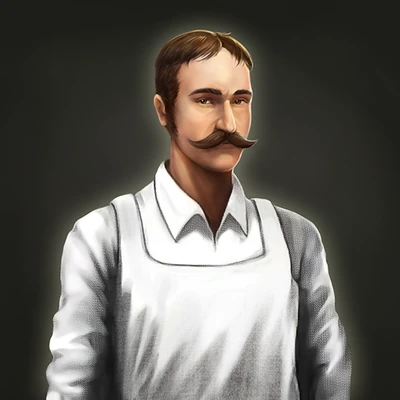
Recorded values
- Cost
- 225 Coin
- Available
- Commerce Age · Church,; Mosque,; Cathedral (with the "Master Surgeons" card) ; Field Hospital*; Meeting House (United States) ; Manor House (British with the "Florence Nightingale" card)
- Training
- 30 sec · 1 population · 23 XP per train
- Durability & mobility
- 360 hit points · 10% ranged resistance · 4.0 speed · 12 line of sight
- Healing
- range 12
- Hand attack
- 5 base damage · attack interval 1.5
- Ability
- Builds Field Hospitals
Role, availability & values
Production is available through Church,, Mosque,, Cathedral (with the "Master Surgeons" card), Field Hospital, Meeting House (United States), or Manor House (British with the "Florence Nightingale" card). It has 360 hit points and 10% ranged resistance. It moves at 4.0 speed and uses 1 population. Training costs 225 Coin; it takes 30 seconds to train. Attack profile: Healing: range 12. Hand attack: 5 damage; every 1.5 seconds. Special ability or role: Builds Field Hospitals.
Matchup & timing
Use the Surgeon to restore a trained force and place Field Hospitals where the army can defend them. Its range-12 healing is most useful after withdrawing from a fight; it should not accompany the front line into contact. Because access varies by civilization, confirm the Church, Mosque, Cathedral or other listed route before making it part of the recovery plan.
Healing and Field Hospital construction
The Surgeon is a support unit available through several civilization-specific buildings and cards. It costs 225 Coin, takes 30 seconds to train and has 360 hit points, 10% ranged resistance, speed 4 and line of sight 12. Healing reaches range 12, allowing the Surgeon to restore nearby units while remaining behind a protected frontline. It can also build Field Hospitals, which gives the unit a role in establishing a recovery point after a battle. Access is not identical for every civilization: Churches and Mosques provide some routes, while the Cathedral requires Master Surgeons, the United States uses its Meeting House, and British access can depend on the Florence Nightingale card. These conditions should be checked before building a deck or strategy around it. A five-damage hand attack is only incidental; do not send the healer forward to fight. Keep it with the injured force and retreat when enemy cavalry or raiders approach.
Managing recovery and protection
A Surgeon’s healing is useful when the army can remain nearby long enough to recover, so do not expect it to replace reinforcements during an active battle. Withdraw damaged units behind the line, keep the Surgeon within range and use a Field Hospital to support a position that the army can hold. The unit has 360 hit points but only 10% ranged resistance, so concentrated fire can still remove it. Keep a screen between the healer and the enemy, and avoid leaving it at a forward hospital after the main force retreats. Coin is also needed for military units and technologies; recruit the Surgeon when the army’s expected time between fights makes healing worthwhile. A Field Hospital provides a fixed point of support, while the Surgeon can move with the force and build another if the situation allows. Access conditions differ by civilization and card, so a missing Surgeon option is not a bug in the roster. Use healing to preserve upgraded or expensive troops, then return the support unit to a safe position before the next engagement.
When healing repays its cost
A Surgeon is most useful when an army survives engagements with damaged units that are costly to replace. The healer’s 12-range support can restore those units while they regroup, and Field Hospital construction lets the player maintain recovery near an objective. If the force is constantly retreating or moving too quickly to remain in healing range, another military unit may be a better use of 225 Coin and one population. Keep the Surgeon out of the first volley and move the Field Hospital only when the surrounding area is secure. The access cards and buildings vary by civilization, so verify the option before building a deck around the healer. Healing supports the regular army; it does not replace unit production, food gathering or defensive coverage.
Place recovery where the army can hold
Field Hospitals are useful only if the army can defend the area around them. Build one behind the frontline after a successful engagement, heal damaged units within the Surgeon’s 12 range, and move the support unit before the opponent’s next push reaches it. Keep a screen nearby because the Surgeon’s limited attack is not a defense against a raid. The healer is most valuable when it preserves high-cost or upgraded troops over several fights; if the army cannot pause, invest in combat units and return for healing later.
Confirm the civilization-specific source
The Surgeon’s access depends on the selected civilization and shipment. Churches, Mosques and special building or Home City options do not provide a universal production route. Check the relevant card or building before assigning Coin to the unit, and do not assume a Surgeon can be trained in every European match. This distinction matters especially when using a guide written for the United States or a British deck.
Healing between engagements
Keep the Surgeon within range of the units that need treatment, and do not scatter the damaged force across multiple sides of the map. A single protected recovery point lets the support unit work efficiently while the army regroups. Move it forward only after the route and Field Hospital site are secure.
Preserve a trained army
Prioritize healing for units that have received upgrades or are expensive to replace. The Surgeon’s value compounds across engagements when those troops survive; a Field Hospital placed too far forward can be lost before recovery pays off.
Retreat when the formation moves
If the frontline advances beyond healing range, move the Surgeon with the injured units instead of leaving it at the previous position. A support unit can only preserve the army while it remains close enough to work and safe enough to survive.