Fall of the Hausa
Fall of the Hausa is an African Royals historical battle set in 1804, when Usman dan Fodio’s revolution challenged the Hausa kingdoms and helped establish the Sokoto Caliphate. The scenario requires the player to defeat three separate capitals.
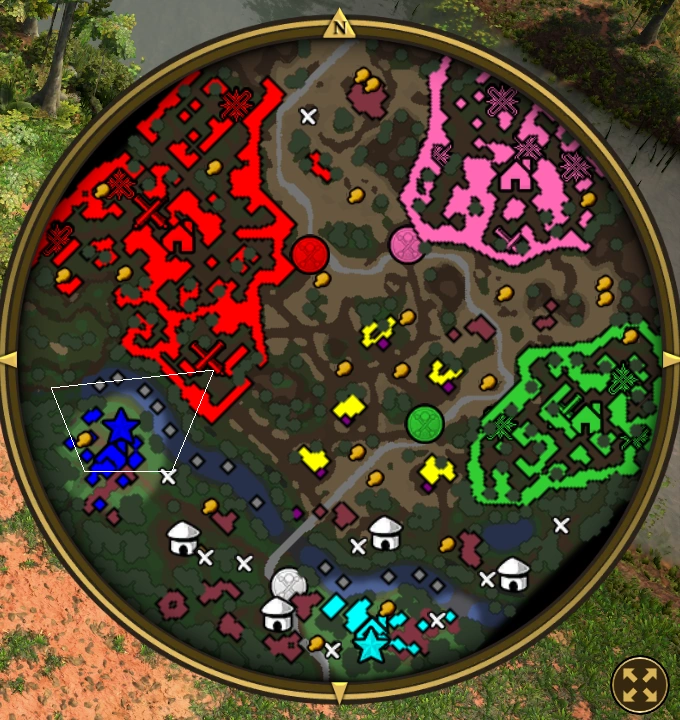
Setting & objective
Destroy the Town Centers of Gobir, Katsina and Kano. Optional objectives are to build a University and free Hausa peasants; they offer additional value but are not substitutes for eliminating all three Town Centers.
How to approach it
Scout routes between the three targets and plan the order of attacks so the army can move without leaving its economy exposed. Use allies and resources gained along the way to sustain the campaign; pursue optional tasks when the force can afford the detour.
Three capitals, one connected campaign
Fall of the Hausa is a 1804 Historical Battle set during Usman dan Fodio’s revolution against the Hausa kingdoms. The required targets are the Town Centers of Gobir, Katsina and Kano. Each is a separate objective, so destroying one does not complete the scenario. Plan a route that lets the army move from capital to capital while keeping enough units to protect its own economy and production. Scout the roads between targets before committing to a siege, and do not leave artillery unsupported while the force moves. The scenario’s campaign setting provides a fixed mission context rather than a normal Hausa civilization match; use the available starting army and mission resources instead of assuming a standard build order. Optional objectives include building a University and freeing Hausa peasants. These can improve the player’s position, but they are secondary to destroying all three Town Centers. Complete them when the route is secure and the army can spare units for the detour.
Prioritize targets and preserve siege
Use a mixed army to clear defenders and keep siege units firing on each Town Center. Focus attacks on the required structure instead of chasing every enemy unit away from the objective. After the first capital falls, regroup and recheck the next route; the distance between targets can stretch the force and expose workers to raids. If a University can be built safely, its optional reward may support the later engagements, but do not send builders through an uncleared area. Freeing peasants can provide additional mission value, though the player should still preserve enough combat units for the remaining towns. Keep mobile units near the siege line to intercept cavalry or raiders, and avoid splitting artillery among all three targets. A concentrated force can remove one Town Center, then move together to the next. The battle represents a political transformation in the region, but the playable objective is specific: destroy Gobir, Katsina and Kano’s Town Centers. Once all are gone, the main objective is fulfilled; optional tasks do not substitute for any of them.
Optional support and economic continuity
The optional University and peasant objectives should be judged by their effect on the remaining two capitals. A University can support technologies or the reward specified by the scenario, but construction consumes time and exposes workers. Clear the site first and build it while the main force can still defend the area. Freeing Hausa peasants may add economic support; escort them toward safety and protect them from enemy units rather than treating the objective as a quick click. Keep enough Villagers working between sieges so the army can replenish, but avoid expanding into territory the enemy controls. After destroying a Town Center, regroup, repair the economy and move to the next target with the siege units protected. If the army becomes divided, the defenders can focus on the isolated part and delay the entire objective sequence. The mission rewards a measured advance: clear the route, secure the target, then move together.
Conclude the campaign after the final capital
Keep the remaining army intact after the third Town Center is destroyed. The required objective is complete at that point; use spare time to finish the University or peasant optional task only if the scenario remains active and those rewards still matter. Do not send the siege force chasing isolated defenders after the final target falls.
Optional objectives do not replace the capitals
Complete the University or peasant tasks only if they do not delay the three Town Center assaults. The main objective remains Gobir, Katsina and Kano; verify that all three are destroyed before concluding the battle.
Verify the three required targets
The final victory check is the destruction of the Town Centers at Gobir, Katsina and Kano. Confirm all three objectives are marked complete before ending the mission; optional University or peasant rewards are not substitutes.
Break the three Hausa capitals and free the peasants
The Historical Battle depicts the Fulani War of 1804–1810 and the rise of the Sokoto Caliphate. The required objective is to destroy the Town Centers of Gobir, Katsina and Kano. A University and the liberation of abused Hausa peasants are optional tasks that can support the player’s economy and force. Scout the routes between the three capitals before committing the army, then focus siege on one Town Center at a time while leaving a reserve to protect the base. The University is a useful support target if it can be built without delaying the main attacks. Freeing peasants requires clearing the guards and escorting the liberated population to safety. This scenario’s Hausa and Fulani forces are scripted for the battle; their setup should not be confused with the normal Hausa civilization’s full skirmish roster.