The African Royals
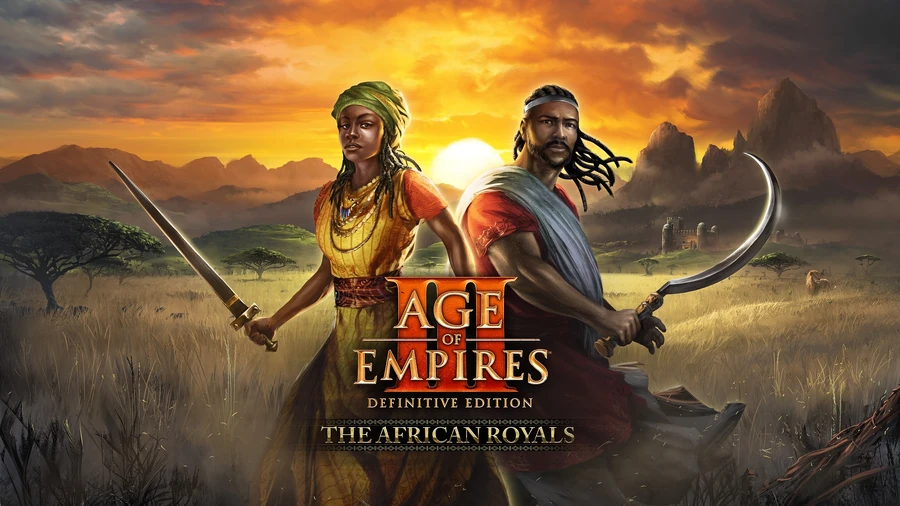
The African Royals is a Definitive Edition expansion that adds the Ethiopians and Hausa, African allies, Influence and new maps and campaigns.
Included content
The two civilizations share some alliance choices but use distinct economies and military rosters. Hausa options center on the University and Influence; Ethiopian access is organized through its own resource and alliance choices. These systems supplement Food, Wood and Coin rather than replacing the standard economy.
Version boundary
Check which African civilization and alliance is active before comparing a unit or technology. Protect the building and resource stream that enables the planned Influence purchase, and use the relevant campaign page for scenario-only forces.
Expansion scope and place in the series
The African Royals is an expansion for Age of Empires III: Definitive Edition, released in 2021. It expands the Definitive Edition ruleset rather than changing the original Age of Empires III campaign into a separate game. Its central addition is two playable African civilizations, the Ethiopians and Hausa, with distinct economies, military rosters and Home City shipment choices. The expansion also adds maps, minor civilizations, historical battles, and related units and technologies. Players need the Definitive Edition content; the expansion’s civilizations and systems should not be described as part of the original 2005 release or the older The WarChiefs and The Asian Dynasties packages.
Ethiopian civilization
The Ethiopians develop their economy around influence as well as the familiar Food, Wood and Coin. Influence can be generated and spent through civilization-specific systems and shipments, allowing the player to access distinctive military and economic options. Their age-up choices and Home City cards can shift the army toward different regional units, so the civilization rewards planning a composition rather than selecting a single universal unit. Ethiopian play asks the player to balance conventional resource gathering with the timing of influence income, then choose when to convert that reserve into troops or upgrades. The practical value of a shipment depends on whether the player can afford its resource component and has the production buildings and population space ready when it arrives.
Hausa civilization
The Hausa have a separate economic identity built around cattle and the Fulani connection. Cattle can be gathered, housed and used within the Hausa economy, linking food production to civilization-specific choices. Their options include units and technologies associated with West African history, and their Home City deck helps determine whether a match develops toward economic growth, mobile forces or a larger combined army. Managing livestock requires attention to where animals are kept and how safely they can be collected; a cattle-based plan can lose value if raiding interrupts access or if the player neglects ordinary map resources. Hausa players should scout for safe gathering space and maintain enough military presence to protect their economy while its distinctive systems mature.
Maps, minor civilizations and exploration
The expansion’s African maps change the practical questions of scouting and expansion. Terrain, wildlife, trading routes and native settlements vary by map, so the value of a civilization bonus depends on the actual layout. Minor civilizations add another layer to exploration: a player can seek a Native settlement, train its units or research its technologies where the scenario supports those actions. These are map-dependent opportunities, not guaranteed components of every match. On an unfamiliar African map, send the Explorer to identify resource clusters, settlement locations and safe routes before committing to a forward base. A nearby settlement can complement a roster, but fighting over it may expose the economy or delay the player’s age-up.
Historical battles and single-player content
The expansion includes historical battle scenarios that place players in specific military situations rather than a standard open-ended skirmish. Their objectives, starting forces and available reinforcements are scenario-defined; they do not necessarily use the same economy or unlock sequence as a random-map match. Read the mission objectives and pay attention to scripted events before spending limited resources. A battle may require holding a location, escorting forces, defeating a named opponent or surviving a timed attack. Units that are valuable in a normal match can be less useful when the scenario restricts production or places the player under immediate pressure. The expansion’s single-player additions give context to its civilizations while using Age of Empires III’s real-time tactical controls.
How to approach the new civilizations
When learning either civilization, first identify which resource powers its special mechanics and what actions create or spend it. Build the required economic support early enough that the unique system contributes before the opponent’s timing attack. Then select a compact army with an answer to both infantry and cavalry; the new roster is most effective when specialized units are supported rather than sent alone. Home City shipments should fill a specific gap, such as adding immediate defense, enabling an age transition or improving the economy. Avoid spending every shipment on a long-term bonus if the opponent is already pressuring a resource line. The expansion’s options reward adaptation, but the ordinary fundamentals still apply: protect gatherers, keep production active and contest useful map space.
Compatibility and version context
The African Royals belongs to Age of Empires III: Definitive Edition and its later balance environment. The original game and its earlier expansions have different civilizations, cards, maps and interface behavior. Unit statistics and card effects may also change across Definitive Edition updates. When comparing a strategy from an older guide, check that it names the same edition and patch context before carrying over build timings or resource totals. A civilization feature described here is not a general rule for every African map or every game mode; scenario rules, treaty settings and custom content can override ordinary skirmish behavior.
Economy and military timing
Both civilizations need the ordinary resource base to support their distinctive mechanics. An early build should identify which gatherers can safely collect Food and Coin, what Wood is needed for production and whether the special resource can be generated without exposing the Town Center. The timing of a shipment can bridge a temporary gap, but a long-term civilization bonus does not help if no units are available when an opponent attacks. Use early scouting to decide whether the first army should defend the economy or contest a central route. Once the position is stable, invest in the civilization’s unique options and add upgrades that strengthen the chosen composition. This staged approach lets a player learn the new systems without abandoning Villager production, map control or basic counter-unit coverage.
Using the expansion in multiplayer
In multiplayer, the African civilizations’ unfamiliar mechanics make scouting and clear communication especially useful. Identify whether an opponent’s plan depends on an early forward base, a trade route or a resource-rich corner, and contest it with a force suited to the threat. Team games allow one player to protect a livestock or influence economy while an ally supplies pressure elsewhere; agree on whether the first shipments support defense or a shared timing attack. Treaty settings change the importance of early combat and long-term scaling, while Deathmatch begins with a different resource situation. Build orders copied from one mode should not be transferred unchanged to another. In ranked or organized play, also confirm that all players use the same Definitive Edition content and balance update.
Expansion features at a glance
The expansion’s additions are connected: new civilizations bring their own unit rosters and economic choices, maps create new reasons to explore, minor civilizations provide local options, and historical battles present controlled single-player challenges. A player can explore them separately. Begin with a skirmish to understand resource flow and production, then try maps where the new settlements and terrain matter, and finally play the historical scenarios for their scripted objectives. In a skirmish, the goal is to build and adapt an economy; in a battle scenario, the goal is the mission’s stated task. Keeping these contexts distinct prevents a scripted reinforcement or mission-specific unit from being mistaken for a general civilization ability.
Reading civilization strengths without overgeneralizing
A civilization’s signature mechanic is a source of options, not a guarantee of victory. Ethiopian influence or Hausa livestock can increase flexibility, but each requires time, space and protection. The opponent can disrupt the relevant gatherers, force an early response or deny the map area needed to scale. Evaluate the actual army composition and available upgrades instead of assuming that every match follows the same build. Use the Home City deck to cover a weakness as well as to amplify a strength: a defensive shipment can protect a growing economy, while a unit shipment can convert a safe position into map control. Since card effects and unit statistics can change between Definitive Edition updates, use the in-game profile for exact current values.
Quick reference
Use the expansion page to distinguish its two playable civilizations, African maps, minor civilizations and historical battles from the earlier Age of Empires III releases. For exact troop statistics, card availability and balance values, use the matching in-game civilization and patch. Scenario missions can replace ordinary production and economy rules with scripted objectives.
Ethiopians and Hausa join the playable roster
The African Royals expansion adds Ethiopia and Hausa as playable civilizations, each with a distinctive economy and military roster. Their age-up and production choices connect to African systems such as Influence and alliances, while shared units and buildings appear across the expansion’s content. Ethiopia uses a Mountain Monastery and Palace choices; Hausa use livestock and their own production options. The two civilizations share an expansion framework but should not be treated as interchangeable: their workers, units, age rewards and economic routes differ.
Influence, alliances and map planning
African civilization strategies can require managing Influence alongside Food, Wood and Coin, and the available alliance units depend on progression and the chosen option. Map access matters because resources and Native or Trade Post locations shape which army is affordable. A player should decide which alliance role is needed before investing, then protect the buildings and resource sites that support it. The expansion also adds historical battles and maps; mission forces and objectives can differ from standard skirmish rosters.
Definitive Edition content and version distinctions
The African Royals is downloadable content for Age of Empires III: Definitive Edition. Its civilization content belongs to that game and should not be mixed with African units or mechanics from another Age of Empires title. Balance updates can alter costs, limits and unit behavior, so use the version noted on each entry when comparing exact values. The linked Ethiopian and Hausa pages explain their separate economies, age-ups, units and cards in more detail.