Heligoland
Heligoland is a barren beach map where teams contest limited usable ground. Harpooner and Sailor outlaws are listed, but no Native settlement is available. Safe gathering lanes and beach approaches are therefore central to the first expansion.
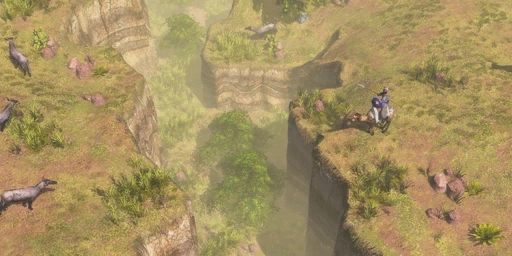
Terrain, routes and neutral sites
- Terrain
- Barren beaches with limited usable ground
- Native settlements
- None listed
- Opening concern
- Protect gathering lanes and beach approaches
Map character
Scout the shore and nearby resources before sending Villagers away from the starting area. A compact army can guard workers while the Explorer checks the route and outlaw access. Do not build the opening around a Native Trading Post that this map does not offer.
What to scout
Expand in stages and protect the first resource site before reaching for distant ground. Naval options depend on the generated water connections; prioritize the beach and ordinary production until scouting reveals a reason to invest in ships.
Treat usable beach as a limited resource
Heligoland’s barren beach setting puts pressure on the space where Villagers can gather and move safely. Scout Hunts, Mines and routes from the starting area before choosing a forward position. A resource may be close but still costly if workers must cross an exposed shore or if production cannot reinforce them. Keep the first gathering group within support range and expand only after the army can cover the travel lane. The map description does not promise a fixed resource cluster, so read each match’s generated layout rather than relying on one remembered opening.
Neutral options without a Native alliance
Heligoland lists Harpooner and Sailor outlaws but no Native settlement. That means the neutral choices are outlaw recruitment and ordinary military production, not a Native Trading Post alliance. Use the Explorer to locate the camps and compare the available recruit with the role the army needs. Reaching a camp should not leave the beach, workers or Town Center undefended. A Dock is a separate decision: confirm that the current water connection supports fishing or transport before spending on ships. If the shore cannot be protected, prioritize a land force and nearby production first.
Hold the shore with a compact, responsive force
Because the map centers on beach access, keep a reserve able to answer a landing or a raid on the first expansion. Do not divide the army evenly across every shoreline point; choose the gathering lane or approach that matters most and leave enough mobility to respond elsewhere. If the generated coast supports a useful naval route, guard the departure point as well as the intended landing. Otherwise, make the beach a boundary to watch rather than an invitation to overinvest in naval units. The outlaws can supplement the force, but safe ground and protected workers remain the basis of the opening.
Use outlaw statistics to cover the beach approach
Heligoland lists the Harpooner and Sailor outlaws but no Native settlement. The Harpooner costs 120 Coin and 4 population; its 20-damage ranged attack reaches range 14 and deals twice as much damage to Cavalry and Shock troops. Its 210 hit points and siege attack make it a substantial unit to place near a threatened beach route, although its training time is 40 seconds. The Sailor costs 100 Coin and 3 population, trains in 28 seconds and has 190 hit points. Its ranged attack deals 15 damage at range 12, while its 22-damage siege attack can pressure structures; it also repairs ships within range 16. The correct choice depends on the exposed lane: Harpooner offers stronger cavalry deterrence, while Sailor can help keep ships operational. Full access varies with civilization and recruitment building, so confirm the unit can actually be trained before planning around it.
Count the cost against workers and beach defense
The outlaw price is only part of the commitment. Coin spent on a Harpooner or Sailor is unavailable for other units or upgrades, and population used by the recruit cannot house another soldier. A Harpooner consumes four population, which can matter when the army also needs a screen and a landing force. A Sailor takes three population and trains faster, but its repair benefit is wasted if ships cannot remain near it safely. Place the outlaw where it can support the route or protect a gathering lane; do not leave it at a distant camp while Villagers work on an undefended shore. If the camp is contested, preserve a coherent army and return with builders only after the approach is held.