Cherokee Rifleman
Cherokee Rifleman is ranged infantry in Age of Empires III, available from the Commerce Age; obtained through Trading Post or Tambo on a Cherokee settlement, Native Embassy.
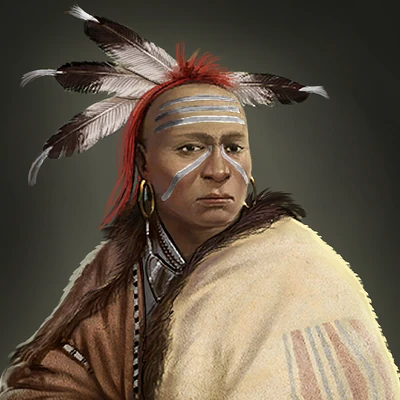
Recorded values
- Available
- Commerce Age · Trading Post or Tambo on a Cherokee settlement; Native Embassy
- Training
- 30 sec · 12 XP per train
- Durability & mobility
- 230 hit points · 10% ranged resistance · 4.0 speed · 18 line of sight
- Hand attack
- 6 damage · 1.5 attack interval · bonuses: 2.0x vs. Light ranged cavalry; 2.0x vs. Ranged shock trooper; 2.0x vs. Heavy infantry; 0.75x vs. Cavalry; 0.75x vs. Shock troops
- Ranged attack
- 13 damage · 2-16 range · 3.0 attack interval · bonuses: 2.5x vs. Light ranged cavalry; 2.5x vs. Ranged shock trooper; 2.0x vs. Heavy infantry; 0.6x vs. Cavalry; 0.6x vs. Shock troops
- Siege attack
- 12 damage · 6 range · 3.0 attack interval
Role, availability & values
Production is available through Trading Post or Tambo on a Cherokee settlement or Native Embassy. It has 230 hit points and 10% ranged resistance. It moves at 4.0 speed. Training costs 60 Food and 60 Wood; it takes 30 seconds to train. Attack profile: Hand attack deals 6 damage. Ranged attack deals 13 damage. Siege attack deals 12 damage. Hand attack bonuses: 2.0× against Light ranged cavalry, 2.0× against Ranged shock trooper, 2.0× against Heavy infantry, 0.75× against Cavalry, and 0.75× against Shock troops. Ranged attack bonuses: 2.5× against Light ranged cavalry, 2.5× against Ranged shock trooper, 2.0× against Heavy infantry, 0.6× against Cavalry, and 0.6× against Shock troops*.
Matchup & timing
A Cherokee Rifleman’s range-16 volley is useful against Light ranged cavalry, Ranged shock troops and Heavy Infantry; its 13 base damage is amplified against those targets. Keep it behind the frontline and close enough to the Cherokee settlement or Embassy route to reinforce. Do not use its reduced Cavalry multipliers as a substitute for anti-Cavalry troops.
Role and recruitment
The Cherokee Rifleman is a ranged native warrior recruited from a Cherokee settlement through a Trading Post or Tambo, or through a Native Embassy where that access is available. The current listed profile costs 60 Food and 60 Wood, takes 30 seconds to train and has a limit of 16 per settlement. It consumes no population. The unit has 230 hit points, 10% ranged resistance, speed 4.0 and line of sight 18. Its long-range rifle fire and early Commerce Age availability make it a useful way to add population-free ranged infantry before a civilization’s later upgrades are ready. The settlement and unit cap remain map-dependent, so the unit is a supplement rather than a guaranteed core roster.
Ranged attack and target bonuses
The Rifleman’s ranged attack deals 13 damage every three seconds at a range of 2–16. It receives 2.5× damage against light ranged cavalry and ranged shock troops, 2× against heavy infantry, and reduced damage against cavalry and shock troops. Its hand attack is only 6 damage, while its siege attack is 12 at range 6 on a three-second interval. These values place it in a skirmisher-like role: focus on heavy infantry and the light cavalry or shock units covered by its bonuses, and maintain distance. Heavy cavalry, hand shock troops, counter-skirmishers and artillery are dangerous. A 16-range attack is useful but shorter than some dedicated Skirmishers, so position it behind a screen and avoid chasing targets into melee.
Combat role and comparison with Skirmishers
The Cherokee Rifleman functions like a native Skirmisher, but arrives in the Commerce Age and carries a sturdier hit-point profile than many standard ranged infantry units. It has less range than conventional Skirmishers, but 230 hit points help it survive incidental damage. Because it uses no population, a group can add firepower after the army approaches its population cap. It still needs protection: the unit’s light-infantry classification makes it vulnerable to cavalry and artillery, and its limited speed means it cannot always escape a committed melee force. Use it to fire into heavy infantry while cavalry or spear units hold the frontline. Do not treat its durability as a reason to fight heavy cavalry directly.
Upgrades and settlement improvements
Cherokee Warrior Societies upgrades Riflemen to Elite in the Fortress Age. The current listed cost is 100 Wood and 75 Coin, reducing earlier Definitive Edition costs; the upgrade adds 25% hit points and damage. Champion Cherokee costs 400 Wood and 300 Coin in the Industrial Age and requires the Elite upgrade, granting the Champion rank and 35% more hit points and damage. Legendary Native Warriors in the Imperial Age costs 1,500 Food and 1,500 Wood and provides 50% more hit points and damage. Specific African civilization rules can grant native upgrades automatically. The Cherokee Rifleman also benefits from applicable native, infantry, gunpowder or ranged-infantry improvements, depending on the player’s civilization and cards. Confirm eligibility before spending resources, because not every global infantry technology affects every native warrior.
Home City cards and population-free value
Home City cards can reduce the unit’s cost or raise its settlement build limit, with the cited maximum reaching 19 per site after the relevant card. Team cards and civilization bonuses can improve its attack, hit points or training. For the Haudenosaunee, a combination of gunpowder, ranged infantry, infantry and native warrior bonuses can bring its attack close to a Forest Prowler’s while retaining substantially greater hit points in the Imperial Age. This is a civilization-specific interaction, not the base Cherokee profile. Cards take deck space and settlement access, so use them when the map and army plan can exploit additional Riflemen. Population-free units can be especially valuable at the cap, but their resource costs and production limits still apply.
Strengths and counters
The Rifleman is most useful against heavy infantry, light ranged cavalry and ranged shock troops. It can add ranged pressure without consuming population and can be trained earlier than some civilization-specific Skirmishers. It is weak against heavy cavalry, hand shock troops, counter-skirmishers and artillery. If the opponent adds cavalry, protect Riflemen with anti-cavalry infantry or melee cavalry that can intercept. If enemy artillery appears, use cavalry or Culverins to remove it rather than trading Riflemen into the guns. Against another ranged infantry army, compare range and damage before taking a stand-up fight; the Cherokee’s durability does not guarantee it wins against a unit with a longer firing range.
Map control and practical use
First scout whether a Cherokee settlement is available and how safely it can be claimed. A central Trading Post can unlock fast access but is likely to be contested; a safer site may delay the first unit group. Protect the site, queue a limited batch and use the Riflemen as a supporting line behind the civilization’s main force. Their long sight can help reveal approaches, but do not leave them isolated as scouts. When hunting or mining areas shift, move the army with them so their ranged damage remains covered. If the settlement is lost, rely on regular production for the core army and avoid planning a timing attack around reinforcements that can no longer arrive.
Name, edition and patch differences
The Cherokee Rifleman has existed across the original Age of Empires III and Definitive Edition with changes to its classification, training time, settlement limit and upgrade costs. The current Definitive Edition entry lists it as light infantry and rifle infantry; older data may classify it differently. Its pre-Definitive Edition train time was shorter, and its settlement cap was lower. The native unit is not the same as a civilization’s standard Skirmisher even when their combat jobs overlap. Exact damage multipliers, cards and access can also vary with patch. When copying an older strategy, confirm the edition and settlement rules before using the listed cost or upgrade timing.
Opening and late-game timing
In the Commerce Age, a few Riflemen can strengthen a defense against heavy infantry or protect a Trading Post without taking population from the normal army. Add more only if the opponent continues to field favorable targets. In the Fortress Age, upgrade them when the group is large enough to justify the cost or when the match is likely to continue. In the Imperial Age, Legendary Native Warriors is an expensive investment; it is most efficient when a significant force remains and the settlement can continue training replacements. If the force has been wiped out or the map site is unsafe, spend resources on reliable production instead.
Positioning checklist
Keep Riflemen behind the frontline, focus fire on heavy infantry, and retreat when heavy cavalry or artillery can reach them. Their range is 2–16, their 13-damage volley repeats every three seconds, and they occupy no population, but none of those strengths removes the need for a screen. Use them where the map allows a safe firing line and where their target bonuses matter.
Choosing a card investment
A cost-reduction or build-limit card is most useful when the player can hold the Cherokee site and intends to train several units. A team combat card can improve the army beyond the player’s own roster, but its value depends on allies who can recruit or benefit from native warriors. In a short match, immediate unit shipments may be better than an upgrade that requires a large force to pay back. Compare the expected number of Riflemen produced with the card’s resource savings and the delay to the next military shipment.
Preserve range advantage
Use terrain and friendly units to keep attackers outside melee distance. The Rifleman’s long attack range and high hit points make it a steady support unit, but sustained counter-fire or a cavalry dive can still remove the group quickly.
Cherokee Native rifle unit
The Cherokee Rifleman is a Commerce Age Native ranged Infantry unit available from a Trading Post or Tambo on a Cherokee settlement, or from a Native Embassy. It costs 60 Food and 60 Wood, takes 30 seconds to train and is limited to 16 per settlement. It has 230 hit points, 10% ranged resistance, speed four and sight 18. The 13-damage ranged attack fires every three seconds at range 2–16. It deals 2.5× damage against Light ranged Cavalry and Ranged Shock troops and 2× against Heavy Infantry, but reduced damage against Cavalry and Shock troops. Its hand attack has similar class targeting. The high health for a ranged Native unit helps it hold a firing line, but the low ranged resistance means it still needs protection.
Native cap, alliance and target choice
Cherokee Riflemen are strongest when they can focus the Infantry and ranged Cavalry they counter while another unit prevents melee Cavalry from reaching them. The train cap belongs to each Cherokee settlement, so recruiting depends on map position and access to the Native site. A Trading Post there also opens Cherokee technologies; weigh the military train against those upgrades and the cost of maintaining the post. Their range 16 allows them to start firing before many Infantry can respond, but they move at speed four and cannot safely pursue a retreating target. Use the army to hold ground, and withdraw the riflemen if the enemy switches to units that their reduced-damage profile handles poorly.