Giant Salamander
Giant Salamander is a huntable animal in Age of Empires III. Its carcass contains 500 Food, making it a substantial natural resource when it appears on a map or scenario.
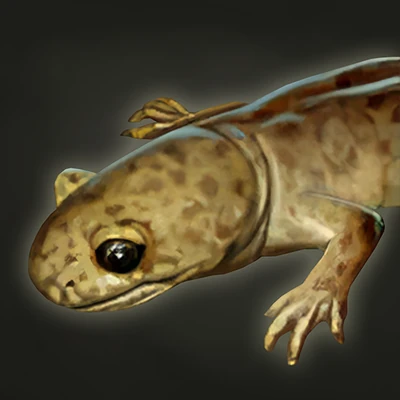
Recorded values
- Durability & mobility
- 20 hit points · 2.0 speed · 18 line of sight
Role, availability & values
Settlers hunt the animal and gather Food from the carcass; the recorded data supports up to eight gatherers. It is finite wildlife, not a unit that can be trained or placed in a livestock building. Location and safety depend on the map.
Matchup & timing
Use nearby Giant Salamanders to maintain early Villager production while the area is safe. Scout a replacement source before the herd is depleted, and protect workers if the hunt is exposed to raids.
A finite 500-Food hunt
The Giant Salamander contains 500 Food and supports up to eight gatherers in the recorded profile. It is wildlife rather than livestock, so it cannot be assigned to a pen or retrained after the carcass is depleted. Scout its location, gather while the route is safe, and plan a replacement Food source before the workers finish it.
A rare Honshu-only hunt
Giant Salamanders are among the rarest huntables in the Asian Dynasties map pool: they appear on Honshu and nowhere else in the recorded map listing. A small group is placed on the island that contains the Trade Route. Each animal holds 500 Food, the same amount as large huntables such as Musk Ox, Bison, Moose and Tapir, and supports up to eight gatherers. That makes the site a meaningful local Food patch, but its value depends on whether the player can safely reach and hold the island.
Gathering role versus Shrine or Hacienda effects
The Salamander is wildlife that Settlers hunt; it is not a trained unit or livestock animal. Its profile has 20 hit points, 2.0 speed and 18 Line of Sight. The source data also lists separate automatic gathering values for Shrines and Haciendas, but those building rates are not the same as a Settler’s hunting rate and do not change the carcass’s 500-Food stock. Plan for depletion and move the workers when the animal is exhausted.