Ivan the Terrible
Ivan the Terrible is the Russian skirmish AI personality in Age of Empires III. His profile uses Russian infantry and cavalry and may establish Blockhouses for early defense and production. The named entry describes computer-controlled behavior, not the historical ruler as a campaign unit.
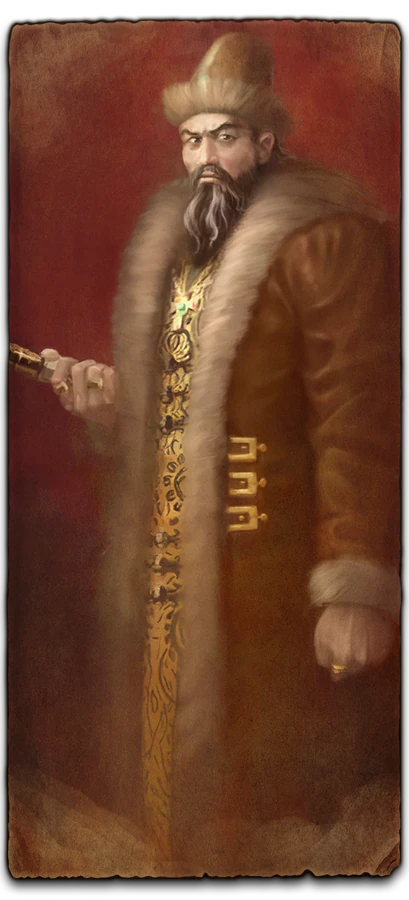
AI identity & army profile
Strelets and Cossacks are characteristic parts of his force. A Blockhouse combines defensive presence with Russian military production, helping him establish early coverage and mass infantry. The structure’s position affects which approaches it can protect, and later upgrades or army support can change how difficult it is to contest.
How to prepare
Scout the Blockhouse coverage and avoid attacking directly into its firing area with an unsupported force. Protect exposed Villagers from Cossack raids and use a route the defensive structure cannot cover. As his army grows, adjust the composition to the units you see rather than assuming the opening mix remains unchanged.
Russian AI army and blockhouse plan
Ivan the Terrible is the Russian AI personality in Age of Empires III. He favors Infantry, especially Strelets, and also uses Cossacks. He builds Blockhouses early to defend the base and create a ready point for mass-producing Infantry, but the source says he does not upgrade them, so their value drops as the match progresses. Russia trains Settlers and military units in batches, and those groups are individually weaker than many other civilizations’ units. Ivan often reaches the Industrial and Imperial Ages later than rival AIs because the group production economy requires a large workforce and resource investment. If he survives, the army can become dangerous: upgraded Halberdiers and Falconets provide a durable anti-Infantry and anti-cavalry line, while Streltsy and Musketeers become less common. Russian Blockhouses can send repeated waves, so the player should attack their production network or maintain a counter army rather than defeating each small group separately.
How to exploit the timing gap
Ivan is described as easier than several AI personalities, though stronger than Queen Isabella. His early Blockhouses let him defend and produce units at the same time, so scout their locations and attack before his Infantry mass grows. Because the AI often spends more Settlers gathering to support Russian group production, raids on exposed workers can delay his aging and military upgrades. Keep anti-Infantry units ready for Strelets, and anti-cavalry units for Cossacks. If he reaches the late game, do not assume his lower technology Age means his army is harmless: upgraded Halberdiers can punish cavalry, and Falconets can dominate unprotected Infantry. His composition is usually relatively weak against Artillery, which can outrange the Blockhouse production zone and attack clustered troops. Use mobile units to reach artillery or workers while the main army holds the Halberdiers.
Personality, biography and ally dialogue
Ivan IV, commonly called Ivan the Terrible, lived from 1530 to 1584 and was Tsar of Russia from 1547. In the game he is voiced by Fred Tatasciore and appears as the Russian AI personality. Definitive Edition portrays him in later life as sinister, taunting and threatening, and says he prefers large armies even at the expense of technological advancement. His dialogue covers resource gifts and requests, previous matches, map familiarity and military intentions. These lines are character flavor and do not change the Russian technology tree.
Blockhouse production and Russian batches
The Russian batch-training system gives Ivan a way to produce several Infantry at once from Blockhouses, but it also ties up resources and encourages a larger workforce. Early Blockhouses can defend territory while producing Strelets and other units; later, their failure to receive upgrades leaves them less effective against advanced armies. Pressure on a Blockhouse can disrupt both local defense and reinforcement. Use Artillery or siege to threaten it from range, but bring enough protection to handle Cossacks or Halberdiers. If Ivan is behind in Age, raid his Settlers and keep him spending on replacement units; if he has reached Industrial, be ready for the upgraded Halberdier and Falconet combination.
Composition changes across the match
Early Ivan armies lean on Strelets and Cossacks, with Blockhouses providing repeated groups. In later matches he tends to use upgraded Halberdiers and Falconets, while Streltsy and Musketeers are less common and cavalry can be a smaller part of the composition. This mix is strong against Infantry and Cavalry but weak against enemy Artillery. Scout the actual army rather than assuming the Russian AI follows the same ratio every game. Ranged Infantry and artillery counters can defeat the late composition, while a mobile unit can pressure the guns or Blockhouses. The personality values large armies and may sacrifice technological pace, so an early Age lead can be exploited before mass production compensates for weaker individual units.
Character voice and history
Ivan IV was Grand Prince of Moscow and later the first Tsar of all Russia. The game presents him in later life with threatening and sinister remarks, and he is voiced by Fred Tatasciore. Ally lines include resource offers, requests and comments about previous matches or maps. The Russian strategy notes in this entry concern his Age of Empires III AI profile and its use of Blockhouses, Strelets, Cossacks and late Halberdiers.
Blockhouse placement and map control
Early Blockhouses are both defenses and production points. Ivan tends to place most of them early, giving him a way to protect routes and rally Infantry near the front. Scout the sites, then choose whether to pressure the building, raid the Settlers supporting it or bypass it and attack the economy. Since the AI does not upgrade Blockhouses, their relative strength falls in later Ages. Siege becomes more effective as the match advances, but leave anti-cavalry near artillery so Cossacks cannot reach the guns.
Technology pace is a weakness to exploit
Russian batch production can deliver numbers but makes advancing costly. Ivan often devotes more Settlers to resources and reaches Industrial or Imperial later than other AI personalities. Use this window to take map control, pressure production and force him to replace units rather than investing in upgrades. If the match lasts, expect his Halberdiers and Falconets to become more dangerous. Transition to Artillery and ranged units that punish the late Infantry group.
Diplomatic reactions
Ivan may offer resources or ask for Food, Wood or Coin, and his dialogue comments on previous victories and familiar maps. These lines convey his personality but do not guarantee a tactical response.
Defend against repeated Infantry waves
Ivan can send unit groups repeatedly from Blockhouses, so a single victory at the frontline may not end the pressure. Keep a defensive reserve near resource buildings and intercept Strelets before they reach the workers. Use artillery or siege against the production structure while the main force clears the rally. An anti-Infantry composition can break his late army, but maintain anti-cavalry support if Cossacks appear.
Late-game counters
Upgraded Halberdiers punish Cavalry, while Falconets threaten clustered Infantry and buildings. Use Culverins or mobile Cavalry to remove the guns and ranged Infantry to damage the Halberdier line. His limited Blockhouse upgrades make these counters increasingly effective as Ages advance.
Recognize the AI’s army preference
Ivan values large Infantry forces over rapid technology.
Plan around Russian batch production
Russia’s group training makes it possible for Ivan to create an Infantry mass quickly once a Blockhouse is active, but the units are weaker individually and consume resources in batches. If he is delayed, the extra workers needed to sustain production can slow technology advancement. Attack the economic base and Blockhouses at the same time when possible: workers replenish the resource pool, while the buildings deliver the next wave. Use a small mobile force to disrupt exposed workers and keep the main army ready for Strelets. In the late game, do not rely on Cavalry alone because upgraded Halberdiers are a frequent part of Ivan’s composition. Artillery counters can clear Falconets and Blockhouses, while ranged Infantry can damage Halberdiers before they reach melee. Keep a fallback route so the Russian army cannot trap artillery against its own frontline.
Interpreting ally dialogue and threats
Ivan speaks in a threatening, sinister style and may boast about resources, prior victories or the strength of his army. His requests and gifts use ordinary tribute mechanics. Treat the quotes as characterization; scout Blockhouse placement and the actual army for reliable tactical information.
Contest the Blockhouses
Early siege pressure interrupts both Russian defense and group production.
Pressure the Russian economy before the late army
Raids on workers slow batch production and age advancement. If Ivan reaches Industrial with upgraded Halberdiers and Falconets, change to artillery counters and ranged Infantry rather than continuing a cavalry-heavy force. His early Blockhouses are dangerous production points, but their missing upgrades leave them less effective later. Force him to defend the economy, then remove the guns or buildings that sustain the next wave.
Keep pressure on production
Contest Blockhouses before they support the Russian mass.
Attack before the ages catch up
An early delay can stop Ivan from reaching his late-game composition.
Target the production network
Removing a Blockhouse cuts off another Russian reinforcement point.
Late-game transition
Replace massed Infantry with Artillery counters when Ivan upgrades Halberdiers.
Pressure early production
Contest the Blockhouses before they mass Infantry.
Delay the Russian age-up
Worker raids can slow resource gathering and later unit upgrades.
Choose the right counter
Watch the Blockhouse rally
Intercept the next Infantry group.
Scout before advancing
Russian forces can continue spawning from Blockhouses.
Protect artillery counters
Keep Infantry near the guns.
Hold the frontline
Let artillery remove the Blockhouse.
AI behavior and diplomatic signals
Ivan’s Russian AI profile favors a large army and can spend more on unit groups than on rapid technological advancement. His early Blockhouses both protect territory and train Infantry, while the Russian batch system encourages concentrated production rather than a continuous single-unit queue. This pattern creates a timing window: pressure the workers and buildings while he is assembling groups, then prepare for stronger upgrades if the match continues. His dialogue shifts between offers, requests, threats and comments about prior games or familiar maps. He may offer or ask for Food, Wood or Coin and may react to Treasure collection or attacks. These lines are personality and ordinary diplomacy; they do not guarantee a tactical choice. Use visible Blockhouse placement and army composition to decide whether to raid, defend or commit to siege.
Adjust the counter as the match develops
An early force of Strelets and Cossacks calls for different answers than a late army with upgraded Halberdiers and Falconets. Keep anti-Infantry units near the base while Cossacks can reach the workers, and use mobile siege or artillery to interrupt Blockhouses once the army can protect it. If Ivan has no nearby Outposts, careful scouting can reveal a route to his production or economy, but do not assume a path is safe merely because the AI lacks warning structures. In team games, coordinate pressure so one player draws the Infantry mass while another threatens the workers or guns. His lower tendency to upgrade Blockhouses makes sustained late pressure useful, but the structure’s defensive attack and reinforcement flow still need to be addressed before advancing on the Town Center.