Minor civilization
A Minor civilization is a map-based ally that a player can access through a Trading Post at its settlement. The alliance extends the main civilization’s options with a distinct roster of units and technologies. The available allies depend on the map and rules, so a Minor civilization is a strategic map feature rather than a universally available building choice.
How it works
Build or capture the relevant Trading Post and use its interface to access the settlement’s offers. Rosters, technology choices and costs differ by ally; they may complement the player’s army with a counter, specialist or economic effect. Access rules have evolved across expansions and Definitive Edition, and some civilizations have additional routes to Native units.
Player decision
Scout settlements before investing and inspect their actual roster. Choose an ally to fill a specific gap or improve a plan, then decide whether the post can be defended long enough to repay its cost. A distant alliance that is easy to lose may be less useful than a nearby one whose units answer the current matchup.
Settlement alliances and Trading Posts
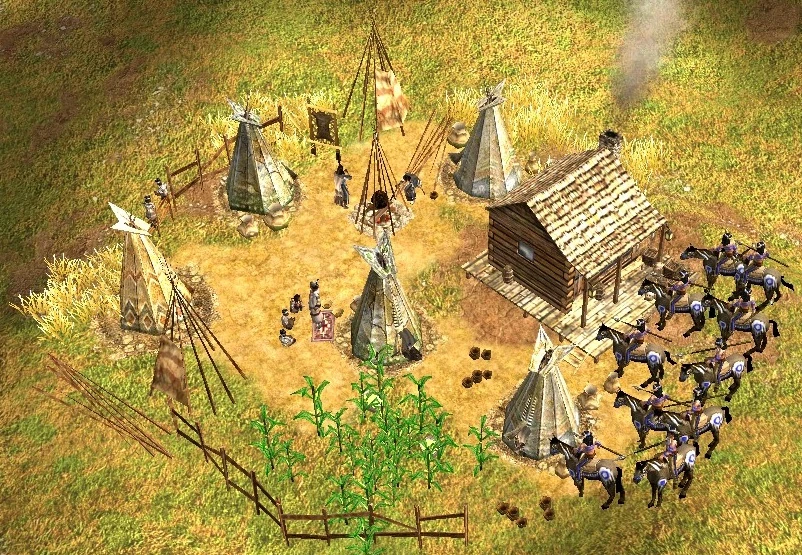
Minor civilizations appear in campaign scenarios and random maps as settlements with buildable sockets. Any playable civilization can usually ally with a settlement by constructing a Trading Post there. The post gives access to that group’s technologies and at least one distinctive Native warrior, while the same site may also unlock special units or map functions. The alliance lasts while the Trading Post remains standing. This makes a settlement a strategic resource point: claim it before the opponent, then protect the post if the technology or unit is important to the army. The exact roster and benefits are tied to the settlement and map, so scouting the available sockets before choosing an alliance is valuable.
Native units and build limits
Native warriors generally cost Food, Wood, Coin or Influence rather than population, but each settlement imposes a unit build limit. The limit can often be increased by allying with additional settlements of the same minor civilization. This lets a player add units without filling the ordinary population cap at the same rate, although the warriors still consume resources and need production time. Native units are not all the same class or role; each group offers a unit with specific strengths and two upgrade stages in the standard profile. Check the unit page for the exact cost, population tag, counters and current upgrades before building a large force.
Native warrior upgrades across Ages
Native warriors can receive hit point and damage improvements in the Fortress and Industrial Ages, reaching a combined increase of 60 percent in the source summary, with further Imperial research available through Legendary Native Warriors at the Capitol. Upgrade names depend on when the unit was introduced: older warriors use Elite and Champion labels, while later content uses Disciplined and Honored or Veteran and Royal Guard. African minor civilization units receive their Age-based improvements automatically and free in the described system. This distinction matters for resource planning: one unit may require research, while another improves as the player advances. Home City cards can add further bonuses, but their effects are civilization-specific.
Native Embassies and remote production
Since The WarChiefs, players can build a Native Embassy to train allied minor civilization units away from the original settlement. This turns a Trading Post alliance into a broader production option and reduces the need to reinforce every unit from a single socket. The Embassy still depends on an active alliance and its available roster, and its construction competes with ordinary military buildings. Place it where units can reach the main force safely. A Native Embassy does not mean every settlement grants every unit; the allied minor civilization controls which warriors and technologies are available.
Regional settlement groups
Minor civilizations are grouped into four broad regional categories: African Kingdoms, Asian Holy Sites, European Royal Houses and Native American Settlements. Their buildings, names and alliances reflect those regions, and their units may use distinct resources or upgrade rules. The category helps players navigate the map but does not predict the exact unit role. African settlement units may use Influence and receive automatic Age upgrades, while Asian, European and Native American settlements follow their own unit access and technology details. Read the settlement entry instead of applying one region’s rules to another.
Naval access and map-specific options
A Trading Post at a minor civilization site can unlock ships at the Dock on selected maps. Native American settlements may grant Canoes; certain Asian Holy Sites permit Marathan Catamarans or Wokou Junks depending on the map; African Kingdoms can grant Privateers; and European Royal Houses may enable Battleships. These ship options vary by settlement and map, so do not assume an alliance creates a naval unit everywhere. A site can therefore be valuable even when its land warrior is not central to the army, particularly on water or coastal maps.
Current roster size and scenario factions
The current captured version lists 40 minor civilizations in normal play and four additional campaign-exclusive groups. Campaign scenarios may present a minor civilization as an ally or enemy with a scripted army, which is distinct from a standard random-map alliance. The settlement’s campaign appearance does not guarantee the same Trading Post technology or warrior access in multiplayer. Use the individual entries for the current unit roster and the scenario page for mission-specific roles.
Technology choices and alliance lifespan
A settlement commonly offers several technologies as well as a warrior. These technologies can improve gathering, combat or unit access, and their costs and effects vary by group. Research them while the alliance is active and make sure the benefit applies to a unit or economy the player actually uses. If the Trading Post is destroyed, access to the settlement’s units and technologies is lost until the site is secured again. This makes post defense part of the alliance investment. Before committing, compare a settlement’s technologies with a Trade Route post’s experience or resource benefit.
Regional units and resource costs
African minor civilization units use Influence in place of some ordinary resource costs and receive free Age-based upgrades in the described system. Other regions commonly pay Food, Wood or Coin, and their units have their own limits and upgrade names. Native units usually do not use population unless their class includes an exception such as the Villager tag. The settlement page lists which unit can be trained and what it costs; regional labels alone are not enough to infer the exact rules.
Decide where to build the alliance
A Trading Post site near the army can shorten reinforcement travel, while a more distant settlement may secure a map route or technology. Use a Hero or Trading Post Wagon when speed matters, and protect a builder at a contested socket. Native Embassies provide remote training after the alliance exists, but they add construction cost and should be placed where the units can reach the battle safely.
Settlement sockets shape route control
Trade Route sockets can be separated by terrain and may require the player to cross an exposed area. A post near the center of the route can create experience or resource value over time, while a Native settlement may sit beside a strategically useful shoreline or pass. Scout both the socket and the approach before building. A Hero’s faster construction helps claim a site, but the finished post still needs protection from enemy units. If an opponent is racing for the same alliance, send troops to control the area before committing a builder.
Upgrade the warriors you continue to train
Native warrior upgrades become more valuable when the unit remains in the army for several Ages. Research them before replacing the force with ordinary units, and use Home City cards only when they improve the settlement’s actual roster. African units that upgrade automatically free resources for production, while other groups may require the player to research their Age upgrades. Check the specific unit’s upgrade names and cost.
Keep the alliance useful after construction
After a settlement is secured, research the technologies that help the current army and train warriors only while the build limit and resource cost make sense. A post that cannot be defended may lose both benefits at once. Reassess the alliance after the opponent changes unit composition.
Native upgrades across the match
Native warrior upgrade names vary with the expansion that introduced the unit. Older settlement units use Elite and Champion, while later units may use Disciplined and Honored or Veteran and Royal Guard. Fortress and Industrial Age improvements raise hit points and damage, and the Capitol can provide a further Imperial Age improvement. African units follow an automatic free upgrade rule on age advancement. Before investing in research, check which upgrade path belongs to the allied settlement and whether the units will remain in the army long enough to benefit. Home City cards can add another layer of bonuses, but they do not make every native unit interchangeable.
Coordinate the warriors with the main army
Use native warriors for their specific counter role and keep ordinary units nearby to cover what the settlement roster lacks.
Defend the access point
Keep a route open to reinforce the Trading Post and preserve access to its warriors and technologies.
Keep upgrades aligned with the roster
Research technologies for warriors that remain in the active army.
What an alliance actually unlocks
A settlement alliance is a bundle of map access rather than a single unit purchase. The Trading Post claims the site, exposes the settlement’s roster and research, and can unlock a route or map-specific naval option. The available warrior is usually capped locally, so the unit limit is a strategic constraint: one post may provide a useful first group, while a second allied settlement can permit a larger force of the same type. Some maps also let an alliance unlock ships at a Dock. Check the settlement’s actual interface before committing, because the group and technology list depend on the map and the edition. A Native Embassy can extend production for civilizations with that building, but it does not make every settlement or roster universally available. The alliance is most valuable when its unit, research or route reward answers a need that the main civilization cannot meet as efficiently.
Map settlement, alliance and unique options
A Minor civilization is a map-based ally accessed through a Trading Post at its settlement. The alliance adds units and technologies that supplement the player’s main civilization, and the available choices depend on the map and game rules. Some allies provide a counter unit, a specialist or an economic improvement; others may be more useful for a specific army composition. Build or capture the relevant Trading Post and inspect its offer rather than assuming every settlement uses the same roster. Some civilizations have additional access through Tambos, Native Embassies or other faction-specific systems.
Scouting and protecting the investment
Scout settlements before spending resources so the chosen ally answers a real need and the Trading Post can be defended. A distant site that is easy to lose may provide little lasting value, even if its units look useful. Compare its cost and technology options with ordinary production and other Native allies on the map. Alliance rules have changed across expansions and Definitive Edition, including rosters and costs, so identify the game version when consulting a build order. Keep the post protected if units or research from that settlement form part of the plan, and reconsider the alliance when the opponent can deny it.