Native warrior
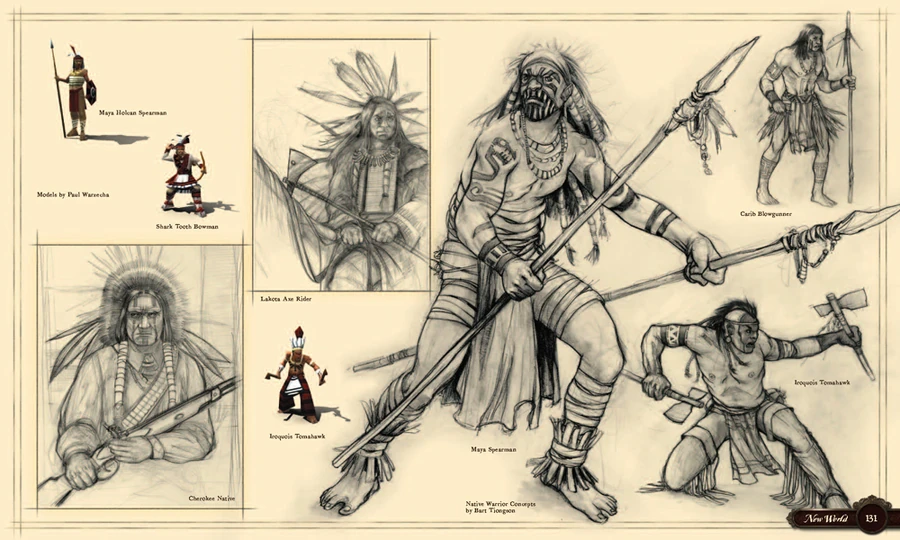
Native warriors are units recruited through alliances with Minor civilizations. Their roster reflects the settlement or alliance, so it can add a specialist role that the player’s main civilization lacks. Many Native warriors use a training limit tied to each settlement.
Access & limits
Build a Trading Post or Tambo at an eligible settlement to access its alliance units and technologies. In The WarChiefs and later versions, Native Embassies provide additional access for civilizations that can build them. The exact roster, population cost, train limit, and upgrade names vary by alliance and release; age-based upgrades commonly use titles such as Elite and Champion, with Asian and Royal House exceptions.
Alliance choice
Scout settlements before choosing an alliance, then recruit a limited number of units that complement the main army. Use the settlement’s technologies when they address an actual composition or economic need, and remember that access may be lost if the Trading Post is destroyed.
Native settlements and production
Native warriors are recruited by building a Trading Post or Tambo on a minor-civilization settlement. Each settlement supports one Trading Post, and the warrior roster and limit depend on the allied civilization. A player can establish Trading Posts on multiple settlements of the same minor civilization; their unit limits stack, allowing a larger force if the map has more than one site. Most native warriors cost Food and Wood and use no population, though there are exceptions. This makes a native alliance a map-dependent way to add units without filling the normal population cap, but it also ties production to a vulnerable site.
Upgrade names and age progression
Native warriors have their own upgrade ladders rather than using the same labels for every roster. Many advance through Elite and Champion, while Asian Holy Site units use Disciplined and Honored, and European Royal House units use Veteran and Royal Guard. Legendary Native Warriors or Exalted Natives can advance eligible units to a top-tier form; European Royal House units may use Imperial instead. The research location depends on civilization and expansion. These names indicate different roster traditions, so an upgrade listed for one alliance should not be assumed to apply to every native warrior.
Embassy access and changing rules
The WarChiefs expansion introduced Native Embassies, which let players train native warriors at locations beyond the original Trading Post settlement. This changes the strategic value of an alliance by reducing dependence on one map site, although limits and civilization conditions may still apply. In older rules, Spies had a bonus against native warriors; that bonus was removed in Definitive Edition. Ninjas and Ninjutsu-Zukai retain bonuses against the class. Always distinguish the classic expansion from Definitive Edition when discussing mercenary-hunting units and native counter bonuses.
Combat class and counter bonuses
Native warriors carry the AbstractNativeWarrior tag in the game data, but their individual unit types determine their actual battlefield role. A native ranged unit, cavalry unit, healer or Warchief does not become interchangeable merely because it belongs to the broad category. In Definitive Edition, Ninja and Ninjutsu-Zukai receive bonuses against native warriors. Many other counter relationships depend on the unit’s own Infantry, Cavalry, Artillery or ranged tags. Check the specific entry before using a native unit as a counter, and use the alliance upgrade that matches the unit’s type.
Use the roster to fill a gap
The alliance is most useful when its available unit covers a weakness in the main civilization’s army or adds a no-population reinforcement at a valuable map location. Native units can offer unusual speed, damage bonuses, healing, stealth or siege roles, depending on the settlement. Their costs still compete with the economy, and a small settlement limit can make losses hard to replace. Protect the Trading Post, Tambo or Embassy that supplies the group, and avoid choosing an alliance just because it is nearby if its units duplicate an already strong part of the roster.
Examples across expansions
The native-warrior category spans many releases and settlements. The Asian Dynasties includes units such as Rattan Shields and War Elephants, while later content adds African and European native rosters. The African Royals adds warriors such as Akan Tufohen and Berber Camel Riders, while Knights of the Mediterranean includes Royal House units with their own Veteran and Royal Guard upgrade names. Each roster has separate stats, costs and counters; this page describes the shared alliance and upgrade systems, while the unit entries explain individual attack values and use.
Population and settlement caps
Most native warriors do not use population, which can make a native alliance attractive in a late army already near its limit. This benefit is not universal, and every settlement has a unit cap. Multiple settlements of the same minor civilization stack their caps, but each one requires its own Trading Post or Tambo and only one Trading Post can be built per settlement. A lost settlement removes both map control and production. Treat the cap as a reason to preserve a useful native group, not as proof that native units are cost-free.
Decide between map access and Embassy production
Trading Post or Tambo recruitment ties the army to a specific minor-civilization site, which can also provide alliance benefits through the Trade Route or local settlement. A Native Embassy offers production at a more controlled location but requires the relevant expansion and building investment. Use the settlement route when the map position is valuable and defensible; use an Embassy when repeated production away from the frontier matters. The correct choice depends on the civilization, available upgrades and whether the enemy can easily capture the site.
Read the individual unit page
The category includes archers, Cavalry, Heavy Infantry, support units and unique warriors with special abilities. Their Food and Wood prices, population use, hit points and multipliers differ. A native unit that counters Heavy Infantry may still lose to Artillery or Cavalry, and a Warchief’s support ability does not apply to every allied roster. Follow the unit link before spending resources, then choose upgrades that affect its actual tags. This shared page explains access and upgrade naming; the individual entries provide the numbers needed for a matchup.
Upgrade only the roster you can sustain
Legendary Native Warriors and Exalted Natives can require substantial research and civilization-specific buildings. Research them when the alliance will remain in the army long enough to repay the cost; a capped group that is about to be replaced by another roster may not justify the investment.
The category is not a single combat role
Use the individual unit’s tags and stats to identify its counters. The shared Native Warrior label explains upgrade and Spy interactions, while its own Infantry or Cavalry class determines most battlefield matchups.
The shared label does not replace unit classes
Native Warrior is a broad roster category, not a promise that every allied unit fights the same way. A settlement may offer Heavy Infantry, ranged Infantry, Cavalry, support units or a specialist with a unique ability. Their ordinary class tags still determine which attacks receive bonuses and which enemy units counter them; a unit recruited from a Native settlement can therefore be a poor answer to a matchup despite its special origin. Native warriors commonly have a settlement-specific build limit and may use no population, but both details should be checked on the individual entry rather than assumed for every unit. The Spy class can interact with Native units differently from ordinary units, and upgrade names also vary by regional roster and release. Use the individual unit’s stat table to verify its cost, population, target multipliers and access before spending resources on a large group.