Colonel Washington
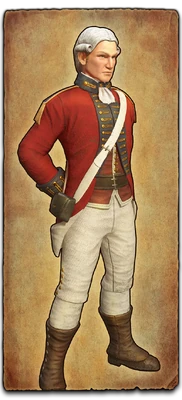
Colonel Washington is British hero in Age of Empires III. Its listed ability is Claims treasures; Regeneration.
Recorded values
- Durability & mobility
- 800 hit points · 40% hand resistance · 5.0 speed · 24 line of sight
- Hand attack
- 14 damage · 1.5 attack interval
- Siege attack
- 14 damage · 6 range · 3.0 attack interval
- Ability
- Claims treasures; Regeneration
Role, availability & values
It has 800 hit points. It moves at 5.0 speed. Attack profile: Hand attack deals 14 damage. Siege attack deals 14 damage. Special ability or role: Claims treasures; Regeneration. If reduced to zero hit points, it collapses rather than dying; after regenerating 100 hit points, a friendly unit or building nearby can revive it.
Matchup & timing
Check whether the mission uses Colonel Washington or the later General Washington profile before applying a build or combat plan. The campaign uses his role across different stages of the colonial conflict, and scenario rules determine the available force. Keep him alive for the objective rather than treating this campaign hero as a normal British unit.
Washington across the Age of Empires III campaigns
George Washington appears in several distinct roles across Age of Empires III. In Act II: Ice, he is Colonel Washington, a British officer during the French and Indian War who later sides with John Black after General Warwick is revealed to be working with the Circle. In Act I: Fire, he appears as General Washington and commands the Continental Army during the American Revolution. He also appears in the Fort Duquesne Historical Battle as an antagonist and serves as a United States AI personality in Definitive Edition. The campaign versions are not interchangeable: one is a British Colonel hero with a smaller combat profile, while the other is a General who can receive Home City shipments. His appearances connect the Black family campaign to the later founding of the United States.
Colonel Washington: stats and abilities
Colonel Washington has 800 hit points, 40% hand resistance, speed 5.0, and line of sight 24. His hand attack deals 14 damage every 1.5 seconds, and his siege attack deals 14 damage at range six every three seconds. He can collect treasures and regenerates, but cannot build Trading Posts or Town Centers and has no special active ability in the Colonel form. When his hit points reach zero, he collapses rather than dying permanently. A friendly unit or building can revive him after he has regenerated at least 100 hit points. This makes him useful for exploration and support, but the player should avoid exposing him to repeated attacks that could keep him out of the mission for an extended period.
General Washington: later campaign role
General Washington has a stronger profile with 1,200 hit points and 28 damage on both his hand and siege attacks, while retaining 40% hand resistance, speed 5.0, and line of sight 24. Like the Colonel, he claims treasures, regenerates, and collapses at zero hit points until a friendly unit or building revives him after he reaches 100 health. The General can also receive Home City shipments, an important campaign ability that the Colonel does not have. The two hero forms therefore have different strategic uses: General Washington can provide shipment support as well as frontline durability, while Colonel Washington is primarily a resilient exploration and combat unit in Act II: Ice.
Story from the Seven Years' War to the Revolution
Washington's campaign history begins in the Seven Years' War scenario. Born in Virginia in 1732, he served in the First Virginia Regiment as a British lieutenant colonel and became involved in the events that triggered the French and Indian War. In Act II: Ice, he serves under General Warwick and eventually defects with his soldiers to John Black when they discover Warwick's allegiance to the Circle. Later, in Act I: Fire, Washington is the Continental Army's commander-in-chief. He meets Nathaniel Black after Bunker Hill, then appears in the campaign's later conflicts around Trenton and Valley Forge. These episodes use fictional Circle of Ossus events alongside historical people and settings; the campaign narrative should be read as alternate history.
Historical background and in-game presentation
George Washington lived from February 22, 1732, to December 14, 1799, and became the first President of the United States. The game presents both Colonel and General versions, with different uniforms, statistics, and campaign affiliations. Washington also inspires the American General hero in Definitive Edition and appears in the Fort Duquesne Historical Battle. His characterization emphasizes military leadership and adaptability, but these scripted roles are not a full historical biography. The campaign depicts a sequence of fictional events involving the Black family and the Circle of Ossus, so separate those scenes from Washington's real history when using the character page for reference.
Hero survival and mission use
Treat Washington as a valuable hero rather than disposable Infantry. His hit points and resistance let him explore ahead of the army, collect treasures, and absorb some damage, but collapsing can delay the mission if allies are not close enough to revive him. Keep supporting units nearby and retreat before the hero reaches zero. General Washington's shipment ability can strengthen a campaign force at the right moment, while the Colonel lacks that function and should instead support scouting and combat. Neither form can replace an Explorer's ability to build Trading Posts or Town Centers, so use the mission's Villagers and construction units for those objectives.
Character relationships and scenario links
Washington's campaign path overlaps with several Black family characters. John Black is central to the Act II: Ice defection, and Nathaniel Black appears beside Washington during the American Revolution. General Warwick and the Circle of Ossus provide the fictional conflict that drives the campaign away from the historical timeline. Chayton Black's Act II: Shadow story takes place later and follows another branch of the Black family. These links help explain why the same Washington is presented as an ally in one scenario and a historical opponent in another. Follow the named scenario pages for each mission's starting force and objectives instead of assuming a single hero profile applies throughout the campaign.
Collapsed state and recovery
Washington does not follow the ordinary death rule used by most units. When the Colonel or General reaches zero hit points, he collapses and can return if he regenerates at least 100 hit points while a friendly unit or building is nearby. Keep escorts close enough to secure the revive, and do not assume that the hero will immediately stand back up in enemy territory. The rule lets him survive a costly mistake, but recovery time can leave the campaign army without its strongest hero. Use his durability to absorb limited damage, then withdraw before he collapses.
Colonel and General: quick comparison
Colonel Washington belongs to Act II: Ice and has 800 hit points with 14 hand damage; General Washington belongs to Act I: Fire and has 1,200 hit points with 28 hand damage and the ability to receive Home City shipments. Both forms have 40% hand resistance, speed 5.0, line of sight 24, and the collapse-and-revive rule. Choose the campaign-specific page or scenario for exact starting conditions, since neither profile represents a standard British or United States Skirmish unit.
From campaign hero to historical battle opponent
Washington's role changes with the scenario. In Act II: Ice he is a British Colonel who joins John Black after the betrayal by Warwick. In Act I: Fire he is General Washington, leading the Continental Army. The Fort Duquesne Historical Battle places him on the opposing side, while his AI personality represents the United States in Definitive Edition. Always use the scenario-specific hero profile: the campaign Colonel and General have different hit points, attack damage, and abilities.
Quick scenario reminder
Use Colonel Washington in Act II: Ice, where he is a British hero who can collect treasure and regenerate. His 800 hit points and 14 attack distinguish him from General Washington in Act I: Fire, who has 1,200 hit points, 28 attack, and can receive Home City shipments.
Use in campaign scenarios
Colonel Washington is a scenario hero rather than a standard unit that players can add to a British or American Home City deck. His precise starting point, supporting units, and objective depend on the mission in which he appears. Use him to scout and claim safe Treasures when the scenario permits, then keep him near the army so his collapse-and-recovery rule can be used if he is knocked down. A hero's high hit points do not make him immune to concentrated fire or scenario hazards. Check the objective panel and mission entry for any escort, survival, or destination requirement before leaving the main force.
Using Washington in the Seven Years’ War scenarios
Colonel Washington is a scenario hero, so his value is tied to the objectives and survival rules of the mission in which he appears. His 800 hit points, 40% hand resistance and 5.0 movement speed make him useful for scouting and engaging ordinary Treasure guardians, while his treasure-claiming ability lets the player turn exploration into resources or other mission rewards. He is not a substitute for an army: concentrated fire and dangerous guardians can still force him to withdraw. His 14-damage hand attack is modest, and the siege attack is primarily a utility profile rather than a way to destroy defended structures quickly. Keep him moving with the expedition, reveal routes before committing the main force and avoid leaving him isolated.
Collapse, regeneration and safe recovery
Washington’s hero rules change how a risky fight should be judged. When his health is exhausted, he collapses instead of being removed permanently; after regenerating to 100 hit points, a nearby friendly unit or building can revive him. This creates a recovery window, not permission to ignore incoming damage. Pull back other troops to cover the location, keep an ally close enough to perform the revival and do not allow enemies to camp the recovery point. Between engagements, his regeneration rewards disengaging early: let health recover before challenging another guardian. This matters most in missions where the hero carries reconnaissance, treasure control or scripted progression value that a regular replacement army cannot provide. The General Washington form belongs to later story appearances and should be read in that mission’s context.