Mongolia
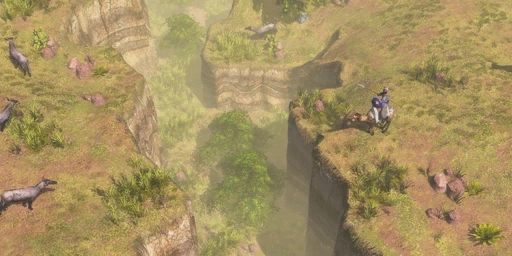
Mongolia is an Asian Dynasties random map with rich northern steppe and taiga resources, a Trade Route along the north, and an open, sparsely wooded southern steppe. Large herds supply abundant huntable Food, while silver mines and Native settlements make the north an important expansion target.
Map character
Scout the northern route and resource belt early, but check the south as well: scattered Coin and open approaches can support a fast push. The Trade Route can contain three, four or five sites, so count the actual posts before choosing where to invest.
What to scout
Use nearby hunts to support an early army, then expand toward whichever resource belt your opponent leaves open. Keep mobile defense in the south, where the open ground gives raiders a direct approach.
Terrain and map layout
Mongolia is a landlocked northern map built around broad grassland and taiga-steppe terrain. Its open interior gives armies room to move and makes distant resource lines visible, while the colder northern edge holds much of the map's silver and other valuable resources. A Trade Route crosses a remote part of the map, so reaching it can provide shipment progress but may require a long walk from the starting settlement. The map is not a single safe central clearing: resource sites and travel lanes are spread out, and a player who expands without scouting can leave Villagers exposed far from the Town Center.
Herds, food, and the first age
Large herds make hunting and herding a major part of the early food economy. As on other herd-rich maps, scout animals early and guide them toward the Town Center or a protected gathering area before hunting. This shortens the distance Villagers must travel and helps keep food income near the settlement. Do not assume the herds will sustain the whole match: nearby animals are depleted, and the economy must transition toward other food sources or livestock as the game develops. Keep an eye on where the next herd is moving and avoid pushing it toward the opponent's side of the map.
The northern resource race
Silver mines are scattered across the northern reaches, and the region's resources can be especially attractive after the starting stock begins to run out. The long distance from a starting Town Center makes these mines a risk as well as an opportunity. Establish vision before sending Villagers north, and consider placing production or defensive buildings where they can cover the route back to the base. A forward Outpost or a mobile army can discourage raids, but an isolated mine is difficult to defend if the opponent already controls the approach. Expand in stages so the army can respond while the economy extends toward the northern edge.
Trading Post control and map pressure
The distant Trade Route adds a contest beyond ordinary resource gathering. A Trading Post can advance shipment progress, but the route's remote position makes it vulnerable to raids and changes hands if the opponent secures the area. Scout the route before committing builders, then decide whether to claim a safe site, contest the enemy's access, or delay until the army can hold it. A Trading Post is most useful when its position can be defended without pulling every unit away from the settlement. Since the route is far from the center of many openings, control may shift over the course of a match rather than being decided by the first builder.
Approaches for different army compositions
The open land favors armies that can move between resource sites and respond to raids, but distant mines and a remote Trade Route also reward scouting and secure forward positions. Fast Cavalry can threaten gatherers who travel alone; ranged Infantry and Artillery can protect a push across exposed ground. A player using slower units should establish vision and move with support rather than chasing mounted raiders across the map. There is no single composition that suits every civilization, because each faction's roster and economy remain distinct. Use Mongolia's space to maneuver and protect a resource corridor, and choose counters based on the enemy units actually present.
Practical scouting route
At the start of the match, reveal the nearest herd, the safest path between the Town Center and open ground, and the direction of the Trade Route. Continue scouting toward the northern resource belt before the first major army movement. This information helps determine whether to gather close to home, place an early Trading Post, or prepare to defend against an opponent expanding north. Revisit the route as herds move and mines are claimed; an opening scout report can become outdated quickly. On a map with valuable distant sites, information is part of the economic plan because it determines which resources can be gathered safely.
Map identity and version scope
This page describes the Mongolia random map in Age of Empires III and its Definitive Edition context. Its defining features are the grassland and northern steppe setting, plentiful herds, widely distributed northern resources, and a remote Trade Route. Exact starting resource placements can vary from match to match, so use the map's terrain and landmarks as a guide and scout the generated layout each game.
Northern herds and southern approaches
Mongolia’s northern taiga and steppe carry dense herds and silver-rich resource areas, while the south is more open and sparsely wooded. The northern Trade Route may have three, four or five sites depending on the generated match. Open southern ground makes raids and army movement easier to spot but also leaves resource lines exposed. Count the posts and scout both belts before choosing an opening; do not base a build order on a fixed Trade Route length.