Musk Deer
Musk Deer is a huntable animal found on central and northern Asian maps, including Mongolia, Siberia and Silk Road in Age of Empires III: The Asian Dynasties. Each deer provides 400 Food when killed and supports up to eight gatherers. Villagers can kill one in two shots, similar to a common Deer, but the herd is finite and its safety depends on where it spawns. The unit is map wildlife, not a trainable animal.
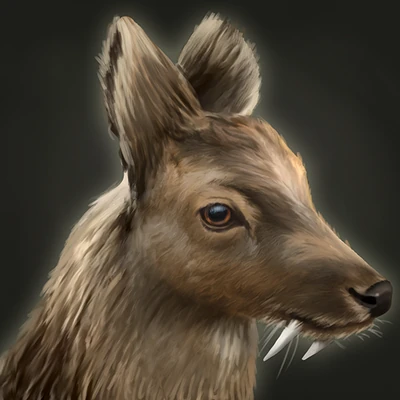
Recorded values
- Durability & mobility
- 20 hit points · 2.0 speed · 18 line of sight
Role, availability & values
Send Villagers to the carcass after the Musk Deer is killed and protect the hunting line while they gather. Several workers can clear the herd quickly, but concentrating eight gatherers makes a raid costly. The source also lists passive building rates separately: a Shrine produces 0.0665 of each resource per second from the deer, while a Hacienda lists 0.166667 Food, 0.25 Wood or 0.113334 Coin per second. These building outputs should not be confused with the 400 Food gathered from each carcass.
Training & availability
Huntable wildlife; 400 Food per carcass; up to eight gatherers; map occurrence depends on the selected setting.
Matchup & timing
Use Musk Deer as an early Food source when the herd is close enough to defend. Scout the next Hunt before the current herd is exhausted, and move workers when the remaining carcasses no longer justify the exposed position. On maps where the herd is distant or contested, weigh the travel and protection cost against safer Hunts or renewable sources.
Map distribution and passive building rates
Musk Deer are listed on Mongolia, Siberia and Silk Road. The animal yields 400 Food per carcass and supports up to eight gatherers. Separately, the source records Shrine income of 0.0665 per resource per second and Hacienda rates of 0.166667 Food, 0.25 Wood or 0.113334 Coin per second. A player should distinguish the worker’s one-time carcass harvest from these building-based passive rates when planning the economy.