Nova Scotia
Nova Scotia is an autumn coastal map with Huron and Stuart settlements and Harpooner and Sailor outlaws. The generated shoreline affects access to water, neutral sites and resources, so the best opening can favor land production or naval support depending on each start.
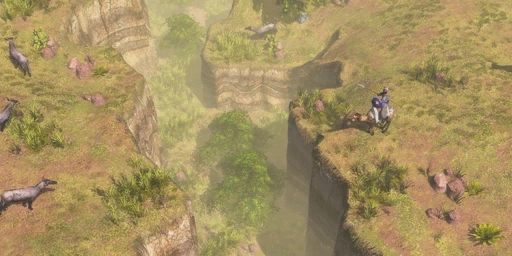
Map character
Scout the coast and both settlements before choosing an alliance or investing in a Dock. Compare Huron and Stuart options with the units your army needs, and locate safe Hunts and Mines before expanding along exposed shoreline.
What to scout
Use fishing or transport when the water route is close enough to protect; otherwise prioritize a land-first economy. Place production where it can respond to both coastal landings and threats to Villagers.
Huron access can add ranged siege support
The Huron settlement gives Nova Scotia a concrete military option: the Huron Mantlet. Its linked unit profile records a ranged attack and a separate siege attack, so it can support an army that needs to pressure buildings while remaining useful against units. It is not a substitute for the core force; compare its cost and training access with what the current army lacks, and protect the Trading Post route that enables the alliance. Huron Sun Ceremony, Huron Trade Dominance and Huron Fish Wedding are also listed Huron technologies. Open the Huron entry to check their effects and the Huron Mantlet page for its full statistics before choosing the site as the center of a build.
Compare the neutral settlement with the outlaw camps
Nova Scotia also lists a Stuart settlement and Harpooner and Sailor outlaws. Treat these as separate possibilities rather than a single neutral package: an alliance at a settlement and access to an outlaw recruit are different investments with different military roles. Scout their locations beside the coast, then decide whether the Huron roster, the Stuart option or an outlaw fills the next army need. A site is only useful if the Villagers and troops can reach it and keep its approach open. If neutral recruitment would pull the army away from a vulnerable shoreline, secure the nearby Hunts and Mines first and return with support.
Let the autumn coast shape, not dictate, the opening
The autumn setting identifies the map, but it does not guarantee a fixed coastline or a naval advantage. Use the match preview to locate actual water access and test whether it provides a protected fishing area, a crossing or only a vulnerable edge. A Dock pays off when the player can defend the shore and keep the boats working; if the enemy can land beside the workers, land production and a compact coastal defense may be safer. Keep a response force near the routes between the Town Center, neutral sites and coast. This lets the army support the chosen alliance without leaving gathering Villagers exposed.
Huron Mantlets provide slow, durable ranged siege
A Commerce Age Huron Mantlet costs 100 Food and 60 Wood, trains in 30 seconds and is limited to ten per Huron settlement before technologies. Its 250 hit points and 40% ranged resistance give it staying power against ranged fire, but its speed is only 3.5. The ranged attack deals 25 damage at range 10; the separate siege attack deals 45 at range 6. This makes the Mantlet a deliberate support unit for pressuring defenses or structures, not a fast answer to a sudden landing. Keep a mobile screen near it while it advances along the coast, and avoid sending it across an exposed route without units that can respond to cavalry or infantry.
Huron technologies reward different coastal plans
Three Huron technologies make the settlement useful for more than Mantlet production. Huron Fish Wedding costs 75 Wood and 75 Coin, researches in 10 seconds and increases fishing-ship gathering from Fish and Whales by 15%, so it only repays the investment when safe water resources are available. Huron Sun Ceremony costs 225 Wood and 225 Coin and increases the Huron Mantlet train limit by 200%; it takes 60 seconds to research. Huron Trade Dominance costs 400 Wood and 400 Coin and delivers one Huron Mantlet every two minutes of game time, up to 30 minutes. These commitments serve different match lengths: improve fishing when the coast is secure, expand the limit for a sustained army, or choose the periodic Mantlet delivery when the game is likely to continue. Check the shoreline and protect the Huron Trading Post before budgeting around a naval bonus.
Stuart units trade Mantlet siege for faster response
The Stuart settlement offers a contrasting land force. A Commerce Age Clansman costs 70 Food and 40 Wood, has 140 hit points and moves at 6.5 speed, letting it reach a threatened gathering site much sooner than a Mantlet. The Lowlander costs 50 Food and 40 Coin and trains in 26 seconds; it has 135 hit points, 30% hand resistance and a ranged attack of 19 at range 12. Its hand attack carries bonuses against Cavalry and Shock troops, while the Clansman supplies the faster shock-infantry role. Choose Stuart when the map’s exposed approaches need mobile defenders or a ranged line; choose Huron when the army can protect slower siege units and wants the fishing or Mantlet technologies. A Dock and neutral Trading Post should support the same coast so ships, builders and the land force do not end up guarding separate fronts.