Huron Mantlet
Huron Mantlet is ranged infantry available through a Huron settlement in The WarChiefs and Definitive Edition. It can be obtained from a Trading Post or Tambo allied with a Huron settlement, and through the Native Embassy. The unit combines ranged fire with a meaningful siege attack: it has 250 hit points, 40% ranged resistance and moves at 3.5 speed. Its recorded attacks deal 25 ranged damage, 45 siege damage and 10 hand damage. It costs 100 Food and 60 Wood, takes 30 seconds to train and becomes available in the Commerce Age.
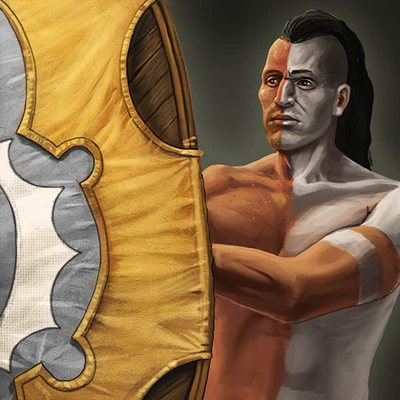
Recorded values
- Available
- Commerce Age · Trading Post or Tambo on a Huron settlement; Native Embassy
- Training
- 30 sec · 16 XP per train
- Durability & mobility
- 250 hit points · 40% ranged resistance · 3.5 speed · 12 line of sight
- Hand attack
- 10 damage · 1.5 attack interval
- Ranged attack
- 25 damage · 10 range · 3.0 attack interval
- Siege attack
- 45 damage · 6 range · 3.0 attack interval
Role, availability & values
Use its ranged attack against units while it is screened, then direct its siege attack toward structures when the position is secure. Its ranged resistance helps against ordinary fire but does not make it safe from melee units or focused siege. The Huron access route also means availability depends on a settlement alliance or Native Embassy rather than a standard European Barracks.
Training & availability
Commerce Age; obtained through a Huron settlement Trading Post or Tambo, or a Native Embassy; 250 hit points; 40% ranged resistance; 3.5 speed; costs 100 Food and 60 Wood; 30-second training time.
Matchup & timing
Choose it when the army can use both ranged pressure and building damage from a single unit line. Scout the opponent’s mobile counters before investing, and protect the Mantlets during the approach to a Town Center or defensive structure.
Current native profile
The Huron Mantlet is a Commerce Age native siege unit trained at a Trading Post or Tambo on a Huron settlement. In Definitive Edition it costs 100 Food and 60 Wood, trains in 30 seconds and has a limit of ten per settlement. Earlier versions used 50 Wood and 100 Coin instead of the present Food cost. The unit has 250 hit points, 40% ranged resistance, speed 3.5 and line of sight 12. Its ranged attack deals 25 damage at range ten every three seconds; its siege attack deals 45 at range six every three seconds. It also has a ten-damage hand attack. The combination of high health and ranged resistance lets Mantlets absorb fire while threatening buildings, but their short range and slow speed expose them to melee cavalry and heavy infantry.
Siege role and target selection
Mantlets have no attack bonuses against ordinary unit classes. Their value is durability and siege damage, not counter damage. The 45-point siege attack makes them useful against towers and other buildings, while their 25 ranged attack can pressure ranged infantry and light ranged cavalry from a short distance. They are effective against those targets when their team can maintain range, but heavy infantry, heavy cavalry, shock troops and artillery are dangerous. A Mantlet is particularly vulnerable when fast melee units close the distance; its speed of 3.5 is too low to escape reliably. Use other units to hold enemy melee troops away and let the Mantlets attack a structure or ranged target from behind the frontline.
Native, mercenary and shipment versions
The native version depends on a Huron settlement and is capped at ten per site in the current profile. Researching Huron Sun Ceremony increases the training limit by 200%, and owning more than one Huron Trading Post site can support a much larger force. Canada can unlock Native Embassy training through Native American Allies. The mercenary version can be shipped regardless of map and does not depend on a Huron site. French and Haudenosaunee cards provide shipments of seven or ten; the Haudenosaunee also have an 18-unit shipment. The native and mercenary versions share many combat values, but access, cap and shipment cost differ. Do not assume a mercenary shipment gives repeatable local production or that the native limit applies to the card units.
Version differences and classification
The Huron Mantlet was introduced with The WarChiefs, where it replaced the Iroquois Mantlet as the native unit associated with that settlement. The Definitive Edition cost shift from Coin to Food and Wood changes the economic role: Mantlets can now be purchased without spending Coin, but they compete for Food and Wood used by the main economy. XP values also differ: the current profile gives 16 for training and killing, compared with 15 before Definitive Edition. The mercenary train limit was 20 before Definitive Edition and is ten in the current profile. Keep those changes separate when comparing legacy matches, cards or build orders.
Upgrades and native-site investment
Huron Warrior Societies costs 100 Wood and 75 Coin in Definitive Edition and upgrades Mantlets to Elite with +25% hit points and damage; older versions used a higher cost. Champion Huron costs 400 Wood and 300 Coin in the Fortress Age, requires the first upgrade and adds 35%. The Imperial native-warrior upgrade adds 50% hit points and damage for 1,500 Food and 1,500 Wood through the appropriate civilization building. These improvements increase survivability and attack, but the unit remains slow and vulnerable to melee counters. Huron Sun Ceremony’s larger train limit is most useful when the player can hold multiple settlements and afford the resource stream; it should not be researched solely to create a large group that cannot be protected.
Field tactics and formation
Use Mantlets as a moving siege screen. Keep them close enough to a main army to threaten structures and soak ranged fire, but do not let them lead into cavalry or heavy infantry. When attacking, let faster units reveal defenders and remove the melee screen, then bring Mantlets forward to damage the building. If enemy artillery appears, retreat behind terrain or counter it with mobile cavalry and dedicated artillery. Their range of ten is shorter than many ranged infantry units, so choose an approach route that avoids crossing a long open firing lane. If defending, position them where a structure forces the enemy to approach rather than asking them to chase a mobile army.
When the unit is worth its cost
A Mantlet is useful when a player needs durable ranged siege support, has access to a Huron settlement or a reliable shipment, and can protect a slow unit. Its Food and Wood cost can fit a Coin-heavy economy, while the mercenary route may require a card rather than local spending. Do not invest in a large contingent if the opponent can reach them with heavy cavalry, shock troops or artillery. A few Mantlets behind a mixed army can pressure buildings and keep ranged units occupied; an unsupported mass can be surrounded and destroyed before its siege damage pays back.
Card-driven limit and shipments
Huron Sun Ceremony raises the native training limit by 200%, changing the number that can be produced from each site. Huron Trade Dominance is a separate card effect that ships one Mantlet every two minutes of game time, up to thirty minutes. These effects operate differently: one expands a local cap, while the other delivers units over time. French and Haudenosaunee shipment cards provide larger immediate groups, which can be valuable when a siege window is short. Consider arrival timing, Coin requirements for a mercenary shipment and the army’s ability to escort the Mantlets before committing to an attack.
Economic choice after Definitive Edition
The current native cost of 100 Food and 60 Wood is not a simple discount from the older 50 Wood and 100 Coin profile; it shifts demand onto the early economy. Food may compete with Villager production and aging, while Wood is needed for buildings and upgrades. This makes Mantlets attractive when Coin is scarce but less convenient when the player is racing an age-up or expanding production. The mercenary shipment and native-site recruitment also impose different opportunity costs, so choose the route that matches the timing of the siege rather than assuming one is always cheaper.
Native allies and Canada
Canada gains access through the Native American Allies Home City Card, which enables Huron Mantlets at Native Embassies. This route is independent of finding a Huron settlement, while native recruitment still depends on the site. Card access can therefore provide a late or revolution-based reinforcement path even when the map lacks the settlement.
Line of sight limits
The unit’s 12 line of sight is short for a siege piece with range ten. Use another unit to reveal targets before the Mantlets advance, especially around buildings guarded by artillery. Their own vision is not enough to scout the full firing lane safely.
Slow siege screen with ranged resistance
The Huron Mantlet costs 100 Food and 60 Wood, takes 30 seconds to train and is limited to ten per Huron settlement. It has 250 hit points, 40% ranged resistance and speed 3.5. Its ranged attack deals 25 damage at range 10 every three seconds, while its Siege attack deals 45 damage every three seconds. The combination gives the Mantlet a role against fortifications and a durable presence against ranged fire, but the low movement speed makes it vulnerable when an army changes direction quickly. Keep it with the main force and choose the approach before moving across open ground. A Huron alliance or Native Embassy provides access, and losing the settlement can interrupt replacements. The Mantlet’s slow pace can be an advantage when it anchors a deliberate siege line, but it should not be used alone to chase a retreating army or to cover multiple map routes.
Use the ranged protection to cover the siege line
The Huron Mantlet’s 40% ranged resistance helps it remain in a contested area longer than a fragile siege unit, but it does not protect it equally from hand attacks or every counter. Keep Heavy Infantry or another screen between it and Cavalry that can reach the formation. Once the opponent is held back, use the 45-damage Siege attack to pressure the intended building rather than diverting the Mantlet to low-value targets. Its ten-unit settlement cap and Food-and-Wood price should be considered alongside the rest of the Native roster; a siege force that absorbs all Food may leave too little for Villagers or the frontline. The unit is most useful when its durability lets the army sustain pressure, not when it is sent forward without support.