Royal Huntsman
Royal Huntsman is economic unit in Age of Empires III, available from the Commerce Age; obtained through Trading Post or Tambo on a House of Oldenburg palace, Native Embassy. Its listed ability is Gathers food from huntables.
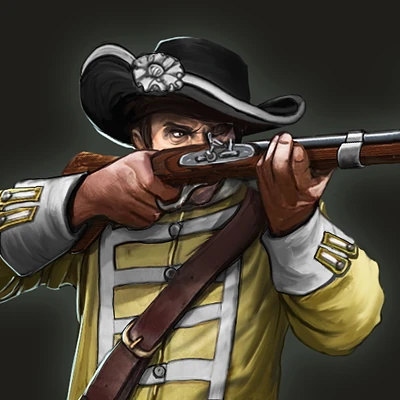
Recorded values
- Cost
- 140 Food
- Available
- Commerce Age · Trading Post or Tambo on a House of Oldenburg palace; Native Embassy
- Training
- 30 sec · 1 population · 14 XP per train
- Durability & mobility
- 150 hit points · 30% ranged resistance · 4.5 speed · 14 line of sight
- Hand attack
- 10 damage · 1.5 attack interval · bonuses: 0.75x vs. Heavy cavalry; 0.75 vs. Hand shock trooper
- Ranged attack
- 10 damage · 2–12 range · 3.0 attack interval · bonuses: 4.0x vs. Huntable; 1.5x vs. Light infantry; 1.5x vs. counter-skirmishers; 0.6x vs. Heavy cavalry; 0.6x vs. Hand shock trooper
- Siege attack
- 5 damage · 6 range · 3.0 attack interval
- Ability
- Gathers food from huntables
Role, availability & values
Production is available through Trading Post or Tambo on a House of Oldenburg palace or Native Embassy. It has 150 hit points and 30% ranged resistance. It moves at 4.5 speed and uses 1 population. Training costs 140 Food; it takes 30 seconds to train. Attack profile: Hand attack deals 10 damage. Ranged attack deals 10 damage. Siege attack deals 5 damage. Hand attack bonuses: 0.75× against Heavy cavalry and 0.75 against Hand shock trooper. Ranged attack bonuses: 4.0× against Huntable, 1.5× against Light infantry, 1.5× against counter-skirmishers, 0.6× against Heavy cavalry, and 0.6× against Hand shock trooper. Special ability or role: Gathers food from huntables.
Matchup & timing
Ranged attack is especially effective against Huntable (4×), Light infantry (1.5×), counter-skirmishers (1.5×). Its reduced multipliers against Heavy cavalry (0.75×), Heavy cavalry (0.6×), Hand shock trooper (0.6×) make it less suitable for those targets. Use ranged fire to focus Huntable, Light infantry, and counter-skirmishers before they can close. Keep a frontline between this unit and threats that can reach it safely.
A hunting unit that also fills a military role
The Royal Huntsman is a Commerce Age Danish native warrior available through a Trading Post or Tambo placed on a House of Oldenburg palace. It costs 140 Food, trains in 30 seconds, uses one population and is limited to seven per House of Oldenburg palace. It has 150 hit points, 30 percent ranged resistance, speed 4.5 and sight 14. Its ranged attack deals 10 damage at range 2 to 12 every three seconds. The unit has a 1.5 times multiplier against Light Infantry and Counter-Skirmishers, but only 0.6 times damage against Heavy Cavalry and Hand Shock troops in the current Definitive Edition data. Before update 14.43676 that reduced multiplier was 0.75. Its close attack is weak, so the rifle is its main combat tool. The defining economic role is hunting: the entry lists 0.84 Food per second (50.4 per minute) from hunted animals, and 0.67 per second (40.2 per minute) from Berry Bushes. Do not treat it as a general Settler for Wood, Coin or farms. When assigned to hunt, its Villager classification lets economic upgrades such as Hunting Dogs improve gathering and Blunderbuss improve its attack. It can gather and defend itself, but that dual role makes it a vulnerable investment: losing one removes both military value and gathering capacity. Use it near safe hunts and keep it away from exposed routes where Cavalry or artillery can target it.
Herding, treasure collection and counter-skirmishing
Royal Huntsmen can fire at deer to push the animals in a chosen direction without killing them. Herding can bring a distant hunt closer to the Town Center or another protected area, reducing the time ordinary workers spend walking and making the food line easier to defend. The special shot is a control tool; it does not turn the Huntsman into a replacement scout or a safe front-line unit. The unit can also pick up Treasures, allowing it to combine exploration with a return to hunting, although sending a costly food gatherer far from protection risks losing its economic function. In combat, the bonus against Light Infantry and Counter-Skirmishers makes it a useful specialist when the enemy has invested in Skirmishers or similar ranged counters. It is not a general-purpose Musketeer: the attack has no useful bonus against artillery, Cavalry and artillery are major threats, and its 150 hit points do not support prolonged frontline combat. Keep Huntsmen behind a conventional screen and focus their fire on the light infantry they counter. A build limit of seven per allied palace prevents mass production, while the 140 Food price competes directly with early worker and age-up spending. Train enough to answer the enemy unit mix, but preserve ordinary Settlers for non-hunt resources and broader economic tasks.
House of Oldenburg access and upgrades
The House of Oldenburg is the normal route to the Royal Huntsman: establish a Trading Post or Tambo at its palace to unlock the allied native roster. The per-palace limit matters on maps with more than one relevant site. The Germans can access Royal Huntsmen through the Prince-Electors Home City card and a Native Embassy, but this depends on the card and ally choice. Their special route should be checked separately from standard Danish access. Royal Huntsmen can benefit from upgrades that affect Villagers and ranged Infantry because the unit carries both classifications. This can improve its hunting economy and combat output, but it does not remove the hunt-only gathering rule, build limit or vulnerability to raids. Native warrior upgrade systems can also improve its military statistics where the civilization has access. Before committing resources, check whether the match offers enough huntable animals and whether the House of Oldenburg alliance supplies other units the army needs. On a map with scarce or unsafe hunts, the unit loses much of its economic advantage and becomes an expensive counter-skirmisher with limited production. Its strongest use is a protected hunt that also provides a small, responsive light infantry answer.
What the dual worker and soldier tags mean
The Villager tag is mechanically important. It allows worker upgrades to improve gathering and permits combat bonuses that target Villagers to affect the unit. At the same time, the Huntsman retains a military ranged attack and can gather from huntable animals. This does not make it a universal replacement for a Settler: it cannot switch to another resource when hunts run out, and its limited count restricts how much of the economy it can supply. The hunting task is also exposed to raids because animal sources often sit away from the Town Center. Keep a retreat route and avoid assigning every Royal Huntsman to the same distant herd. A split between nearby hunts can reduce the chance that one raid removes the entire group. The unit can herd deer by firing without killing them, so it can move the food source toward a safer position before gathering. Use that ability early enough that the animals do not wander into an opponent-controlled area. Its ability to collect Treasures creates another optional task during quiet periods, but treasure scouting should not leave the active hunt unprotected. When the Huntsman is attacked, use its ranged resistance and speed to fall back behind an escort instead of holding position against cavalry.
Economic timing and safe production
A 140 Food cost is significant during a Commerce Age transition, especially when the same Food is needed for Settlers, military units and the next Age. Royal Huntsmen train in 30 seconds, so adding a large queue delays the moment when they begin gathering or countering the enemy. The seven-per-palace limit further encourages selective production. A small number can help secure a hunt and respond to Skirmishers; filling the cap is only useful if the map has enough safe animals and the army can protect them. If the hunt is nearly exhausted, stop producing Huntsmen and move workers to a sustainable resource source. Ordinary Settlers remain necessary for Wood, Coin and non-hunt Food. In combat, keep Huntsmen behind Heavy Infantry or other units that can absorb cavalry pressure. Their attack is tailored to light infantry, not buildings or artillery, and the low close-combat damage makes a direct charge ineffective. Against a composition with no Skirmishers, the opportunity cost can outweigh the benefit. Recheck the opponent after each engagement and transition away if Cavalry or artillery becomes the main threat.
Age of Empires III: Definitive Edition content
The Royal Huntsman was introduced with Knights of the Mediterranean as a House of Oldenburg native warrior. Treat its House of Oldenburg alliance, Danish counter-skirmisher role and current 0.6 multiplier against Heavy Cavalry and Hand Shock troops as Definitive Edition information. The listed values changed in update 14.43676 from 0.75, so an older match or archived guide can show a different number. Germans can obtain the unit after the Prince-Electors card through their Native Embassy, subject to choosing the Oldenburg ally. Those access rules are distinct from ordinary Danish Trading Post access and from campaign-only units. When comparing unit costs or build orders, account for the age, map settlement and access card rather than assuming every civilization can train Royal Huntsmen from the same building.
Royal Hunter is a separate upgraded form
The Danish Royal Huntsman can become a Royal Hunter after the League of Armed Neutrality technology. The Royal Hunter is a stronger counter-skirmisher form with different population, movement, sight and gathering properties; it is not simply another name for the base Huntsman. The source lists 14 Food damage at range up to 19, speed 4.0 and sight 21 for the Royal Hunter, with 1.5 times damage against Light Infantry and Counter-Skirmishers and a reduced 0.6 multiplier against Heavy Cavalry and Hand Shock troops in the current version. Before update 14.43676 that cavalry reduction was 0.75. Royal Hunters no longer gather Food, so researching the transformation shifts the unit away from its worker role into dedicated ranged combat. The League technology is also required to unlock this path. Consider the change when the economy no longer needs the Huntsman on hunts and the opposing army has a substantial skirmisher line. The upgrade is less useful if the match still depends on this unit for Food or if enemy cavalry can exploit its weak matchup.
Different routes used by Danes, Germans and Russians
The House of Oldenburg Trading Post alliance is the baseline route, but several civilizations have special access and population rules. Danes can train Royal Huntsmen at a Native Embassy after sending Oldenburg Kings; their version costs two population, is limited to seven and can reach Royal Guard level. League of Armed Neutrality allows that route to transform them into Royal Hunters, which use one population and have a limit of 14 per palace. Germans unlock Royal Hunters at a Royal Embassy after Prince-Electors and choosing Oldenburg; their version uses one population, has a limit of 21 and can receive Veteran and Royal Guard upgrades. Russians receive four Royal Huntsmen from Treaty of Mozhaisk, which also unlocks a Royal Embassy for further training. Revolutionary France can receive Royal Hunters through the random native warriors in Sister Republics. These population and count differences are not universal base statistics. Check the civilization, Home City card and patch before calculating army capacity or production.
Use the Villager tag and resistances correctly
Villager combat upgrades can increase the Huntsman attack because the unit is classified as a Villager, and worker upgrades can improve its gathering. Its current ranged resistance is 30 percent, which helps against ranged fire but offers no protection from melee Cavalry or artillery siege attacks. A strong counter-skirmisher label describes its attack bonuses; it does not mean the unit itself counters every unit called a Skirmisher in all circumstances. The 10 damage rifle and three-second firing cycle need the appropriate class multiplier, a protected firing position and focus fire to be effective. Heavy Cavalry receives only 0.6 times ranged damage in the current entry, so a cavalry charge should be handled by the army screen. The unit can use its speed 4.5 and ranged resistance to retreat behind that screen, but its low attack in hand combat makes standing in melee a poor choice.
Measure the food source before training
The listed gathering rates are 0.84 Food per second from hunted animals and 0.67 from Berry Bushes. Those values help compare the unit with ordinary Settlers, but they do not make its narrow worker role equivalent to a full economy unit. Protect its route and keep other workers available for Wood and Coin.
Worker economy with a counter-skirmisher weapon
The Royal Huntsman combines a worker role with ranged infantry fire. It gathers Food from hunted animals and berries, and can use applicable Villager improvements such as Hunting Dogs and Blunderbuss. Its ranged attack is specialized against light infantry such as Skirmishers, giving the economy a limited defensive tool while it gathers. The unit is not a replacement for a full military line: its build limit and small numbers prevent it from answering a large army, and cavalry or artillery can exploit its vulnerability. Gather from protected huntables and withdraw when enemy raiders arrive.
Cost, limits and safe deployment
The documented profile costs 140 Food, takes 30 seconds to train and has a build limit of 14. It gathers at about 0.84 Food per second from hunted animals and 0.67 from berries before upgrades. Those rates and the higher Food cost make it an investment in both economy and defense rather than a cheap substitute for Settlers. Do not expose Royal Huntsmen to Oprichniks or other units with bonuses against Villagers. Keep them near the base or a protected hunt, and use ordinary combat units to handle threats that exceed their counter-skirmisher role.
Hunting specialist and access
The Royal Huntsman is an allied economic unit that gathers Food from huntable animals. It can be accessed through the relevant Trading Post or Tambo settlement roster, the House of Oldenburg palace settlement, or a Native Embassy where the option is enabled. The unit has 150 hit points, speed 4.5 and 30% ranged resistance. Its gathering role connects settlement control and diplomacy to the economy: securing the correct site can provide workers that convert nearby wildlife into Food without using the civilization’s ordinary Villager production queue.
Cost, combat profile and safe use
A Royal Huntsman costs 140 Food, uses one population and takes 30 seconds to train. Its attack is mainly defensive: the 10-damage ranged shot has a 4× bonus against Huntables and a 1.5× bonus against Light Infantry and counter-skirmishers. Those modifiers do not make it a substitute for a dedicated combat unit. Keep Huntsmen near the animals they are assigned to and within support of the army, since losing a costly economic unit to a raid also removes its future Food income. Access and roster details vary with the allied settlement and game mode.