The Eighty Years’ War
The Eighty Years’ War is an asymmetrical Historical Map: one player must defend a fortified peninsula while the other players attack it. The defender’s position and the attackers’ coordination shape the match.
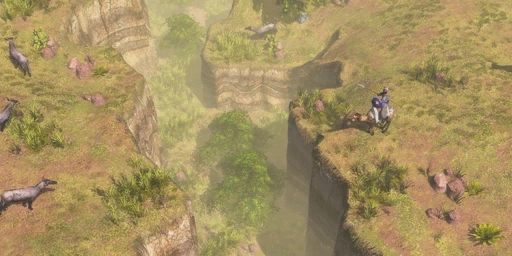
Historical setting & objective
As defender, inspect the approaches and protect the fortified position against more than one direction of attack. As an attacker, coordinate pressure so the defenders cannot move their whole force against a single approach. The map’s special rules and civilization selection should be checked before the match begins.
Map control & approach
The defender should preserve a reserve for the threatened side instead of chasing every raiding unit. Attackers should time assaults together and keep reinforcements moving toward the same objective rather than arriving one at a time.
Asymmetric roles and coordinated pressure
This scenario gives the defending player a fortified peninsula to protect against the opposing team, so the two sides have different jobs. The defender should read the approaches, protect the position that anchors the defense and keep a reserve that can move toward a real threat. Chasing a small raiding group can open another route for a coordinated assault. The attackers should communicate and time pressure from more than one direction; separate attacks arriving in sequence let the defender concentrate against each one. Preserve enough force to maintain the siege or hold ground after the first exchange, and replace losses toward the shared objective. Check the selected match rules, civilization limits and timer before choosing the army, since those scenario settings shape how long the defense can hold.
Defend the peninsula without abandoning the timer
The defender faces three attackers around a fortified peninsula, and the scenario timer makes disciplined survival part of the task. Map the approaches and keep enough strength near the fort to stop a coordinated assault; a reserve should move toward a credible threat rather than chase every small group. The attacking team should use its numerical advantage to pressure more than one approach, while timing its units so the defender cannot defeat each group in turn. Siege and frontline forces need to arrive together if an attack is to make lasting progress. The defender should repair or reinforce only when the mission rules allow it and when doing so does not leave a critical approach open. Check the in-game briefing for the exact timer and civilization restrictions.
Headquarters is the win condition
The listed civilizations are British, Dutch, French, Portuguese and Spanish. This is an asymmetric team scenario with a timer: the defending team must keep its Command Post alive, while the attackers must destroy that Command Post. The defender begins with a Headquarters, a Town Center and three Trading Posts already placed on the maritime Trade Route, giving it an early shipment advantage. Attackers receive Command Posts instead of Town Centers; these can receive shipments and function as Town Centers under the scenario rules. The fortified peninsula, route and extra Trading Post sites shape the defense, so do not treat this as simply one player against exactly three opponents in every game. The number of players and team setup can vary. Defenders should protect the Headquarters and use the setup’s upgrades; attackers need to coordinate damage on that objective instead of being drawn into fights that leave the timer running.
Asymmetric starts and the Command Post objective
The defender begins with a Headquarters, a Town Center and three Trading Posts already on the maritime Trade Route, giving that side a strong shipment lead. Each attacker instead starts with a Command Center that functions as a Town Center and accepts Home City shipments, but offers only the Bank of Antwerp and Hire Zeeland Regiment scenario technologies. The attackers must destroy the Headquarters; the defender must keep it alive until the scenario timer expires. Two peninsulas near the map edge each have an empty Trading Post site and Battery Tower site. The defender can build at these locations even when a site is unusually close to an attacker’s Town Center, so scout them before assuming they are safe. Recommended settings restrict the game to the Industrial Age. British, Dutch, French, Portuguese and Spanish are the recommended civilizations; confirm lobby settings before selecting an ordinary late-age build order.
Use the special technologies to strengthen the assigned role
The Headquarters offers several technologies that only make sense for its defense. Abjuration costs 350 Food and 350 Coin in the Commerce Age and gives Settlers 10% faster gathering and building plus 20% hit points. Bank of Antwerp costs 300 Food and 250 Wood, ships a Bank Wagon and increases the Bank limit by one. In the Fortress Age, Ostend Defenses costs 350 Food and 350 Coin, raises building hit points by 20%, and gives Battery Towers 25% more attack and five additional Line of Sight. Hire Zeeland Regiment costs 200 Food and 450 Coin, sends six Ruyters and grants gunpowder troops and cavalry 10% more attack. Maurice of Nassau’s Tactics costs 250 Wood and 175 Coin, improving infantry hit points and attack by 10% and reducing their build time by 20%. Prince of Orange is an Industrial Age technology costing 500 Food and 300 Coin; it doubles Explorer hit points and gives Explorers an aura that increases nearby unit durability.
Trading Posts and mercenaries are part of the siege plan
The defender’s three starting Trade Route posts begin upgraded to level two but cannot start a Trade Monopoly. They can research Watergeuzen in the Fortress Age for 300 Food and 400 Coin, reducing warship build time by 25% and increasing speed by 15%. Piet Heyn’s Plunder costs 175 Food and 175 Wood in the Industrial Age, sends 300 Coin plus 500 for each owned warship up to a further 3,000 Coin. The map also offers Fusiliers, Highlanders, Cannoneers and Irish Brigadiers as mercenaries. Defenders can use the fortified peninsula and shipment advantage to rotate troops between the objective and two water approaches; attackers should coordinate siege with a screen and pressure the objective before the defender’s special upgrades and shipments accumulate. Split attacks only when both forces can still be reinforced.