Cheyenne Rider
Cheyenne Rider is Heavy cavalry in Age of Empires III, available from the Commerce Age; obtained through Trading Post or Tambo on a Cheyenne settlement, Native Embassy.
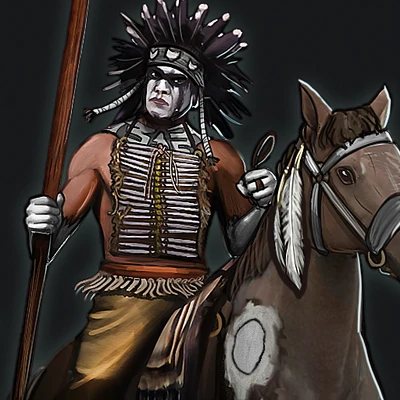
Recorded values
- Available
- Commerce Age · Trading Post or Tambo on a Cheyenne settlement; Native Embassy
- Training
- 40 sec · 19 XP per train
- Durability & mobility
- 300 hit points · 10% ranged resistance · 6.75 speed · 12 line of sight
- Siege attack
- 15 base damage · range 6 · attack interval 3.0
- Hand attack
- 21 base damage · attack interval 1.5 · bonus damage: 1.5x vs. Cavalry; 1.25x vs. Shock troops
- Trample attack
- 11 base damage · attack interval 2.0 · area of effect 3 · bonus damage: Same as hand attack
Role, availability & values
Production is available through Trading Post or Tambo on a Cheyenne settlement or Native Embassy. It has 300 hit points and 10% ranged resistance. It moves at 6.75 speed. Training costs 95 Food and 90 Wood; it takes 40 seconds to train. Attack profile: Siege attack: 15 damage at range 6; every 3.0 seconds. Hand attack: 21 damage; every 1.5 seconds. Trample attack: 11 damage; every 2.0 seconds; area of effect 3.
Matchup & timing
Use the unit’s 6.75-speed movement to choose the approach, threaten an exposed flank, and pull away before anti-cavalry forces can surround it. Its listed attack bonus makes Cavalry and Shock troops priority targets. Keep a clear retreat route and bring it back to the main army when the opponent protects the economy.
Commerce Age heavy cavalry profile
The Cheyenne Rider is a Commerce Age Native heavy Cavalry unit trained at a Trading Post or Tambo on a Cheyenne settlement, or through a Native Embassy where available. It costs 95 Food and 90 Wood, takes 40 seconds to train and is limited to ten per settlement. It has 300 hit points, 10 percent ranged resistance, speed 6.75 and sight 12. Its hand attack deals 21 damage every 1.5 seconds, with current multipliers of 1.5 against Cavalry and 1.25 against Shock troops. Its trample attack deals 11 damage at a two-second interval over a radius of three, and its siege attack deals 15 at range six. The combination of strong health and class bonuses gives it an unusual role among heavy Cavalry: it can fight enemy Cavalry and Shock troops as well as raid vulnerable Light Infantry and Artillery.
Cheyenne Fury and matchup changes
Cheyenne Fury is the key technology for the Rider’s anti-Cavalry role. It increases the bonus damage multipliers against Cavalry and Shock troops, improving the unit’s performance beyond its base 1.5 and 1.25 multipliers. The upgrade helps it trade against other heavy Cavalry and makes opponents rely more on hit-and-run Light Ranged Cavalry or Heavy Infantry. Before researching Fury, the Rider is less impressive than a standard Hussar in raw health and base damage; its listed profile has lower hit points, ranged resistance and attack, but a cheaper total cost and specialized bonuses. Use Fury when the enemy is likely to field Cavalry or Shock troops in numbers. If the opponent instead builds Heavy Infantry or ranged Cavalry, add Light Infantry support and avoid direct charges.
Raid targets and infantry support
Cheyenne Riders are mobile enough to raid exposed Villagers and threaten Artillery, but their lack of a ranged attack means they must cross the firing line before dealing damage. Their melee attack is effective against Light Infantry and Artillery in the usual heavy Cavalry role, and the trample attack can hit several nearby targets. Support them with Light Infantry, which can challenge the Heavy Infantry and Light Ranged Cavalry that counter the Riders. A mixed group makes it harder for the opponent to rely on one anti-Cavalry unit. Avoid sending the Riders into a defended base without scouting: ranged fire can reduce their health while they approach, and the settlement cap makes replacement limited.
Cheyenne rank upgrades and settlement access
Cheyenne Warrior Societies upgrades Riders to Elite with 25 percent more hit points and damage. It costs 100 Wood and 75 Coin in Definitive Edition, compared with 200 of each before that edition. Champion Cheyenne requires the first upgrade, costs 400 Wood and 300 Coin and adds 35 percent in the current profile, compared with 40 percent earlier. Legendary Native Warriors or Exalted Natives adds a further 50 percent to native hit points and damage where available. Native Treaties or other Home City Cards may send Riders or improve native units, depending on the civilization. The ten-per-settlement cap and 40-second train time mean that a secured Cheyenne site is important if Riders form a major part of the army. Plan upgrades with the expected enemy roster rather than researching them automatically.
Version history and army role
The Rider’s current profile differs from older versions: before Definitive Edition it cost 40 Food and 110 Wood, trained in 30 seconds, had 320 hit points and dealt 11 base hand damage. Definitive Edition changed the resource mix to 95 Food and 90 Wood, increased train time to 40 seconds and raised base attack to 21, while introducing Cavalry and Shock troop multipliers. Update 13.58326 reduced hit points from 320 to 300 and raised experience for training and kills. This means older descriptions of a slow, low-damage unit do not reflect its current profile. It still has no ranged attack and remains vulnerable to Light Ranged Cavalry and Heavy Infantry; the newer bonuses make it a more specialized Commerce Age heavy Cavalry option rather than a universal raider.
When to choose a Cheyenne force
A Cheyenne Rider force is most useful when the map offers a settlement and the opponent’s army depends on Cavalry, Shock troops, Artillery or exposed Light Infantry. The Riders can protect a native ranged line, raid distant resources and punish enemy Cavalry after Cheyenne Fury is researched. Their limitations are equally important: only ten can be trained per site, they cost both Food and Wood, and Light Infantry support is needed against their counters. If the opponent has many Skirmishers or ranged Cavalry, preserve the Riders for flanks instead of charging the main formation. Use native shipments to establish an early group, then rely on the settlement for replacements.
Cheyenne Fury damage planning
The Rider’s value changes notably after Cheyenne Fury. The technology strengthens its existing Cavalry and Shock troop bonuses, with the source noting that damage against those categories rises by about two-thirds relative to the pre-upgrade multiplier. This turns the unit into a serious answer to heavy Cavalry while preserving its ability to raid Light Infantry and Artillery. Do not spend the upgrade automatically if the opponent is focused on ranged Cavalry or Heavy Infantry, since those remain difficult matchups. A mixed force with Light Infantry support lets the Riders focus on Cavalry while the supporting line addresses their counters. The technology’s value is highest when several Riders are already fielded or can be trained safely from the settlement.
Trample attack and formation density
The Cheyenne Rider’s trample attack deals 11 damage at a two-second interval over a radius of three, using the same class multipliers as its normal attack. This makes it useful when several opponents are packed together, such as Cavalry surrounding a friendly ranged unit or Infantry clustered near a choke. The trample base damage is lower than the standard 21-damage hand attack, so do not assume it replaces focused melee strikes against a single target. Spread enemy formations with a flank or use the Riders to enter from the side, then keep the group from being trapped by Heavy Infantry. Their siege attack can help finish a structure after the army wins the area.
Why its matchup is unusual
Most heavy Cavalry is used to attack ranged Infantry and Villagers, but the Cheyenne Rider’s bonuses against Cavalry and Shock troops make it better suited to fighting other mounted forces than a basic raider. Its 21 base attack and 1.5-second cadence provide consistent melee pressure, while Cheyenne Fury strengthens the class multipliers. The unit is still weaker in several raw statistics than a Hussar, so its value depends on those bonuses and the map settlement. A force of Riders without Fury can lose a straight exchange; after the technology, it can force enemy heavy Cavalry to retreat. Use hit-and-run against Light Ranged Cavalry and rely on Light Infantry to handle Heavy Infantry.
Preserving the settlement force
The Cheyenne Rider has a local cap of ten, so even a resource-rich player cannot replace a lost army from one settlement at once. Training takes 40 seconds and costs both Food and Wood; secure the Trading Post or Tambo and use Home City shipments where the faction allows them. A forward site is valuable for reinforcement but vulnerable to raids. If the Rider group is your main Cavalry screen, keep part of it near the settlement and commit the rest only when Cheyenne Fury or the target matchup justifies the trade. Its 300 hit points let it survive contact, but its 10 percent ranged resistance is modest and concentrated fire can still remove it.
Selecting fights after the age-up
Cheyenne Riders should be sent into fights where they can reach the target quickly and exploit their Cavalry bonus. If the opponent has a larger ranged line, approach from a flank and let Light Infantry screen the path. If Heavy Infantry arrives, avoid a head-on charge and use another unit to soften it first. The Rider’s good health supports a brief engagement, but its ranged resistance is only ten percent. Withdraw once the opponent’s counters have formed rather than trading the full ten-unit settlement limit for a few kills.
Rider support and retreat paths
Pair Cheyenne Riders with Light Infantry or other units that can pressure Skirmishers and ranged Cavalry. The Riders should take the melee engagement against Cavalry or Shock troops while support keeps their counters occupied. Because their attack is melee, choose a route that avoids crossing a full enemy firing line and leave a retreat path back toward the settlement or army. This preserves a limited ten-unit force for the next fight.
Heavy cavalry against light infantry and artillery
The Cheyenne Rider is Heavy Cavalry suited to attacking light infantry and artillery. It also has bonuses against Cavalry and Shock troops, which the Cheyenne Fury improvement can strengthen. This gives it a broad role similar to other versatile heavy cavalry, but it remains vulnerable to light ranged Cavalry and Heavy Infantry. Use it to threaten artillery or exposed Skirmishers, and avoid frontal charges into a prepared anti-Cavalry line.
Use the upgrade and support units together
Cheyenne Fury makes the Rider more effective as an all-rounder, but does not remove its counters. Pair the cavalry with light infantry that can pressure Heavy Infantry and ranged Cavalry, and retreat when the opponent’s screen is concentrated. A documented profile has a lower total cost than its baseline comparison, but exact costs and bonuses depend on the version and upgrade state. Check the applicable Native alliance option before planning repeated production, and reserve population for the supporting army.