Daimyo
Daimyo is a Japanese cavalry hero that combines combat presence with forward production and shipment support. It can train Japanese infantry and cavalry and receive Home City shipments.
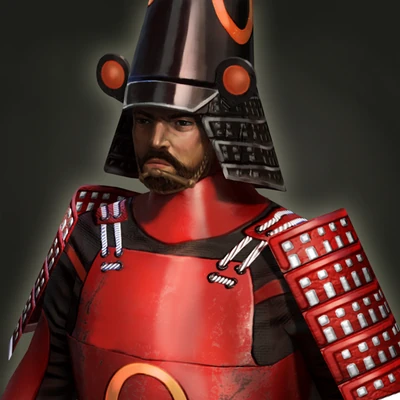
Recorded values
- Cost
- 350 Coin
- Available
- Commerce Age (Mototada) ; Fortress Age (Kiyomasa and Masamune) · The Shogunate (Daimyo Masamune; Daimyo Mototada and Daimyo Kiyomasa must be shipped from the Home City first)
- Training
- 100 sec · 4 population · 35 XP per train
- Durability & mobility
- 650 hit points · 30% ranged resistance · 6.5 speed · 12 line of sight
- Siege attack
- 40 base damage · range 6 · attack interval 3.0
- Hand attack
- 30 base damage · attack interval 1.5
- Trample attack
- 20 base damage · attack interval 2.0 · area of effect 3
- Ability
- Trains infantry and cavalry; Receives Home City shipments
Role, availability & values
Daimyo access depends on the Japanese Wonder and Home City shipments for the individual Daimyo. The recorded profile has 650 hit points, 30% ranged resistance and a four-population cost. Its training and shipment abilities make it valuable beyond its own attacks.
Matchup & timing
Keep the Daimyo behind the first line so it can reinforce the army or receive a shipment without being lost in a charge. Use its production ability when a safe forward position can reduce reinforcement time, and protect it as a hero as well as a costly unit.
Japanese field commander and shipment point
A Daimyo is a Japanese heavy cavalry commander that can train troops, receive Home City shipments and strengthen nearby units. There are three named versions—Mototada, Kiyomasa and Masamune—with the same base statistics but different access. Mototada arrives from the Home City in the Commerce Age, Kiyomasa is shipped later, and Masamune is granted when the Shogunate is selected to advance to the Fortress Age or higher. A player can retrain lost Daimyo at the Shogunate after obtaining the relevant access. Only one of each version can be active. Each Daimyo costs 350 Coin, takes 100 seconds to train or retrain, uses four population and has 650 hit points, 30% ranged resistance, speed 6.5 and line of sight 12. Its hand attack deals 30 damage every 1.5 seconds, Trample deals 20 in an area of three every two seconds, and its siege attack deals 40 at range six every three seconds. These values let it fight as heavy cavalry, but its four-population cost makes losing one a major army loss. Keep it behind the front and use an escape path before beginning a unit queue. Saburau Zeal provides a passive attack bonus to nearby friendly units. Multiple Daimyo auras do not stack, so placing two together does not double the effect; use additional commanders for their other roles instead. The health regeneration ability also helps a Daimyo recover after a skirmish, but it should not be used as a reason to leave the unit exposed. Its aura and shipment function make it a strategic support unit as much as a combatant. A Daimyo can serve as a Home City shipment delivery point anywhere it can safely stand. This creates a forward reinforcement route: move the commander to a protected position, call in a shipment and use the same location to train troops. Crates from resource shipments may appear at the Daimyo’s position, so avoid selecting them while it is near the enemy. Military shipments and unit production make the commander valuable during a push, but when it trains units it must remain stationary and is vulnerable. Move it behind a screen, queue the troops, then reposition after production completes. The field unit roster includes Yumi Archers for ranged infantry, Ashigaru Musketeers for frontline and anti-cavalry work, Samurai for area melee damage, Naginata Riders for cavalry and Yabusame for ranged cavalry. In the Commerce Age, Yumi cost 55 Food and 50 Wood, Ashigaru 80 Food and 40 Coin, Samurai 95 each and Naginata Riders 100 each. Yabusame become available in the Fortress Age for 60 Food and 150 Coin. The Daimyo’s queue consumes resources just like production buildings, so use it when the army needs reinforcements away from the base or when a forward Barracks is unavailable. Protect the Daimyo from artillery and heavy melee units. Use it to hold the center of an army, provide aura coverage and deliver a well-timed shipment, not to charge alone into a fortified position. Its value rises when the Japanese can retrain commanders and keep them alive through multiple engagements.
Train the right reinforcements for the engagement
The Daimyo’s unit queue costs resources and population, so choose a unit that meets the current threat. Ashigaru Musketeers can protect the commander from cavalry, Yumi Archers can add ranged damage, and Samurai can break a clustered melee. When the enemy’s artillery is exposed, Naginata Riders can pressure the guns, while Yabusame provide a later ranged cavalry option. A queue that does not match the battlefield can leave the Daimyo stationary for no useful gain. Keep the commander behind a screen and cancel or finish production before moving it into danger. Shipment placement also requires planning. A forward Daimyo can bring military reinforcements closer to the fight, but resource crates may land in an unsafe area if the commander is too far forward. Select military cards for an active assault and resource cards only when the delivery point can be defended. The shipment function remains available even if the Daimyo is not training units, so the commander can reposition after a delivery.
Keep commanders alive for long engagements
Retraining at the Shogunate makes the Daimyo renewable, but the 350-Coin cost and 100-second build time can leave the army without its aura during a critical push. Retreat a damaged commander early and use regeneration before beginning a second fight.
Use the aura without clustering the army
Keep nearby troops within Saburau Zeal while leaving enough space for ranged units to avoid artillery splash. The aura’s non-stacking rule makes one well-positioned Daimyo more efficient than grouping several commanders together.
Reposition after training
Once a field queue finishes, move the Daimyo behind its troops so it can keep providing the aura and shipment access.
Japanese commander and mobile production point
The Daimyo is a Japanese mounted leader who can support an army by training units and serving as a mobile rally point. This makes it more than a combat unit: it can help reinforce a force away from the main base and keep production close to the front. Protect the Daimyo while it is training, since a loss can interrupt that reinforcement route. Use its mobility to follow the army, but avoid leaving it exposed to artillery or concentrated anti-Cavalry units.
Coordinate production with the Japanese army
A Daimyo’s queue still consumes resources and population, so it should complement—not replace—ordinary production buildings. Train units suited to the opponent and rally them where they can join the fight safely. Japanese units and age-up options have their own costs and counters; check the current roster before filling the queue with one type. Keep a second production route available in case the Daimyo must retreat, and use its mobility to reinforce a successful push rather than sending it ahead of the army.