Svalbard
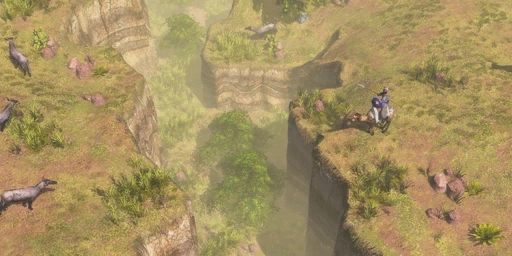
Svalbard is a sparse northern map whose description emphasizes the sea as a survival resource. No Native settlement is listed; Qivittoq and Harpooner are the available outlaw options. Water access and limited land resources make the coastline an important part of the opening.
Terrain, routes and neutral sites
- Terrain
- Sparse northern map with important sea access
- Native settlements
- None listed
- Opening concern
- Scout coastline and land resources before naval spending
Map character
Scout the shore, nearby land resources and outlaw sites before paying for a Dock. Establish whether fishing or transport can support the economy, then protect the route for workers and reinforcements. With no Native settlement, do not reserve the opening for an alliance Trading Post.
What to scout
Expand in stages instead of relying on a rich starting area. Naval investment should support a specific food source or movement plan, while land units remain necessary to protect Villagers and coastal structures.
Practical direction
Because there is no Native settlement, compare ordinary production, outlaw access and water use directly; focus resources on the option the current coastline can sustain.
Build a sea economy only around a protected coast
Svalbard’s map description makes the sea a response to scarce land resources, but a Dock does not solve scarcity by itself. First reveal the shore and check whether fishing space is close enough to defend. If the route is safe, Fishing Boats can provide a continuing Food source while land troops protect the workers and coast. If the opponent can reach the shoreline early, postpone the investment or secure the approach before placing the Dock. Treat water as one branch of the economy and maintain a land force that can protect buildings, deter raids and hold the ground where later expansion is needed.
Neutral recruitment without a settlement alliance
Svalbard lists no Native settlement. Qivittoq and Harpooner are the available outlaw types, so the neutral plan centers on outlaw access rather than a Native Trading Post. Their presence does not remove the need to train a core army or protect the route to a camp. Use the Explorer to locate the outlaw options and compare their reach and cost with ordinary military production. If the camp lies across exposed ground, secure the nearby economy first and return when the force can escort the approach. This keeps resources focused on options the generated map actually offers.
Expand in stages on a resource-limited map
A sparse starting area can tempt players to send many Villagers toward the first distant resource they find. Scout its path and the nearby shoreline, then move only the workers the army can protect. Keep production and reinforcements close while the first expansion is being established; once the route is safe, add another gathering area or the naval branch. This stepwise approach limits the cost of a raid and keeps the player from investing simultaneously in an exposed land site, an undefended Dock and an outlaw camp. Recheck the opponent’s movement before committing to the next frontier.
Compare the outlaw options against scarce resources
Svalbard has no Native settlement, so its listed neutral recruits are Harpooner and Qivittoq. They draw on different resources and serve different battlefield roles. A Qivittoq costs 90 Wood and 3 population, trains in 30 seconds and moves at 6.0 speed. Its ranged attack deals 15 at range 12 and has bonuses against Mercenaries, Native warriors, Pets, Cavalry and Shock troops, but its 111 hit points make it risky to leave exposed. A Harpooner costs 120 Coin and 4 population, takes 40 seconds and has 210 hit points with 30% hand resistance. It fires for 20 damage at range 14 and deals double damage against Cavalry and Shock troops; its 4.0 speed makes it less suited to chasing threats across a sparse map. Use the Qivittoq when mobile pressure and its target bonuses matter, or the Harpooner when a durable anti-cavalry position can protect the economy.
Avoid paying for a recruit before securing its route
The map’s limited land resources make the outlaw cost compete with ordinary production, a Dock and the units needed to escort workers. Locate the camp and the nearest Food, Wood and Coin first, then estimate whether the recruit can reach a useful position without leaving the starting area open. A Qivittoq spends Wood that may be needed for buildings or a Dock; a Harpooner ties up Coin that could support other military units. Neither replaces a core army or solves the need to protect Fishing Boats and coastal workers. Choose the camp closest to a defendable route, maintain a reserve near the base and delay a second neutral investment if the first one cannot be reinforced.