Mongol Scout
The Mongol Scout is an Asian Dynasties heavy cavalry unit with stealth detection and a trample attack. It combines mounted mobility with a way to reveal hidden threats, giving it a scouting role alongside its combat use.
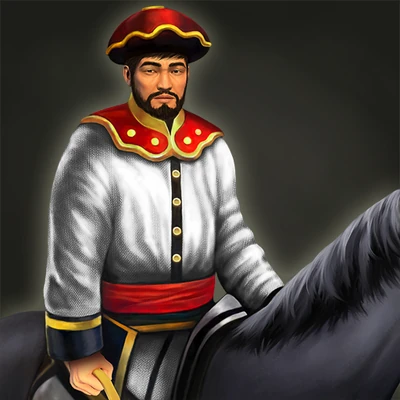
Recorded values
- Cost
- 70 Food
- Training
- 35 sec
- Durability & mobility
- 250 hit points · 30% ranged resistance · 6.0 speed · 24 line of sight
- Hand attack
- 5 damage · 1.5 attack interval
- Siege attack
- 5 damage · 6 range · 3.0 attack interval
- Trample attack
- 4 damage · 2.0 attack interval
Role, availability & values
It has 250 hit points, 30% ranged resistance and 6.0 speed. Its sight detects stealth; the trample attack deals area damage, while the ordinary melee profile is modest. The listed unit belongs to Asian Dynasties content, so check the map or roster that supplies it.
Matchup & timing
Send it ahead to reveal a stealth approach or sweep around a group with trample, but keep it away from dedicated anti-cavalry counters. Its scouting value is lost if it is committed into a fight it cannot escape.
Scouting, stealth detection and team access
The Mongol Scout is a mounted reconnaissance unit from The Asian Dynasties, with 250 hit points, 30% ranged resistance, speed 6.0 and line of sight 24. It detects Stealth and can cross the map to reveal terrain, but its combat profile is intentionally weak: a five-damage hand attack every 1.5 seconds, a five-damage siege attack at range six every three seconds, and a four-damage trample attack in an area of three every two seconds. It is not trained in the normal production queue; the listed 70 Food and 35-second training values are not a regular way to obtain it. Chinese Home City Cards can send two Mongol Scouts to the entire team in the Exploration Age with TEAM Ming Mongols and another in the Commerce Age with TEAM Yongle Infrastructure. They can also appear as treasure rewards on Mongolia and Silk Road. Their early arrival can reveal the map, locate treasures and identify an exposed Settler line before the opponent knows the army’s direction. Because they add no population pressure beyond their special source rules and are relatively durable against ranged fire, a scout can stay useful after the opening exploration. Do not commit it to a fight against Heavy Infantry or Light Ranged Cavalry, which are especially dangerous counters. The scout’s 24 line of sight is higher than many ordinary scouts, and its ability to see hidden units can expose ambushes or stealth approaches. This information has value even when the unit never attacks: track enemy production, find a safe route for the main army, and keep vision on a treasure or trade route. Cards that improve line of sight can further expand its scouting role. Pair it with a hero when fighting Treasure Guardians; the Scout can help the hero handle a guardian while avoiding the role of main damage dealer. Harassment is situational. Against a distracted opponent or AI, the Scout can pressure an isolated villager or disrupt an unprotected resource line. Against a skilled player, the same early shipment might be less valuable than Settlers or Food that accelerate the economy and the Commerce Age. It has low damage and loses direct fights, so the goal is to force attention and withdraw, not to destroy a defended base. Japanese Mountain Warrior can double treasure values, which may make the exploration route more attractive when the deck and map support it. Use its speed and vision to contribute without taking unnecessary damage. Keep it outside heavy infantry reach, circle around anti-cavalry groups and retreat if the opponent commits forces to chase it. The Mongol Scout is a limited team shipment or treasure reward rather than a massable cavalry unit; plan around the units that can be obtained, then transition to the civilization’s standard army. Its role is information, treasure support and light harassment, with combat only when the target is isolated.
Scout without trading away the unit
Use the Scout’s wide vision to reveal a route and then stay outside the opponent’s army rather than chasing a low-health target through fog. It can spot stealth and help a hero approach treasure, but its weak attack means the hero and regular troops must do most of the fighting. If an opponent starts producing anti-cavalry units, move the Scout to another flank and preserve its vision instead of testing the counter. Its team shipment arrives early enough to affect exploration; decide whether that information is more valuable than an economic shipment before locking the card into a deck.
Know the limits of the early shipment
A Mongol Scout can collect information and draw attention, but it does not secure a treasure automatically and cannot replace the Chinese team cards’ other economic effects. The unit’s value falls if the opponent already controls the map with anti-cavalry troops. In that case, retain it near the hero or use its 24 line of sight to watch a resource approach instead of attempting harassment. Team access can also mean the Scout appears for several allied civilizations at once, so plan a shared scouting route rather than sending each copy into the same defended area.
Use vision to support the main army
Keep the Scout ahead of the army far enough to reveal terrain but close enough to retreat behind friendly troops. Its stealth detection can warn of a hidden approach, and its speed lets it shift to another route when threatened. This information can protect Settlers and help choose where the next engagement begins.
Chinese-allied scouting cavalry
Mongol Scouts can enter a match through Home City Cards that ally other civilizations with China. The documented team cards can provide two Scouts in the Exploration Age and one in the Commerce Age. They may also appear as Treasure rewards. This makes them a map-dependent support unit rather than a standard Stable line. Use their mobility to explore routes, reveal enemy production and help secure Treasures.
Preserve the scouting advantage
A Scout is valuable for information and map presence, but should not be committed to a fight against trained cavalry or defensive fire. Keep it moving, retreat when the opponent responds and use its vision to guide the main army. The card and team conditions determine availability, so verify that the correct deck and alliance are active before relying on the unit.